Advanced Financial Statement Analysis
Double-Entry Mechanics
The Equation That Balances Everything
The entire structure of modern accounting rests on a single, elegant equation. You already know the basic version: Assets = Liabilities + Equity. This formula provides a static snapshot of a company's financial position. But businesses are dynamic. They generate revenue and incur expenses, constantly changing their value. To capture this activity, we use the expanded accounting equation.
Think of it this way: the basic equation is a photograph, while the expanded equation is a time-lapse video. It shows not just where the company stands, but how it got there over a period. Every transaction a business makes must keep this equation in balance. This is the core mechanic of double-entry bookkeeping, where every entry has an equal and opposite entry.
The basic concept behind double-entry accounting is the accounting equation, which states that Assets = Liabilities + Equity.
Tracing a Single Transaction
Let’s see how this works with a common scenario. Imagine a design firm completes a project for a client and sends an invoice for $5,000. The client will pay in 30 days. No cash has changed hands yet, but a transaction has occurred.
Here’s how it hits the books:
- Accounts Receivable (an Asset) increases by $5,000. The company now has a legal claim to that cash.
- Service Revenue (part of Equity) increases by $5,000. The company has earned the money.
Notice the dual impact. The Balance Sheet is affected (Assets are up) and so is the Income Statement (Revenue is up). When the client pays the invoice 30 days later, the transaction is: Cash (an Asset) increases by $5,000, and Accounts Receivable (another Asset) decreases by $5,000. The net effect on the Asset side is zero, but the company's cash position has improved.
This flow ensures that financial statements are interlinked and consistent. The net income from the Income Statement flows into the Statement of Retained Earnings, which in turn updates the Equity section of the Balance Sheet. A change in one place ripples through the others.
Keeping Time with Adjusting Entries
The world doesn't operate neatly within monthly or quarterly reporting periods. A company might pay for a full year of insurance upfront, or an employee might earn wages in December that aren't paid until January. This is where comes in. Its goal is to match revenues to the period in which they are earned and expenses to the period in which they are incurred, regardless of when cash moves.
To achieve this, accountants make at the end of an accounting period. These entries never involve cash and affect one income statement account and one balance sheet account. They fall into two main categories: accruals and deferrals.
| Category | What it is | Example |
|---|---|---|
| Accruals | Revenue earned or expense incurred before cash moves. | Accrued Revenue: Interest earned on an investment but not yet received. |
| Accrued Expense: Wages earned by employees but not yet paid. | ||
| Deferrals | Cash moves before revenue is earned or expense is incurred. | Deferred Revenue: A customer pays for a one-year subscription upfront. |
| Deferred Expense: A company pays for its annual insurance policy in January. |
Let’s look at depreciation, a classic deferral. A company buys a machine for $120,000 with an expected useful life of 10 years. Instead of recording a massive $120,000 expense in year one, the company spreads the cost over the machine's life. Each year, it records a depreciation expense.
The monthly adjusting entry would be:
- Debit (increase) Depreciation Expense by $1,000.
- Credit (increase) Accumulated Depreciation by $1,000.
This entry correctly reduces net income by $1,000. On the balance sheet, Accumulated Depreciation is a contra-asset account, meaning it reduces the book value of the machine. After one month, the machine's book value is $120,000 - $1,000 = $119,000. This process accurately reflects the asset being 'used up' over time.
From Trial Balance to Final Reports
After all transactions and adjusting entries for a period are recorded, the next step is to prepare an Adjusted Trial Balance. This is an internal report that lists every account and its final debit or credit balance. Its primary purpose is to confirm that total debits equal total credits, proving the mathematical accuracy of the ledger.
Once balanced, this report becomes the single source of truth for creating the financial statements.
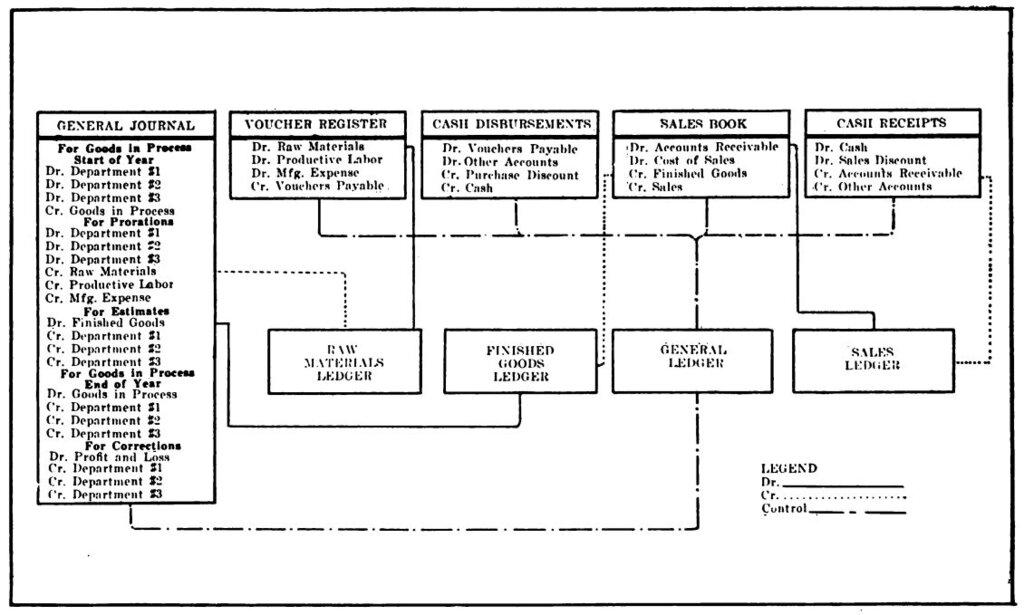
The process is straightforward:
- Income Statement: All revenue and expense account balances are moved from the trial balance to create the income statement. The result is net income or loss.
- Statement of Retained Earnings: The beginning retained earnings balance is updated with the net income (or loss) and reduced by any dividends paid. This gives the ending retained earnings.
- Balance Sheet: Asset, liability, and the newly calculated ending retained earnings balances are used to assemble the balance sheet. The other equity accounts (like common stock) are pulled directly from the trial balance.
If everything has been done correctly, the final balance sheet will, of course, balance. Assets will equal Liabilities plus Equity.
Ready to test your understanding of how these mechanics fit together?
What is the primary difference between the basic accounting equation (Assets = Liabilities + Equity) and the expanded accounting equation?
A company pays $12,000 upfront for a full year of insurance coverage. What is the correct adjusting entry to record at the end of the first month?
Understanding this flow is crucial. It shows how the day-to-day recording of transactions provides the structural integrity for the high-level financial reports that guide business decisions.