Advanced Facebook Ads Mastery
Advanced Campaign Optimization
Pinpoint Your Local Market
You already know how to target a city. Let's get more precise. For a local service like pest control, broad targeting is like using a fishing net in the open ocean hoping to catch a specific type of fish. Advanced geo-targeting is like using a sonar and a specific lure in the exact spot where that fish lives.
Instead of just targeting 'Austin, TX', start thinking in layers. Use radius targeting to draw a circle around specific affluent neighborhoods where homeowners are more likely to invest in preventative pest control. You can also target by individual ZIP codes. Does a certain part of town have older homes prone to termites? Target them directly. Conversely, use exclusions to avoid wasting money on industrial parks, commercial districts, or apartment-heavy areas if your focus is single-family homes.
Layering your targeting is key. For example, you could target homeowners within a 10-mile radius of your office but exclude the ZIP code for a large, dense apartment complex in that same area.
Now, let’s add behaviors. Facebook knows who is a homeowner, who recently moved, and who is interested in home improvement. These are powerful signals. Someone who just bought a house is a prime candidate for a preventative pest inspection. Someone browsing home renovation content is invested in their property and more likely to care about pest issues.
Combine these behaviors with your specific geo-targeting. Now you're not just showing ads to everyone in a neighborhood; you're showing ads to homeowners who recently moved into that specific, high-value neighborhood. This is how you maximize every dollar.
Build Your Unbeatable Audiences
The most valuable audiences are the ones you build yourself. These are people who already know you, which makes them far more likely to convert. We do this with Custom Audiences.
You can create a Custom Audience by uploading your list of past customers. Facebook will match the emails or phone numbers to user profiles. You can then run ads to this list, perhaps offering a discount on an annual plan. It's a fantastic way to generate repeat business.
Even better is retargeting based on website activity. Using the Meta Pixel, you can create an audience of everyone who visited your website in the last 90 days. Get more specific: target only people who visited your 'Termite Services' page but didn't contact you. Show them an ad with a testimonial about your termite treatments. You're reminding a high-intent prospect why they were interested in the first place.
Real estate agents should develop Facebook retargeting ad campaigns to re-engage users who have previously interacted with your website or Facebook ads, increasing the likelihood of conversion.
Once you have a strong Custom Audience, you can create a Lookalike Audience. This is where Facebook's algorithm shines. You give it a source audience, like your list of best customers, and Facebook goes out and finds new people with similar characteristics, behaviors, and interests. It's the most effective way to find new customers who look just like your existing ones.
For a pest control business, a Lookalike Audience built from a list of customers who purchased an annual service plan is incredibly powerful. You're essentially telling Facebook, "Find me more people like these high-value clients."
Test, Measure, and Refine
Never assume you know what will work best. Advanced optimization is built on constant A/B testing, also known as split testing. This means running two or more variations of an ad to see which one performs better. Don't just guess; let the data tell you what your audience responds to.
You can test almost anything:
- Creative: A picture of your team vs. a picture of a termite. A short video vs. a static image.
- Headline: "Protect Your Home from Pests" vs. "Fast & Reliable Pest Control."
- Placement: Facebook Feed vs. Instagram Stories.
- Audience: Your Lookalike Audience vs. an audience based on behavioral targeting.
Create a campaign and duplicate the ad set. Change only one variable in the duplicate. Let both run with an equal budget. After a few days, you'll see a clear winner. Turn off the loser and test something new against the winner. This is a continuous cycle of improvement.
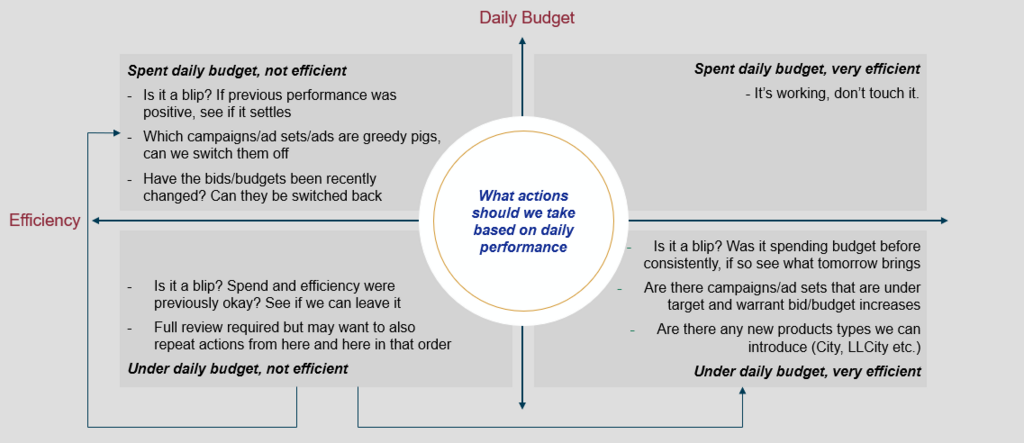
To know what's working, you have to track the right Key Performance Indicators (KPIs). For a pest control service, the most important KPIs are often:
- Cost Per Lead (CPL): How much does it cost to get someone to fill out your contact form or call you? This is your bottom line.
- Conversion Rate: What percentage of people who click your ad actually become a lead?
- Click-Through Rate (CTR): Are people finding your ad compelling enough to click on it? A low CTR might mean your creative or headline isn't working.
- Frequency: How many times, on average, is the same person seeing your ad? If it gets too high (e.g., above 5-6 in a week), you might be annoying your audience.
By monitoring these KPIs during your A/B tests, you can make data-driven decisions that systematically lower your costs and increase your ROI. Optimization isn't a one-time setup; it's an ongoing process of refining your strategy.
A pest control company wants to target homeowners in older houses prone to termites. Which of the following represents the most precise and effective targeting strategy?
What is the primary purpose of creating a 'Lookalike Audience'?
Applying these advanced techniques will elevate your campaigns from simply running to strategically winning in a competitive local market.