Advanced Epidemiology Methods
Epidemiological Study Designs
Charting the Course
In epidemiology, every research question requires a specific plan of attack. This plan is the study design. Think of it as a blueprint for an investigation. Choosing the right design depends entirely on what you want to find out. Are you just describing a health issue, testing a theory about its cause, or evaluating a new treatment? The answer will point you to one of three main categories: descriptive, analytical, or experimental.
Describing the Landscape
Descriptive studies are the foundation. Their job is to characterize health events by answering questions like: Who is getting sick? What are the symptoms? Where is it happening? When did it start?
This category includes a few key types.
Case Reports and Case Series A case report is a detailed account of a single patient. It can be the first to flag a new disease or an unusual symptom. For example, early reports on AIDS in the 1980s were case reports describing a strange new immunodeficiency in young men.
When you group several similar case reports together, you get a case series. This can help identify patterns that a single case might miss. While they are great for generating hypotheses, they can't prove a cause-and-effect relationship because there's no comparison group.
Cross-Sectional Studies These studies are like a snapshot in time. Researchers collect data on a group of people at a single point to measure both an exposure and an outcome simultaneously. For instance, a survey could ask a group of adults if they currently smoke and if they currently have high blood pressure.
This design is relatively quick and inexpensive, making it useful for understanding the prevalence of a condition. However, its biggest weakness is temporality. Since you're measuring everything at once, you can't be sure if the exposure came before the outcome. Did smoking lead to high blood pressure, or are people with high blood pressure more likely to smoke? It's a classic chicken-or-the-egg problem.
Connecting the Dots
Analytical studies go a step further. They aren't just describing the situation; they're designed to test hypotheses about the relationship between an exposure and an outcome. They ask why.
Case-Control Studies This design is retrospective, meaning it looks backward in time. Researchers start by identifying a group of people with a disease (the "cases") and a comparable group without the disease (the "controls"). Then, they investigate the past of both groups to see if the cases were more likely to have experienced a certain exposure.
Imagine trying to find the cause of a foodborne illness outbreak. You would identify everyone who got sick (cases) and a similar group who didn't (controls). Then you'd ask everyone what they ate at the picnic. If a much higher percentage of the sick group ate the potato salad, you've found a likely culprit.
Case-control studies are efficient for studying rare diseases and outbreaks, but they rely on people's memories, which can be unreliable. This is known as recall bias.
Case-control studies start with the outcome and look backward for the exposure.
Cohort Studies Cohort studies are prospective; they move forward in time. Researchers identify a group of people (a cohort) and classify them based on their exposure to a potential risk factor. Then, they follow this cohort over time to see who develops the disease or outcome of interest.
For example, to study the effects of exercise on heart disease, you could recruit a large group of healthy adults. You'd ask about their exercise habits at the start and then follow them for years, tracking who eventually develops heart problems. You could then compare the rate of heart disease in the active group to the rate in the sedentary group.
This is a powerful design because the exposure is measured before the outcome occurs, which helps establish that the exposure might cause the outcome. However, cohort studies can be very expensive and time-consuming, especially for diseases that take a long time to develop.
Cohort studies start with the exposure and look forward for the outcome.
Choosing between a case-control and a cohort study often depends on the disease you're investigating. For a rare disease, a cohort study would be impractical because you'd need to follow a massive number of people for a long time just to see a few cases. A case-control study is much more efficient in that scenario.
Testing an Intervention
The final category, experimental studies, is where researchers actively intervene. Instead of just observing, they introduce a treatment or prevention measure and watch what happens. These studies provide the strongest evidence for cause and effect.
Randomized Controlled Trials (RCTs) RCTs are the gold standard in clinical research. In an RCT, participants are randomly assigned to one of two or more groups. One group receives the intervention being tested (like a new drug), while the other group, the control group, receives a placebo or the standard treatment.
Random assignment is the key. It ensures that, on average, the groups are comparable at the start of the study. Any differences in outcomes observed at the end can then be attributed to the intervention. Blinding, where participants (and sometimes researchers) don't know who is in which group, helps prevent bias.
Field Trials Field trials are similar to RCTs, but they take place in a real-world setting, or "in the field," rather than a clinical one. They often involve people who are healthy but at risk for a disease. The goal is usually to test a preventive measure, like a new vaccine or a health education program.
The famous Salk vaccine trial in the 1950s was a massive field trial. Hundreds of thousands of schoolchildren were randomly assigned to receive either the polio vaccine or a placebo, providing strong evidence that the vaccine was effective.
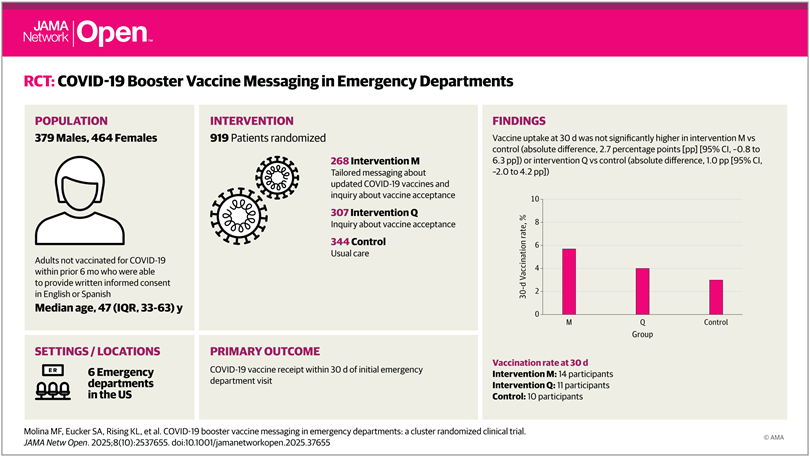
Experimental studies are powerful but also come with challenges. They are complex, expensive, and raise ethical considerations. It's not always possible or ethical to randomize people to a potentially harmful exposure, which is why observational studies remain critical.
| Study Design | Main Goal | Strengths | Limitations |
|---|---|---|---|
| Case Report/Series | Describe new or rare conditions | Quick, inexpensive, hypothesis generating | No comparison group, cannot establish causality |
| Cross-Sectional | Measure prevalence at one point in time | Quick, inexpensive, good for planning | Cannot determine temporality (cause/effect order) |
| Case-Control | Investigate causes of rare diseases | Efficient for rare outcomes, quick | Potential for recall bias, difficult to select controls |
| Cohort | Examine causes, preventions, and prognosis | Establishes temporality, good for rare exposures | Expensive, time-consuming, inefficient for rare diseases |
| RCT/Field Trial | Test the effect of an intervention | Strongest evidence for causality, minimizes bias | Expensive, complex, potential ethical issues |
Ultimately, no single study design is perfect for every question. Each has a specific purpose, with its own set of strengths and weaknesses. The art of epidemiology lies in choosing the right design to get the most reliable answer possible.