Advanced Enterprise Risk Management Strategies
Advanced ERM Frameworks
Beyond the Basics of ERM
You've grasped the fundamentals of Enterprise Risk Management (ERM). Now, it's time to explore the frameworks that put these concepts into action. Think of a framework as the blueprint for a skyscraper. While the basic principles of construction are known, the blueprint provides the specific structure, materials, and processes needed to build a sound, resilient building. Similarly, ERM frameworks provide the structure for building a risk-aware organization.
We will focus on two of the most widely recognized blueprints: ISO 31000 and the COSO ERM framework. They offer different approaches, but both aim for the same goal: integrating risk management into every layer of an organization to improve decision-making and achieve objectives.
ISO 31000 The Universal Standard
The International Organization for Standardization (ISO) created ISO 31000 as a set of guidelines, not a certification standard. This means an organization can't become "ISO 31000 certified." Instead, it provides a flexible, universal approach that any organization can adapt, regardless of its size, industry, or location.
The core of ISO 31000 rests on three key elements: principles, a framework, and a process.
The principles are the foundation. They describe the characteristics of effective and efficient risk management. They emphasize that risk management should create and protect value, be an integral part of all organizational processes, and be tailored to the organization's unique context.
The framework provides the organizational arrangements needed to embed risk management throughout the company. It's about ensuring leadership commitment, integrating risk into decision-making, and continuously improving the system. It's not a one-time setup; it's a dynamic system that evolves with the organization.
Finally, the process is the step-by-step method for managing risk. This involves identifying what could happen, analyzing the likelihood and consequences, evaluating the risk against set criteria, and then treating the risk. This entire process is supported by constant communication and monitoring.
COSO ERM Aligning with Strategy
The Committee of Sponsoring Organizations of the Treadway Commission (COSO) offers another popular framework, particularly in the United States. Its formal title is "Enterprise Risk Management—Integrating with Strategy and Performance." That title is a mouthful, but it reveals the framework's core focus: linking risk management directly to business strategy and performance goals.
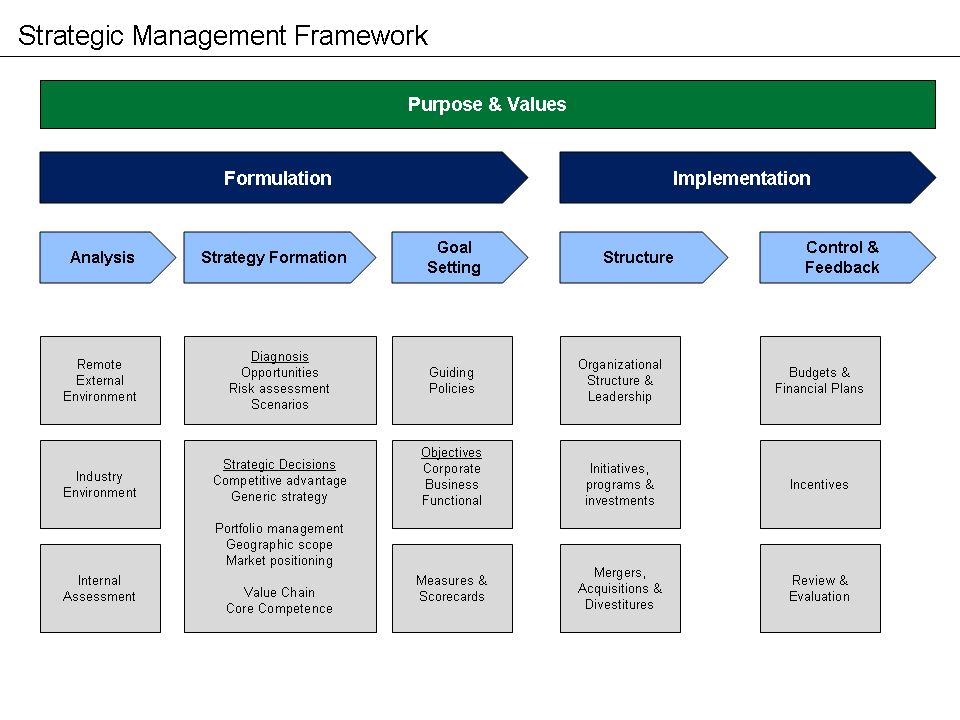
The COSO framework is structured around five interrelated components, often remembered by the acronym GOPRO:
| Component | Description |
|---|---|
| Governance & Culture | Sets the organization's tone, reinforcing the importance of, and establishing oversight responsibilities for, enterprise risk management. |
| Objective-Setting & Strategy | Integrates ERM with strategic planning. The organization sets its risk appetite in the context of creating, preserving, and realizing value. |
| Performance | Identifies and assesses risks that may affect the achievement of strategy and business objectives. Risks are prioritized by severity. |
| Review & Revision | The organization reviews entity performance and considers how well the ERM components are functioning over time. |
| Ongoing Information, Communication, & Reporting | Involves the continual process of obtaining and sharing information from internal and external sources across the entity. |
Unlike ISO 31000's broader guidelines, the COSO framework is more prescriptive. It is designed to help management and boards of directors understand and articulate the level of risk the organization is willing to accept in pursuit of its goals.
By following the COSO framework, an organization can manage risk in a comprehensive way, ensuring they are aligned with the entity’s overall strategy and business objectives.
Choosing and Integrating a Framework
So, which framework is better? It’s not about which one is superior, but which one is the best fit. ISO 31000 is often seen as more flexible and adaptable, making it a good choice for diverse, global organizations. COSO is often favored by companies, particularly in the U.S., that need a strong link between risk management and their strategic and financial performance, often for regulatory reasons.
Many organizations don't choose one over the other. Instead, they create a hybrid system, borrowing the principles and flexibility of ISO 31000 and combining them with the strategy-focused components of COSO. The ultimate goal is not to perfectly implement a specific framework by the book.
The goal is to build a risk management system that becomes part of the organization's DNA, influencing every major decision and helping to achieve strategic objectives reliably and sustainably.
Integrating any framework requires a significant cultural shift. It starts with leadership commitment and cascades down through every department. When done right, ERM isn't just a compliance exercise run by a small team. It becomes a tool used by everyone to make better, more informed decisions.
Ready to check your understanding of these advanced frameworks?
An organization seeking a flexible, universal set of guidelines for risk management that can be adapted to any industry or location would be best served by which framework?
The COSO ERM framework is subtitled "Integrating with Strategy and Performance." This reveals its core focus is on linking risk management directly with what?
By mastering these frameworks, organizations move from simply reacting to threats to proactively managing uncertainty, turning potential challenges into opportunities for growth and innovation.