Advanced English Speaking Fluency
Sophisticated Sentence Structures
Building More Intricate Sentences
You already know how to build a basic English sentence: subject, verb, object. It's a solid foundation. But to express complex ideas and sound more natural in conversation, you need to connect those simple ideas into more sophisticated structures. This is where complex and compound-complex sentences come in.
A complex sentence links an independent clause (a complete thought) with one or more dependent clauses (incomplete thoughts). A compound-complex sentence takes it a step further, joining at least two independent clauses with at least one dependent clause. Think of them as Lego sets. Simple sentences are individual bricks; complex sentences are small structures you build by snapping those bricks together.
The key is the connector: the subordinating conjunction. Words like 'although,' 'because,' 'since,' 'while,' and 'if' are the glue that holds a dependent clause to an independent one.
For example:
- Simple: The project was successful.
- Complex: Although the budget was tight, the project was successful.
- Compound-Complex: Although the budget was tight, the project was successful, and the team celebrated their achievement.
Notice how the final sentence conveys multiple related ideas with a clear logical flow. This is the goal: to layer your thoughts gracefully.
Adding Detail with Relative Clauses
Another powerful tool for adding information is the relative clause—a type of dependent clause that describes a noun. Introduced by relative pronouns like who, whom, whose, which, and that, they let you pack in descriptive detail without breaking the flow of your sentence.
There are two main types:
-
Defining Clauses: These provide essential information to identify the noun. You can't remove them without changing the core meaning. They often use that for things and who for people. Example: The report that I submitted yesterday needs revision.
-
Non-defining Clauses: These add extra, non-essential information. They are set off by commas and often use which for things. Example: The report, which is over 50 pages long, needs revision.
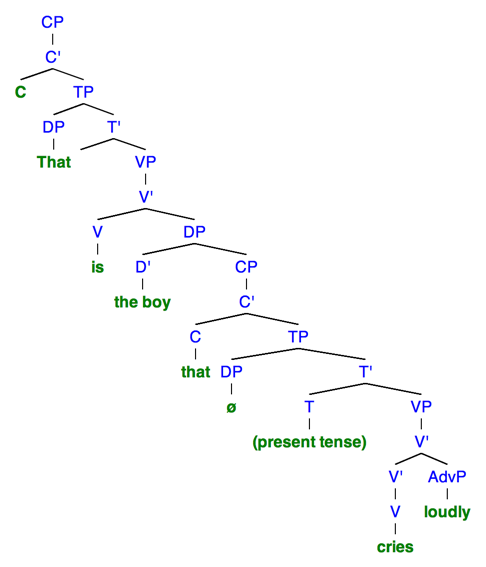
Choosing between that and which can be tricky. A good rule of thumb is to use that for essential information (no commas) and which for extra details (with commas). This small distinction adds precision to your writing and speech.
Shifting Focus and Formality
The way you structure a sentence can subtly change its emphasis. The most common way to do this is with the passive voice. You're likely familiar with the active voice, where the subject performs the action (e.g., "The team completed the analysis.").
The passive voice flips this around, making the recipient of the action the subject (e.g., "The analysis was completed by the team."). We use the passive voice for a few key reasons:
- To emphasize the action or the result, not the person who did it.
- When the actor is unknown, irrelevant, or obvious.
- To create a more formal or objective tone, common in academic and professional writing.
| Active Voice | Passive Voice | When to Use Passive |
|---|---|---|
| We made a mistake. | A mistake was made. | To de-emphasize blame. |
| Someone stole my wallet. | My wallet was stolen. | The actor is unknown. |
| Researchers must follow the protocol. | The protocol must be followed. | To sound more formal and objective. |
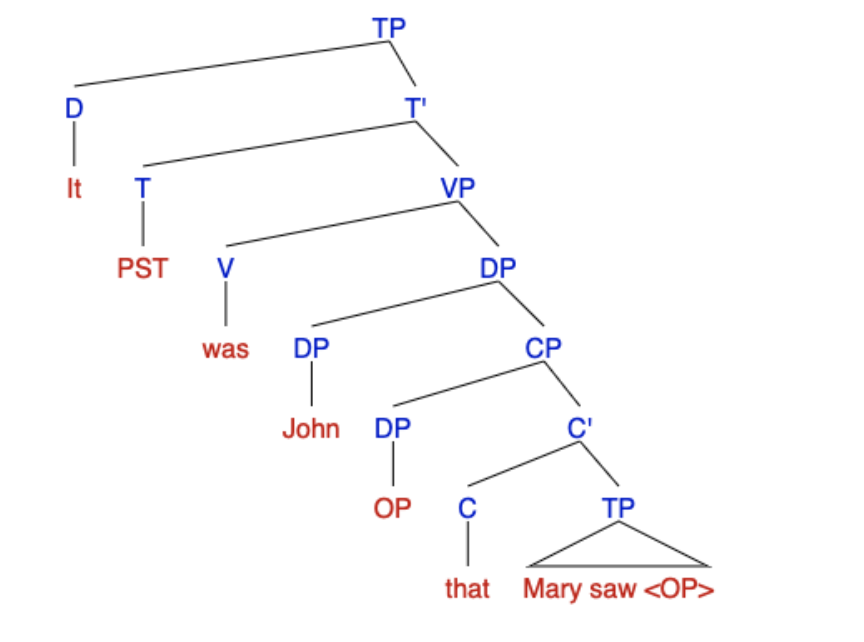
Another technique for emphasis is using a —specifically an 'it-cleft.' This structure splits a single clause into two, using the pattern It + to be + [emphasized part] + that/who.... Its only job is to draw the listener's attention to a specific piece of information.
Consider the difference:
- Standard: Sarah submitted the final report.
- It-cleft: It was Sarah who submitted the final report.
The second sentence immediately answers the unspoken question, "Who submitted it?" It adds a layer of insistence and clarity, which is very useful in debates or when correcting a misunderstanding.
Which of the following is a compound-complex sentence?
What is the primary function of an 'it-cleft' sentence, such as "It was Sarah who submitted the final report"?