Advanced English Language Studies
Origins of English
The Family Tree of English
The story of English doesn't begin in England. It starts thousands of years ago with a language we've never actually heard: Proto-Indo-European, or PIE for short. No one wrote it down, but linguists have pieced it together by studying its descendants. It’s the great-great-grandparent of hundreds of modern languages, from Hindi and Persian to Spanish and English.
Think of PIE as a single, ancient tree trunk. Over time, massive branches grew out from it, each one becoming a major language family.
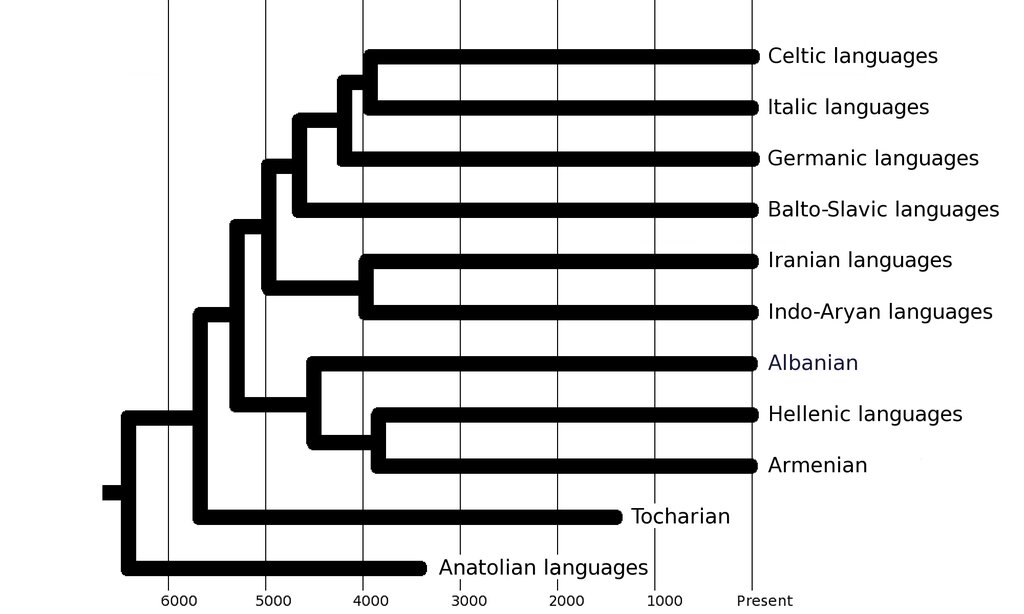
One of these branches was Proto-Germanic. This was the common tongue spoken by tribes in Northern Europe around 500 BC. It developed its own unique sounds and vocabulary, distinct from other PIE offshoots like Latin or Greek. Proto-Germanic is the direct ancestor of modern German, Dutch, Swedish, and, of course, English.
A New Home for a New Language
For centuries, Britain was home to Celtic-speaking peoples known as Britons. The Romans had a presence there for a while, but by the early 5th century, they had withdrawn their legions, leaving the island vulnerable.
This opened the door for new groups to cross the North Sea. Three closely related Germanic tribes—the Angles, the Saxons, and the Jutes—began migrating from what is now Denmark and northern Germany. They were looking for new lands to farm and settle.
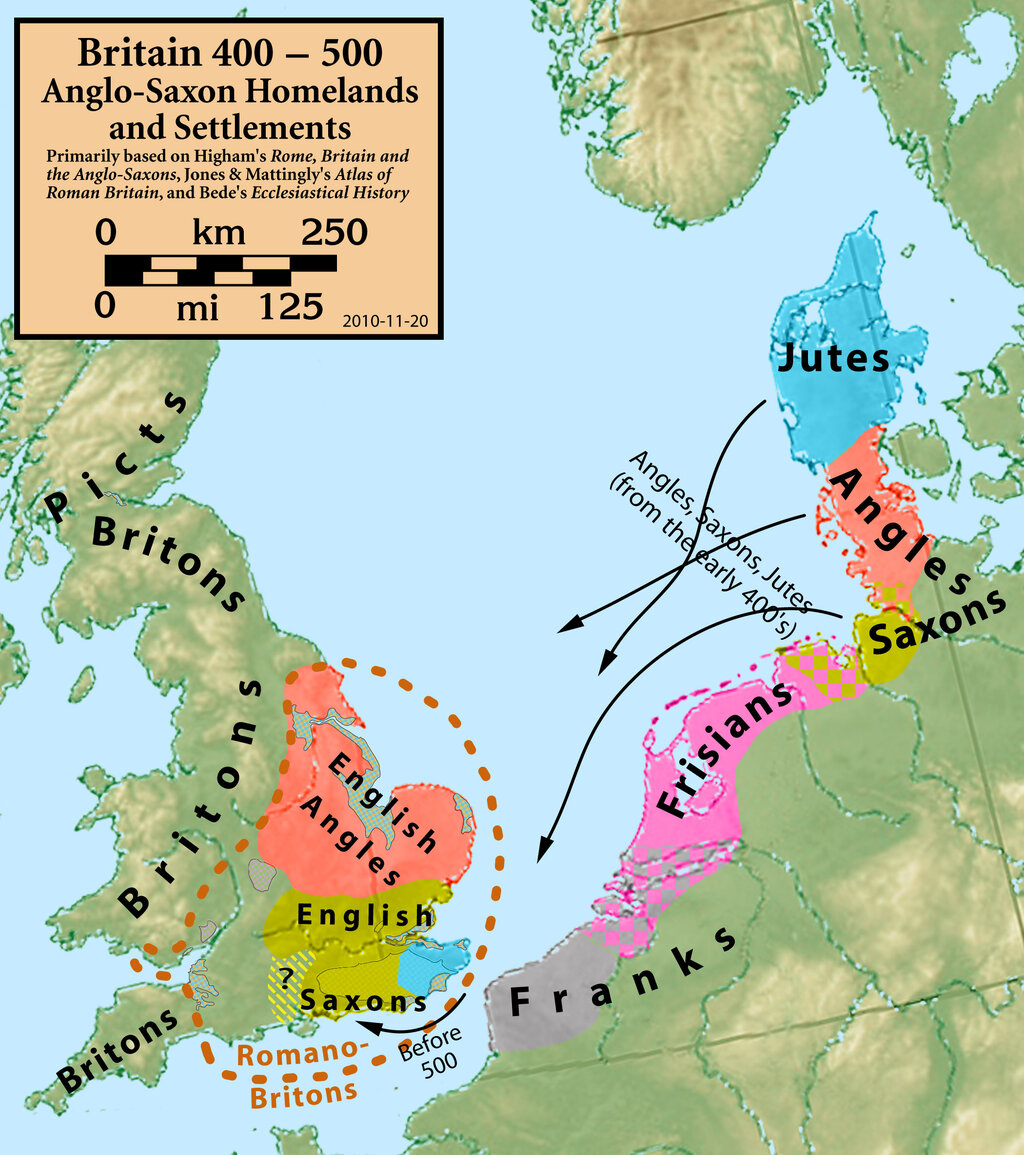
As these tribes settled in different parts of the island, they pushed the native Britons to the west and north, into areas we now know as Wales, Cornwall, and Scotland. The dialects spoken by the Angles, Saxons, and Jutes began to merge. This blend of West Germanic dialects in a new land created a distinct language: Old English, also known as Anglo-Saxon.
Old English developed out of the combined dialects of Germanic tribes called the Angles, Saxons, and Jutes, who invaded Britain in the 5th century.
What Was Old English Like?
If you heard Old English today, you probably wouldn't recognize it as English. The vocabulary was almost entirely Germanic, and its grammar was much more complex. For example, Old English was a highly inflected language.
Inflection
noun
A change in the form of a word (typically the ending) to express a grammatical function or attribute such as tense, mood, person, number, case, and gender.
Nouns, pronouns, and adjectives changed their endings depending on their function in a sentence—whether they were the subject, object, or something else. Word order was more flexible than in Modern English because the inflections did the grammatical heavy lifting. Here’s a line from the epic poem Beowulf:
Hwæt! We Gardena in geardagum, þeodcyninga, þrym gefrunon. (Listen! We have heard of the glory of the Spear-Danes, of the kings of the people, in days of yore.)
Outside Influences
While Old English was fundamentally Germanic, it didn't exist in a vacuum. It picked up words from two other major languages.
Celtic: Surprisingly, the language of the native Britons had little impact on Old English vocabulary. Only a handful of words were borrowed, but many place names, especially for rivers and hills, have Celtic origins. For instance, the rivers Thames, Avon, and Trent all come from Celtic words.
Latin: Latin had a more significant influence, arriving in two distinct waves. The first came from the Roman occupation of Britain before the Anglo-Saxons arrived, leaving behind words related to trade and military life, such as weall (wall), strǣt (street), and cēap (trade, which gives us "cheap"). The second, and much larger, wave came with the conversion of the Anglo-Saxons to Christianity in the 7th century. Missionaries introduced hundreds of words related to religion, learning, and church life, such as abbot, hymn, priest, and school.
This new language, forged from Germanic dialects and seasoned with a bit of Latin, laid the foundation for the English we speak today. It was a robust and expressive tongue that would soon face even greater changes.
What is the reconstructed, unwritten language that is the ancestor to hundreds of modern languages including English, Spanish, and Hindi?
Which characteristic of Old English grammar made its word order more flexible than that of Modern English?