Advanced Engineering and Pathophysiology of CGM Systems
Enzymatic Sensor Architectures
First-Generation: Oxygen Dependence
The foundational mechanism for early electrochemical glucose sensors relies on the enzyme glucose oxidase (GOx). This system operates through a two-step cascade. First, GOx catalyzes the oxidation of glucose using molecular oxygen as the natural electron acceptor. This reaction produces gluconolactone and hydrogen peroxide (H₂O₂).
The generated H₂O₂ then diffuses to the surface of a platinum-iridium (Pt-Ir) working electrode. Here, it is electrochemically oxidized at a relatively high potential, typically around +0.6 V versus a silver/silver chloride (Ag/AgCl) reference electrode. The resulting current is directly proportional to the H₂O₂ concentration, and thus, to the initial glucose concentration.
The primary limitation of this architecture is its dependence on a constant, sufficient supply of oxygen. In physiological conditions, particularly in subcutaneous tissue where CGMs operate, oxygen concentration can be variable and often much lower than glucose concentration. This "oxygen deficit" leads to an underestimation of glucose levels, as the reaction rate becomes limited by O₂ availability rather than glucose.
Second-Generation: Redox Mediators
To circumvent the oxygen deficit problem, second-generation sensors incorporate artificial electron acceptors, known as redox mediators. These molecules act as electron shuttles, replacing O₂ in the catalytic cycle. They efficiently transfer electrons from the reduced enzyme's active site directly to the electrode surface.
A common class of mediators includes ferrocene derivatives. The process involves the mediator in its oxidized state (M_ox) reacting with the reduced GOx, followed by electrochemical regeneration of the mediator at the electrode.
This mediated electron transfer (MET) approach offers significant advantages. It operates at a much lower potential (around +0.2 V), which minimizes interference from other electroactive species in the blood, such as ascorbic acid and uric acid. Most importantly, it makes the sensor's response independent of local oxygen fluctuations.
Advanced Architectures
Third-generation sensors aim for direct electron transfer (DET) by "wiring" the enzyme's redox center directly to the electrode. This eliminates the need for any diffusible species (O₂ or mediators). The challenge is that the FAD/FADH₂ redox center in GOx is buried deep within a protective protein shell, preventing efficient electron tunneling. Strategies to overcome this include orienting enzymes on the electrode using self-assembled monolayers or entrapping them within conductive polymers or redox hydrogels that act as a series of fixed relay stations for electrons.
DET sensors are effectively reagentless, offering a simplified design and potentially greater long-term stability by eliminating mediator leaching.
Fourth-generation, non-enzymatic sensors abandon the biological component entirely. Instead, they rely on the direct electrocatalytic oxidation of glucose on the surface of nanostructured metal or metal-alloy electrodes (e.g., Pt, Au, Ni, Cu). These materials offer high surface area and catalytic activity. While this approach avoids the inherent instability and limited lifespan of enzymes, it faces significant challenges in achieving high selectivity for glucose over interfering compounds and preventing surface fouling by reaction intermediates.
The Diffusion-Limiting Membrane
Regardless of the generation, nearly all CGM sensors are governed by a critical component: the diffusion-limiting membrane. The concentration of glucose in the body (typically 4-10 mM) far exceeds the Michaelis constant () of GOx (around 1 mM). Without intervention, the enzyme would quickly become saturated, and the sensor response would become non-linear and insensitive to changes in glucose at hyperglycemic levels.
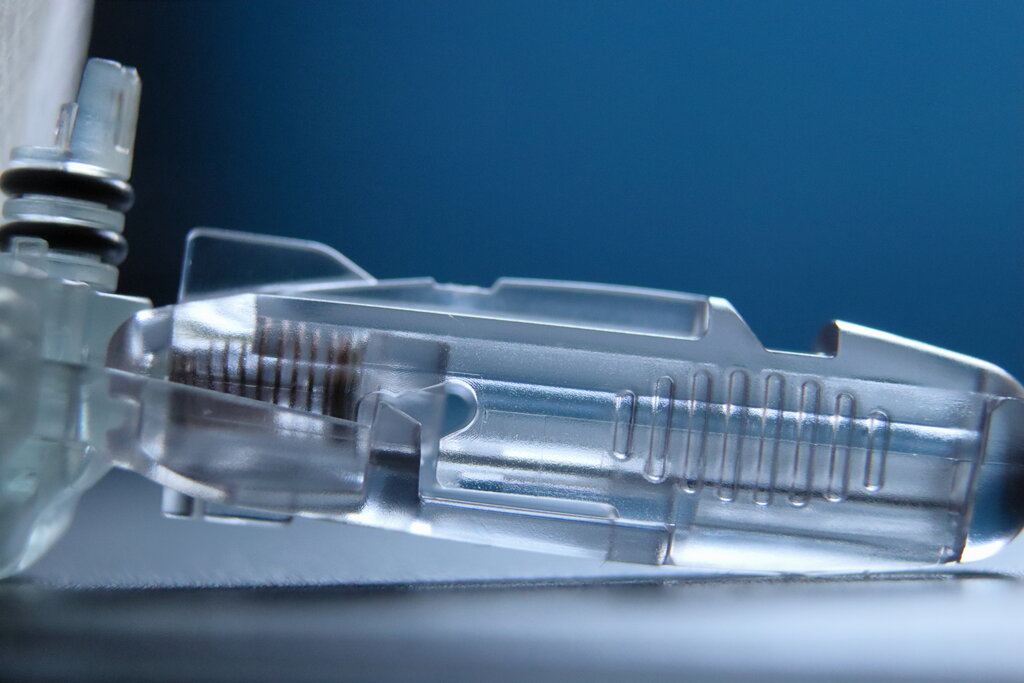
A polymer membrane is placed over the enzyme layer to restrict the flux of glucose to the active site. This creates a diffusion-limited regime where the rate of glucose transport across the membrane, not the enzymatic reaction rate, is the limiting factor. By carefully engineering the membrane's permeability, the sensor's response remains linear across the entire physiological glucose range, ensuring accurate readings from hypo- to hyperglycemia.