Advanced Emotional Regulation Techniques
Neural Circuits of Emotion
The Brain's Two Roads for Emotion
When you encounter an emotional trigger, your brain doesn't just react; it processes the information along two distinct pathways. Think of it as a fork in the road for incoming sensory data, which first arrives at the thalamus, your brain's central sorting office.
The first path is the 'low road'. It’s a direct, high-speed connection from the thalamus straight to the amygdala, the brain's alarm system. This route is incredibly fast but lacks detail. It makes a quick, rough assessment of the situation: threat or no threat? This pathway is responsible for that initial, gut-level emotional reaction before you've even had a chance to consciously think about what's happening. It’s the jolt of fear you feel when a car horn blares unexpectedly.
The second path is the 'high road'. This route is more scenic. Information travels from the thalamus to the sensory cortex and then on to the prefrontal cortex (PFC), your brain’s executive centre. The PFC analyses the data in detail, considers the context, and makes a reasoned judgment. Only then does it send a signal to the amygdala, either confirming the alarm or telling it to stand down. This is the moment you realise the car horn was from a movie, not a real danger, and the initial fear subsides. The constant communication between the amygdala and the PFC is the biological foundation of emotional regulation.
The Chemical Cascade
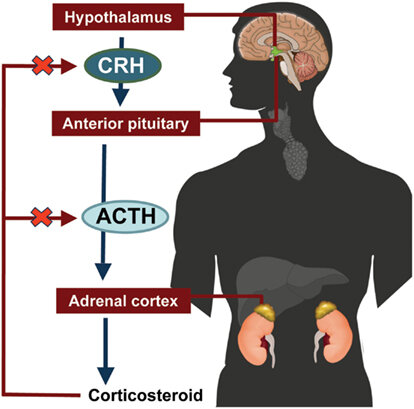
When the amygdala sounds the alarm, it doesn't just act alone. It triggers a powerful chemical cascade that floods your body with stress hormones. This response begins when the amygdala sends a distress signal to the hypothalamus, the command centre for many of your body's essential functions. This kicks off the , a complex communication network between the hypothalamus, the pituitary gland, and the adrenal glands.
First, the adrenal glands release adrenaline. This gives you that immediate surge of energy. Your heart pounds, your breathing quickens, and your senses sharpen. It's the body's way of preparing you to deal with an immediate, physical threat. A few minutes later, if the threat persists, the HPA axis releases cortisol. This is a longer-acting stress hormone that keeps your system on high alert, mobilising sugar into the bloodstream for energy and suppressing non-essential functions like digestion and the immune system. This hormonal one-two punch is why the physical sensations of an emotional hijack can linger long after the initial event has passed.
Your Body's Built-in Brake
While the sympathetic nervous system revs your engine with adrenaline and cortisol, the parasympathetic nervous system acts as the brake. A key player in this braking system is the . It is the longest cranial nerve, wandering from the brainstem down through the neck and into the chest and abdomen, connecting with nearly every major organ along the way.
When the vagus nerve is stimulated, it slows your heart rate, promotes digestion, and sends calming signals back to your brain. This is the physiological basis for many grounding techniques. Deep, slow breathing, for example, directly stimulates the vagus nerve, which in turn tells the brain that the danger has passed. By consciously activating this nerve, you can manually apply the brakes on an and help your prefrontal cortex come back online.
This highlights a crucial point: emotional regulation is not just a mental exercise. It's a physiological skill. Understanding the interplay between the amygdala, the PFC, your hormones, and the vagus nerve gives you a blueprint for targeted intervention.
Rewiring Your Brain
Your brain isn't static. The neural circuits involved in emotional regulation can be strengthened or weakened over time through a process called neuroplasticity. Every time you successfully navigate an emotional trigger—by taking a deep breath, reframing a negative thought, or choosing a measured response over a reactive one—you are strengthening the 'high road' pathway between your prefrontal cortex and your amygdala.
Think of it like building a muscle. Initially, overriding the amygdala's powerful alarm signal requires significant conscious effort. But with consistent practice, the regulatory pathways become more efficient. The PFC gets better and faster at interpreting situations and calming the amygdala. Over time, what once required intense effort becomes more automatic. You are literally reshaping your brain to be more resilient and less reactive. This is the biological promise of practicing advanced emotional regulation.
When sensory information about a potential threat is processed, what are the two distinct pathways it can take in the brain?
Which part of the brain acts as the 'alarm system', making a quick, rough assessment of a situation and triggering an initial gut-level reaction?