Advanced Electric Longboard Design
Introduction to 3D Printing
Building from Nothing
Imagine building a sandcastle, but instead of packing sand into a bucket, you lay it down one grain at a time. That’s the core idea behind 3D printing. It’s a process called additive manufacturing, where an object is built layer by tiny layer from the ground up.
additive manufacturing
noun
The industrial production name for 3D printing; a process of creating an object by building it one layer at a time.
Traditional manufacturing is often subtractive. Think of a sculptor carving a statue from a block of marble. They start with a solid block and remove material until the final shape is revealed. Additive manufacturing does the opposite. It starts with nothing and adds material precisely where it's needed, following a digital blueprint.
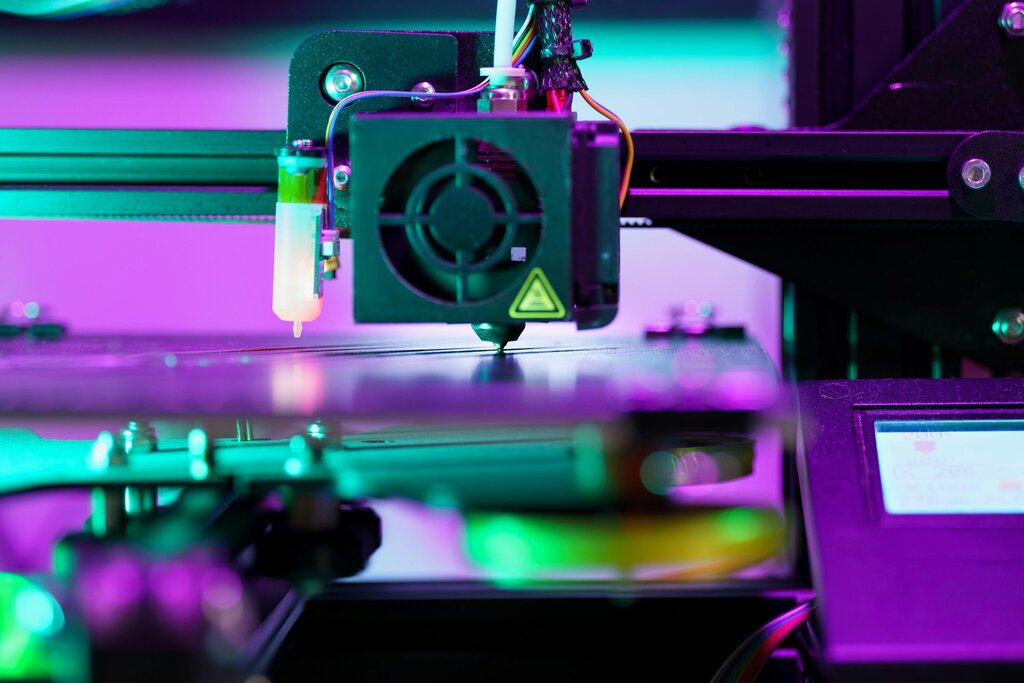
For building an electric longboard, this method is perfect. We can create custom enclosures for batteries, mounts for motors, and protective covers for electronics. The most common type of printer for this kind of work is a Fused Deposition Modeling (FDM) printer. It works by melting a plastic filament and extruding it through a tiny nozzle, drawing out each layer of the object. It's like a very precise, robotic hot glue gun.
Choosing Your Plastic
The material you print with, called filament, is just as important as the printer itself. For longboard parts that need to handle vibration, stress, and outdoor conditions, not just any plastic will do. Let's look at the three most common choices.
| Material | Best For | Key Pros | Key Cons |
|---|---|---|---|
| PLA | Prototyping, non-structural parts | Easy to print, rigid, biodegradable | Brittle, low heat resistance |
| PETG | Motor mounts, enclosures | Strong, durable, good layer adhesion | Can be stringy, absorbs moisture |
| ABS | Enclosures, structural parts | Very strong, high heat resistance | Hard to print, requires ventilation |
PLA (Polylactic Acid) is the easiest to work with. It’s great for making initial prototypes to check if your parts fit correctly. However, it's brittle and can warp in a hot car, so it's not ideal for final, functional parts on a longboard.
PETG (Polyethylene Terephthalate Glycol) is a fantastic all-rounder. It's a sweet spot between PLA's ease of use and ABS's strength. It's tough, has a little flex, and holds up well to impacts, making it a solid choice for motor mounts and battery enclosures that will take a beating.
ABS (Acrylonitrile Butadiene Styrene) is the same stuff LEGO bricks are made from. It’s extremely durable and can handle high temperatures. The trade-off is that it's trickier to print. It tends to warp as it cools and releases fumes, so you need a well-ventilated space and often an enclosed printer.
For most electric longboard parts, PETG offers the best balance of strength, durability, and printability.
Designing for Strength
Creating a strong part isn't just about picking the right material. How you design and print it matters immensely. Since FDM printers build in layers, the object is weakest along these layer lines, like a stack of pancakes that’s easier to pull apart than to bite through.
How to design for 3D printing might seem daunting at first, but with the right approach, anyone can create successful parts that print smoothly.
First, consider print orientation. You want to orient your part on the printer bed so that the forces it will experience are perpendicular to the layer lines, not parallel to them. If you’re printing a motor mount, print it lying flat so the layers are stacked vertically. This makes it much stronger against the pulling force of the motor.
Second, think about infill. 3D printed parts are rarely solid plastic. The inside is typically filled with a honeycomb or grid pattern. For a structural part like a motor mount, using a higher infill percentage, say 40-50%, will make it much more robust.
Finally, add more walls. The outer shell of your print is called the wall. Increasing the number of wall layers from the standard two or three to four or five can dramatically increase the part's overall strength without adding much print time or material cost.
Time to see what you've learned about getting started with 3D printing.
What is the key difference between additive manufacturing (like 3D printing) and subtractive manufacturing (like sculpting)?
You need to print a durable motor mount for an electric longboard that will experience stress and vibration. Which filament is the best choice for this functional part?
With these fundamentals in mind, you're ready to move from digital design to physical part.