Advanced eBay Seller Onboarding and Compliance
Account Strategy and Type
Personal vs. Business Account
When you start selling on eBay, you face a key decision: should you use a personal or a business account? While a personal account is fine for occasionally selling items from around your house, it's not built for growth. If your goal is to build a professional selling operation, a business account is the necessary foundation.
A personal account ties your activities to you as an individual. A business account, on the other hand, allows you to operate under a legal business name, like a sole proprietorship or LLC. This isn't just a cosmetic difference—it affects your branding, legal standing, and access to powerful selling tools.
Start with a business account, not personal – even if you're testing the waters.
For serious sellers, starting with a business account from day one prevents logistical headaches later. It establishes a clean separation between your personal finances and your business operations, which is crucial for accurate bookkeeping and tax reporting. If you already have a personal account with a solid sales history, you can convert it, but starting fresh is often simpler for long-term management.
The Business Account Advantage
Opting for a business account unlocks a suite of features designed for scaling. The most significant is full access to the Seller Hub, your central dashboard for managing and analyzing your entire eBay business. While personal accounts have a simplified version, the business Seller Hub provides the comprehensive data needed for strategic decisions.
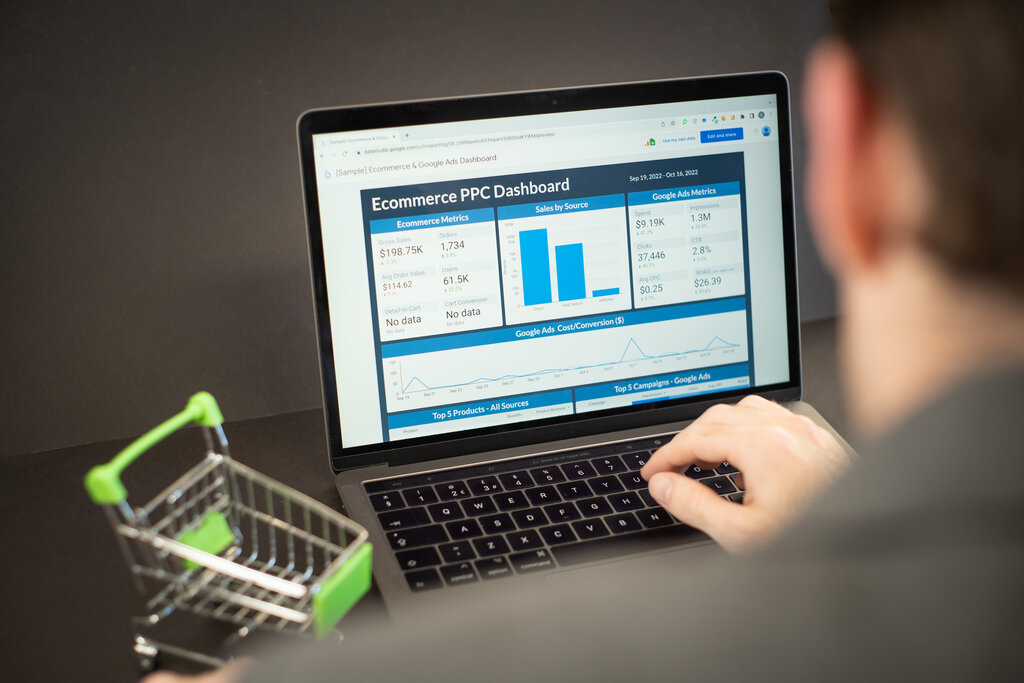
Within the Seller Hub, you gain access to tools like Promotions Manager. This allows you to create sophisticated sales events, such as order discounts (e.g., "save 10% on orders over $50"), shipping discounts, and coupon codes. These promotional tools are essential for driving traffic and increasing average order value, giving you a competitive edge.
Furthermore, a business account makes it easier to request higher selling limits. eBay imposes limits on new sellers to ensure they can meet customer expectations. By operating as a registered business, you signal to eBay that you are a serious, professional entity, which can help streamline the process of getting those limits increased as your sales volume grows.
Professional Fee Structures
The fees you pay on eBay are directly tied to your account type and whether you subscribe to an eBay Store. While both personal and business accounts pay final value fees (a percentage of the total sale amount), business accounts are better positioned to save money at scale through a Store subscription. These subscriptions offer a certain number of free listings per month and reduced final value fees in many categories.
Here’s a simplified look at how fee structures differ with an eBay Store subscription, which is a common feature for business accounts. The rates for 2025-2026 continue this model, rewarding higher-volume sellers with lower effective costs.
| Feature | Basic Store | Premium Store | Anchor Store |
|---|---|---|---|
| Monthly Cost (approx.) | $22-$28 | $60-$75 | $300-$350 |
| Free Fixed Price Listings | Up to 1,000 | Up to 10,000 | Up to 25,000 |
| Final Value Fee (most cats.) | 12.35% | 11.5% | 10.2% |
| Promotions Manager | Included | Included | Included |
As you can see, as your sales volume and listing count grow, upgrading your Store subscription significantly reduces your per-item costs. This scaling advantage is a primary reason professional sellers use business accounts. It also reinforces the importance of maintaining separate finances.
Separating your business and personal accounts is the single most important thing you can do to manage your business finances.
A dedicated business bank account linked to your eBay account simplifies tracking revenue and expenses, making financial management more efficient and accurate.
Ready to test your knowledge?
What is the primary reason for a serious seller to choose an eBay business account over a personal account?
A seller wants to offer a special promotion, such as "save 10% on orders over $50". Which tool, fully unlocked with a business account, is used for this?
Choosing the right account type from the start is the first step in building a scalable and professional eBay business. It provides the tools, branding, and financial structure needed for long-term success.