Advanced Early Childhood Development
Integrated Developmental Neurobiology
The Brain's Air Traffic Control
You already know that children’s brains develop over time, but the process is far from a simple, linear assembly line. It’s more like building a bustling city. The first structures are basic, essential services. But for the city to thrive, it needs a sophisticated command center. In the developing brain, that command center is the Prefrontal Cortex (PFC). Located at the very front of the brain, the PFC acts as the air traffic control tower for our thoughts and actions.
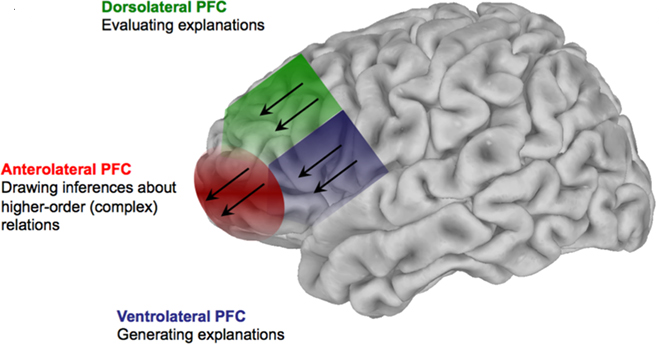
This region governs our executive functions: a set of critical cognitive skills. Think of them as the brain's management team.
- Working memory is the brain's sticky note system. It allows us to hold and manipulate information for short periods, like remembering the steps of a recipe while cooking.
- Inhibitory control is our mental brake pedal. It helps us resist impulses and stay focused on a goal, like a child waiting their turn instead of grabbing a toy.
- Cognitive flexibility lets us switch gears and adapt to new rules or situations. It’s what allows a child to transition from building blocks to a game of tag without a meltdown.
The PFC doesn't come fully online at birth. Its development is a long, slow burn that extends well into early adulthood, which explains why a toddler's self-control is so different from a teenager's.
Building and Refining the Circuits
How does the brain build these complex executive functions? It starts with an explosive boom of construction followed by careful, selective renovation. Early in life, the brain undergoes a process called synaptogenesis, creating far more neural connections, or synapses, than it will ultimately need. This initial overproduction creates a dense, tangled web of potential pathways.
Following this boom is a crucial sculpting phase known as . The brain begins to trim away the unused or inefficient connections. This isn't a loss of function; it's a gain in efficiency. The neural pathways that are used frequently are strengthened, while those that are neglected wither away. This "use it or lose it" principle ensures that the brain's architecture is tailored to the individual's specific environment and experiences. It’s how the brain transitions from a state of broad potential to one of specialized, high-speed processing needed for higher-order thought.
This advantage is in part due to the brain cross-regional temporal development mechanisms, where the progressive formation, reorganization, and pruning of connections from basic to advanced regions, facilitate knowledge transfer and prevent network redundancy.
The Biology of Serve and Return
The experiences that drive synaptogenesis and pruning aren't abstract. They happen through moment-to-moment interactions with caregivers. Scientists call this process "serve and return." A baby babbles, gestures, or cries (the serve), and a responsive adult returns the serve with eye contact, words, or a hug. This seemingly simple social game is a powerful engine of brain development.
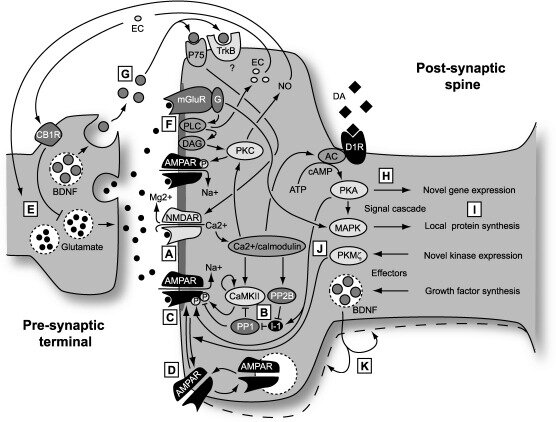
Each serve-and-return interaction triggers a cascade of neural activity. When these interactions are reliable and consistent, they build and strengthen the very circuits needed for emotional regulation and executive function. The caregiver's response tells the child's developing brain that their signals matter, which helps establish a sense of security and control. Biologically, these repeated interactions are firing and wiring the neural connections in the PFC and limbic system, laying the literal groundwork for future learning, behavior, and mental health. They are not just nice social activities; they are biological imperatives for healthy brain architecture.
Moving to Think
Development isn't siloed. Progress in one area often unlocks growth in another, creating a powerful feedback loop. Motor development is a prime example. When a baby learns to crawl, it's not just a physical milestone. It's a cognitive and social revolution.
Suddenly, the infant is no longer a passive observer. They are an active explorer. This new mobility allows them to investigate objects, learn about cause and effect (if I push this, it falls), and develop a better understanding of spatial relationships. Their world expands from what's within arm's reach to the entire room.
This motor achievement also transforms their social world. They can now initiate social interactions by moving toward a caregiver or a sibling. They can engage in more complex joint attention, following a parent's gaze to an object and then crawling over to it. This constant, dynamic interplay between moving, thinking, and relating shows how development is a deeply integrated process. Each skill builds on the last, bridging the gap between basic motor patterns and complex, higher-order cognition.
These developmental periods, marked by rapid synapse formation and pruning, create sensitive windows for learning. The brain is uniquely primed to build its executive function skills during early childhood, making supportive experiences and interactions during this time especially impactful. Let's review some key terms from this section.
Now, let's test your understanding of how these neurobiological processes come together to shape development.
Which part of the brain is described as the “command center” or “air traffic control tower” for executive functions?
A child is building a tower, but their friend wants to play a matching game. The child successfully puts the blocks away and changes their focus to the new game's rules. This ability to switch gears is an example of which executive function?
Understanding this integrated process helps us see why early experiences are so powerful. The brain doesn’t just grow; it is actively built by the interplay of biology and experience, creating a foundation that lasts a lifetime.