Advanced E-commerce Systems and Strategic Scaling
Headless Architectural Frameworks
Decoupled Architecture Paradigms
The monolithic e-commerce platform, with its tightly coupled frontend and backend, is giving way to more flexible, decoupled architectures. In a headless model, the presentation layer is severed from the backend business logic. This separation allows for independent scaling, deployment, and technology stack evolution for different parts of the system, such as product management, order processing, and content delivery.
This architectural shift enables a microservices-based approach where each business capability—catalog, cart, checkout, search—is a discrete, independently deployable service. While this grants enormous flexibility, it also introduces complexity in orchestrating data flow to the client application. The frontend, often a React-based framework like Next.js, now needs to aggregate data from numerous APIs, each with its own contract and latency characteristics.
Headless commerce separates the front-end (what users see) from the back-end (data, inventory, logic).
The BFF Pattern
To manage the chaos of multiple downstream services, the Backend for Frontend (BFF) pattern introduces an intermediary layer. A BFF is a dedicated backend service designed to serve a specific frontend application. It acts as a facade, aggregating calls to various microservices, translating data formats, and tailoring payloads specifically for the needs of the client. For example, a mobile app's BFF might fetch data from the product, user, and review services, then combine and trim it into a single, lightweight JSON object optimized for a product detail page.
This pattern prevents the frontend from becoming bloated with business logic and API orchestration. It isolates clients from backend refactoring and allows backend teams to build generalized services while the BFF team focuses on optimizing the frontend data delivery experience. The trade-off is the operational overhead of maintaining an additional service, but for complex applications, the separation of concerns is invaluable.
Federating Commerce Data
GraphQL has emerged as a powerful tool for headless frontends, allowing clients to request precisely the data they need. However, in a microservices environment, a single GraphQL schema becomes a new monolith. GraphQL federation solves this by allowing each microservice to own and expose its part of the data graph. An API gateway then composes these distributed schemas into a single, unified graph for the client.
For instance, the product service defines the Product type with fields like id and price. The content service (e.g., Contentful) can then extend the Product type by adding a longDescription field. The client can query for price and longDescription in a single request, completely unaware that the data originates from two separate services. This enables true ownership and independent evolution of schemas across teams.
// Product Service Schema
type Product @key(fields: "id") {
  id: ID!
  price: Float
  sku: String
}

// Reviews Service Schema
extend type Product @key(fields: "id") {
  id: ID! @external
  reviews: [Review]
}

// Gateway composes these into a single graph.
State and Scalability
The JAMstack architecture—JavaScript, APIs, and Markup—is often associated with static sites, but it scales powerfully for enterprise e-commerce. By pre-rendering pages as static HTML at build time (e.g., product listing pages), sites achieve sub-second load times. Dynamic functionality is then layered on top. Inventory checks, cart additions, and personalized recommendations are handled by client-side JavaScript making calls to serverless functions or microservice APIs.
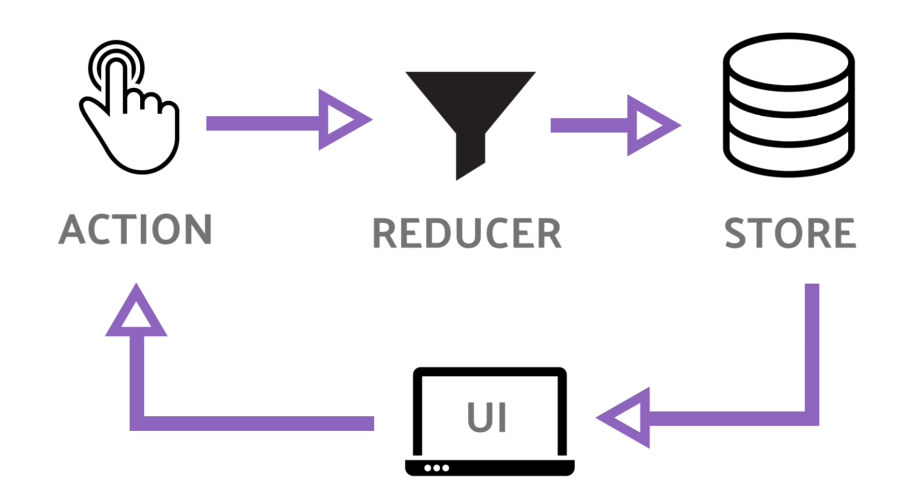
This approach shifts complexity from the server to the build process and the edge. A global CDN serves the static markup, ensuring low latency worldwide. State management on the frontend becomes critical. With data coming from a CMS (Sanity, Contentful), a commerce engine (Shopify, commercetools), and user-specific APIs, a robust state management solution like Redux or Zustand is necessary to create a coherent and reactive user experience. This distributed state must be carefully hydrated on the client to avoid mismatches between the static markup and the interactive, live data.
The key is to manage the boundary between static and dynamic content. Data that changes infrequently is best handled at build time. Data that is volatile or user-specific must be fetched at runtime. The architecture of a performant headless system lies in optimizing this balance, leveraging frameworks like Next.js for their hybrid rendering capabilities (mixing static generation, server-side rendering, and client-side fetching) to deliver a fast, scalable, and dynamic commerce experience.
Now, let's test your understanding of these advanced architectural concepts.
What is the primary role of a Backend for Frontend (BFF) in a headless e-commerce architecture?
How does GraphQL Federation solve the problem of a GraphQL schema becoming a 'new monolith' in a microservices architecture?
Successfully navigating the trade-offs between these patterns is the hallmark of modern, high-performance e-commerce engineering.