Advanced Duplex Receptacle Installation and Wiring
Advanced Terminal Connections
Beyond the Basics of Termination
You already know how to wire a standard duplex receptacle. The hot wire goes to the brass screw, the neutral to the silver, and the ground to the green. But the method you use to attach those wires to the terminal matters just as much as getting them in the right place. The long-term safety and reliability of an electrical connection depend entirely on its mechanical and electrical integrity.
We'll explore two common methods for terminating wires on a receptacle: traditional screw terminals and push-in, or "speed wire," connections. While both are permissible under specific circumstances, their performance characteristics are vastly different.
The Anatomy of a Screw Terminal
The classic screw terminal is the workhorse of electrical wiring. It relies on physical force, applied by a screwdriver, to clamp the conductor securely against a metal plate. This method creates a large surface area of contact between the wire and the terminal, which is crucial for a low-resistance connection that can effectively dissipate heat.
For a proper side-wire connection, the wire must be looped in the same direction the screw tightens—clockwise. As you tighten the screw, it pulls the loop tighter against the terminal, ensuring a solid mechanical bond. A loop bent in the wrong direction will be pushed open by the screw, resulting in a weak and unreliable connection.
Proper torque is non-negotiable. Most manufacturers specify a torque setting, typically around 12–14 inch-pounds, for their terminal screws. Under-tightening creates a loose connection, a source of arcing and heat. Over-tightening can deform the brass screw, damage the wire conductor, or even crack the device's housing. Professional electricians often use a special torque screwdriver to ensure every connection is perfect.
A variation of the screw terminal is the back-wire or clamp-style connection. Instead of looping the wire, you insert a straight, stripped conductor into a hole on the back of the device. Tightening the adjacent screw then closes a metal clamp onto the wire. This method provides the same high-quality, high-surface-area connection as side-wiring but is often faster.
The Push-In Problem
Push-in terminals, colloquially known as "back-stabbing", offer speed. You simply push a stripped solid wire into a hole, where a small spring-loaded clip grabs it. The convenience is undeniable, which is why it's common in large-scale residential construction where speed is a priority.
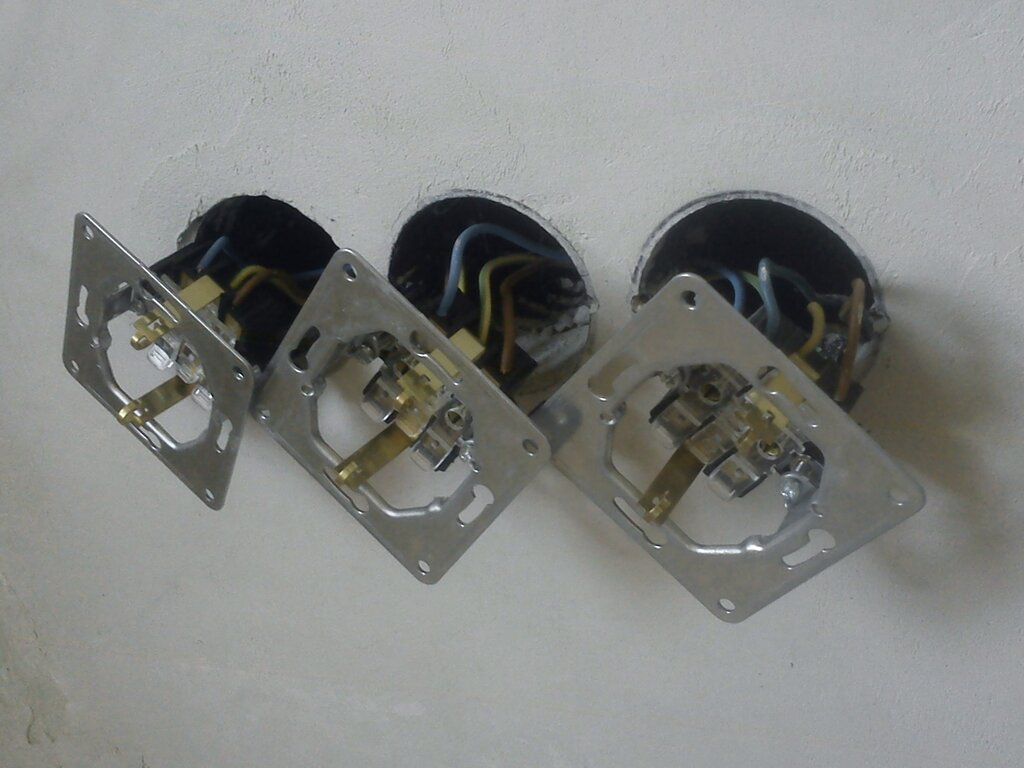
However, this speed comes at a cost to quality. The spring clip makes minimal contact with the conductor—often just a single point or a tiny line. This small contact point creates higher resistance compared to a screw terminal. Under load, this resistance generates more heat. Over time, cycles of heating and cooling can cause the spring to lose its tension, leading to a loose, hazardous connection.
Due to these limitations, the [{
}] (NEC) places strict limits on push-in terminals. They are only permitted for use with 14 AWG solid copper wire and only on 15-amp circuits. You can never use them with 12 AWG wire, on 20-amp circuits, or with stranded wire of any kind.
This is why you'll almost exclusively find push-in options on cheaper, residential-grade outlets. Specification-grade outlets, designed for commercial use and higher durability, almost always feature high-quality screw terminals with back-wire clamps.
| Feature | Screw Terminals (Side/Back-Wire) | Push-In Terminals (Back-Stab) |
|---|---|---|
| Contact Area | High | Low |
| Connection Force | High (Applied by tool) | Low (Spring tension) |
| Heat Dissipation | Excellent | Poor |
| Wire Compatibility | 14 AWG, 12 AWG; Solid or Stranded | 14 AWG Solid Only |
| Circuit Rating | 15A or 20A | 15A Only |
| Reliability | Very High | Lower; Prone to loosening |
| Typical Grade | Residential & Specification | Residential Only |
While push-in wiring may be code-compliant for a 15-amp residential lighting circuit, the superior mechanical and electrical connection of a screw terminal is always the better choice for safety and long-term performance.
What is the primary advantage of using push-in terminals (also known as "back-stabbing") when wiring an electrical receptacle?
When forming a loop to connect a wire to a side-wire screw terminal, it must be bent clockwise. Why is this direction crucial?