Advanced Dropshipping Monetization
Advanced Dropshipping Strategies
Maximize Every Sale
Once a customer decides to buy, you have a golden opportunity to increase the value of their order. This is where upselling and cross-selling come in. They’re simple techniques that can significantly boost your revenue without needing to find new customers.
Upselling is persuading a customer to buy a more expensive, upgraded, or premium version of their chosen item. If they're buying a basic drone, you might offer a model with a longer flight time and a better camera for a slightly higher price.
Cross-selling involves suggesting related products that complement the item they're already buying. For that same drone, you could recommend extra batteries, a carrying case, or propeller guards. The key is to offer items that genuinely enhance the original purchase.
One of the most effective methods that modern e-commerce stores use is upselling — a technique that not only improves the customer shopping experience but also increases the overall cart value effortlessly.
To do this well, make your offers relevant and timely. Present upsells on the product page and cross-sells in the shopping cart or during checkout. Bundling products is another powerful strategy. Offering a package deal, like a drone with two extra batteries and a case for a discounted price, makes the decision easy for the customer and increases your average order value.
Work Smarter, Not Harder
As your dropshipping business grows, you can't handle everything manually. Trying to process every order, answer every email, and update every product listing by hand will quickly lead to burnout and errors. Automation is the key to scaling your operations efficiently.
By automating repetitive tasks, you free up your time to focus on strategic activities like marketing, product research, and customer relationships. Start by automating order fulfillment. Most e-commerce platforms have apps that automatically send customer orders to your suppliers, which eliminates manual data entry and speeds up shipping.
Other key areas for automation include:
- Email Marketing: Set up automated email sequences for abandoned carts, welcome messages for new subscribers, and order confirmation emails.
- Customer Service: Use chatbots for common questions like "Where is my order?" This provides instant support and filters inquiries for your human support team.
- Inventory Management: Sync your store with your supplier's inventory to automatically update stock levels and avoid selling out-of-stock items.
Automation isn't just about saving time; it's about building a more reliable and professional business that can handle growth without falling apart.
Let Data Be Your Guide
Your store generates a huge amount of data every day. This data is one of your most valuable assets for making smart business decisions. Instead of guessing what works, you can use analytics to understand your customers and your business on a deeper level.
Start by tracking key metrics. Your e-commerce platform's dashboard is a great place to start. Pay attention to:
- Website Traffic: Where are your visitors coming from? Which channels bring in the most valuable customers?
- Conversion Rate: What percentage of visitors make a purchase? Which pages have high bounce rates?
- Average Order Value (AOV): How much does the average customer spend? Are your upselling efforts working?
- Customer Lifetime Value (CLV): How much revenue does a customer generate over their entire relationship with your store?
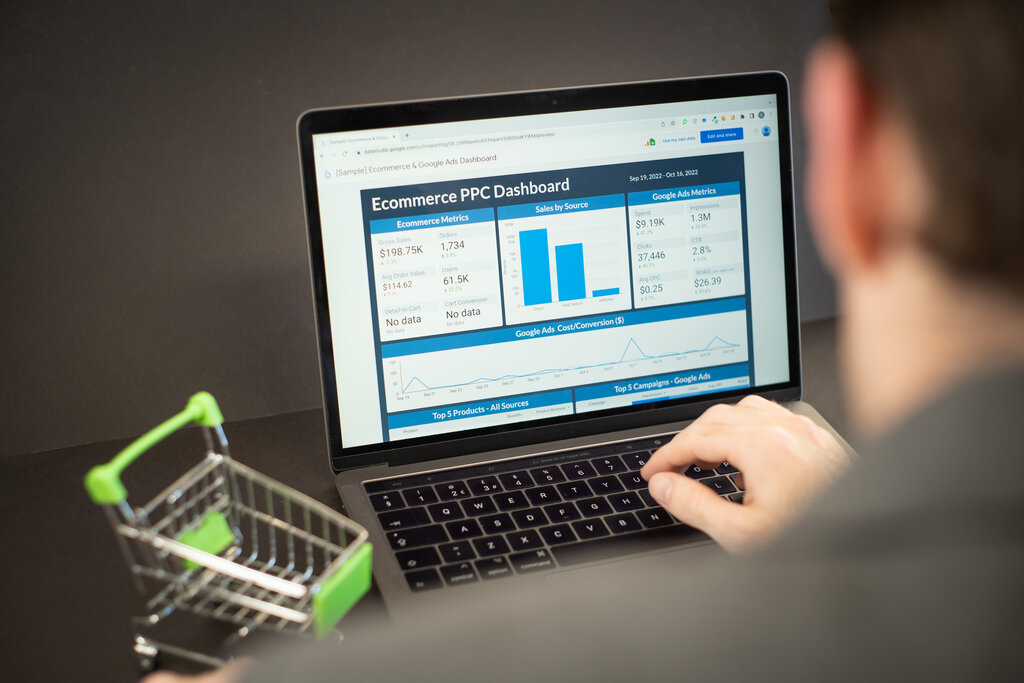
Use this information to guide your strategy. If you see that a particular ad campaign is driving lots of traffic but few sales, you might need to adjust your ad targeting or the landing page. If you notice a product is frequently bought with another, you can create a formal bundle to boost sales even further. Data transforms your decision-making from guesswork into a calculated science.
Grow Beyond One Hit
Relying on a single winning product is risky. Market trends change, competitors emerge, and supplier issues can arise. Diversifying your product offerings is crucial for long-term stability and growth.
There are a few ways to diversify intelligently. You can expand within your current niche by adding complementary products. If you sell yoga mats, consider adding yoga blocks, straps, and apparel. This strategy leverages your existing brand authority and customer base.
Alternatively, you can expand into adjacent niches. If your store focuses on home coffee brewing, you could branch out into specialty teas or high-end kitchen gadgets. This allows you to target a similar demographic with new product categories.
Before adding new products, always do your research. Validate demand, check for reliable suppliers, and analyze the competition. A scattered, unfocused product catalog can confuse customers and dilute your brand. Strategic diversification strengthens it.
The goal is to become a go-to brand for a specific lifestyle or interest, not just a seller of one popular item.
Finally, consider your pricing. Instead of setting a price and forgetting it, use a dynamic pricing strategy. This involves adjusting prices in real-time based on factors like competitor pricing, demand, and inventory levels. Automated pricing tools can scrape competitor sites and adjust your prices to remain competitive, maximizing your profit margins on every sale. It's a powerful way to react to the market instantly.
A customer adds a basic coffee grinder to their cart. On the checkout page, you recommend they also buy a bag of premium coffee beans. What is this technique called?
What is the primary benefit of automating order fulfillment in a dropshipping business?
These advanced strategies move beyond the basics, turning your dropshipping store into a scalable, resilient, and more profitable business.