Advanced Digital Marketing Strategy and Execution
Holistic SEO Strategy
Beyond Keywords
You already know how to find and use keywords. Now it’s time to move past that. Modern SEO isn't about winning a single keyword; it's about owning an entire topic. This is called topical authority. Search engines want to rank websites that demonstrate deep expertise on a subject, not just those that have stuffed the right words onto a page.
The most effective way to build this authority is through content clusters. Think of it like a book. You have a main chapter that covers a broad topic—this is your pillar page. Then you have several smaller sections that dive into specific sub-topics. These are your cluster pages. Each cluster page links back to the pillar, and the pillar page links out to all its clusters. This structure sends a powerful signal to search engines that your site is a comprehensive resource.
Using topic clusters is an effective SEO tactic because it helps you create content that demonstrates topical authority, relevance, and expertise.
This model works because it mirrors how search engines now understand the world. They don't just see strings of letters; they see concepts and the relationships between them. By organizing your content this way, you're aligning your strategy with the principles of semantic search, making it easier for algorithms to recognize your expertise and reward you with higher rankings for a wide range of related queries.
Structuring for Success
A strong content cluster strategy is useless without a logical site architecture to support it. For large websites, how you structure your pages is critical. A clean, logical structure helps search engines discover your content efficiently, a concept known as crawlability. If a search engine crawler gets lost or can't find your important pages, they might as well not exist.
A good rule of thumb is the three-click rule: a user (or a crawler) should be able to get from your homepage to any other important page on your site in three clicks or fewer. This often means favouring a "flat" architecture, where pages aren't buried under too many layers of categories, over a "deep" one. This structure not only helps with your site's crawl budget but also improves user experience, which is a significant ranking factor in itself.
Finding Your Edge
Once your house is in order, it's time to find new opportunities. A competitor keyword gap analysis is a powerful technique for this. The goal is simple: find the valuable keywords your competitors are ranking for, but you are not. This process reveals the gaps in your content strategy.
The process involves using an SEO tool to export the organic keywords for two or three of your top competitors. You then compare their keyword lists against your own. The keywords that they rank for, but you don't, represent your content gaps. Prioritise these gaps by search volume and relevance to your business goals to build out your content plan.
| Keyword | Competitor A Rank | Competitor B Rank | Your Rank | Opportunity? |
|---|---|---|---|---|
| advanced backlink strategies | 5 | 8 | -- | High |
| technical SEO audit framework | 12 | -- | -- | Medium |
| semantic search SEO | -- | 7 | 4 | Optimise |
| site architecture for SEO | 3 | 4 | 22 | High |
Technical SEO Audits
Content and architecture are two pillars of a holistic strategy, but the third is technical performance. A technical SEO audit is a systematic check-up of your website's health from a search engine's perspective. For large sites, this isn't a one-time task but an ongoing process.
Instead of getting lost in minor details, focus on high-impact areas first. A solid framework prioritises issues based on their potential to affect rankings and user experience. Start with the fundamentals:
- Crawlability & Indexability: Can search engines find and index your content? Check your
robots.txtfile, XML sitemaps, and look for any pages that are mistakenly blocked. - Site Speed: How fast does your site load? Use tools to analyse Core Web Vitals. Slow pages hurt user experience and rankings.
- Mobile-Friendliness: Is your site easy to use on a mobile device? With mobile-first indexing, this is non-negotiable.
- Security: Does your site use HTTPS? It’s a basic requirement for trust and a minor ranking signal.
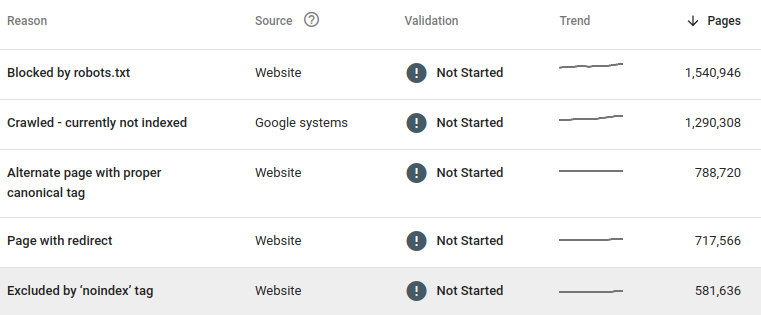
Once these are solid, you can move on to more advanced areas like structured data implementation, international SEO (if applicable), and log file analysis to see how search engines are actually interacting with your site. The key is to create a prioritised roadmap—fix the things that will make the biggest difference first.
Let's check your understanding of these advanced concepts.
What is the primary goal of using a pillar page and cluster content model?
The "three-click rule" is a principle of good site architecture. What does it help improve?
By integrating these elements—topical authority, sound architecture, competitive intelligence, and technical excellence—you move beyond basic SEO. You start building a robust, defensible organic growth engine.