Advanced Data Science and Machine Learning Mastery
Advanced Machine Learning
Smarter Together: Ensemble Methods
Why rely on a single opinion when you can consult a team of experts? That's the core idea behind ensemble methods. Instead of training one complex model and hoping for the best, we train multiple simpler models and combine their predictions. This collective approach often leads to more accurate and robust results than any single model could achieve on its own.
Ensemble methods are techniques that create multiple models and then combine them to produce improved results.
Two of the most common ensemble strategies are bagging and boosting.
Bagging, short for Bootstrap Aggregating, works like holding an election. It trains multiple models in parallel, each on a slightly different, randomly sampled subset of the training data (a process called bootstrapping). For a classification task, the final decision is made by a majority vote among all the models. For regression, it's the average of their predictions.
A popular example is the Random Forest algorithm, which builds an ensemble of decision trees. Each tree gets a random sample of the data and a random subset of features to consider, ensuring diversity in the 'voters'.
Boosting takes a different approach. It builds models sequentially, one after another. Each new model is trained to correct the mistakes made by its predecessors. It's like a student who studies, takes a practice test, reviews the wrong answers, and then focuses on those specific topics for the next study session.
Models in a boosting ensemble don't get an equal vote. The ones that perform better on the training data are given more weight in the final decision. Popular boosting algorithms include AdaBoost and Gradient Boosting Machines (GBM).
Finding the Clearest Divide
Support Vector Machines (SVMs) are powerful classifiers that work by finding the optimal boundary, or hyperplane, that separates data points of different classes. The goal isn't just to find any boundary, but the one that creates the largest possible 'no man's land' between the classes. This gap is called the margin.
hyperplane
noun
A decision boundary that separates the data points of different classes. In a 2D space, it's a line; in a 3D space, it's a plane.
By maximizing this margin, the SVM creates a decision boundary that is as far as possible from the data points of any class, making it more robust and less likely to misclassify new data.
The data points that lie closest to the hyperplane and define the width of the margin are called support vectors. These are the critical elements of the dataset; if they were moved, the hyperplane would have to adjust. All other points are ignored.
What if the data can't be separated by a straight line? SVMs have a clever solution called the kernel trick. It projects the data into a higher-dimensional space where a linear separator can be found. Imagine data points on a line that can't be separated by a point; by projecting them into two dimensions, a simple line can easily divide them.
Specialized Neural Networks
Deep learning models, or neural networks, are inspired by the structure of the human brain. While you may be familiar with basic feedforward networks, specialized architectures have been developed for specific types of data.
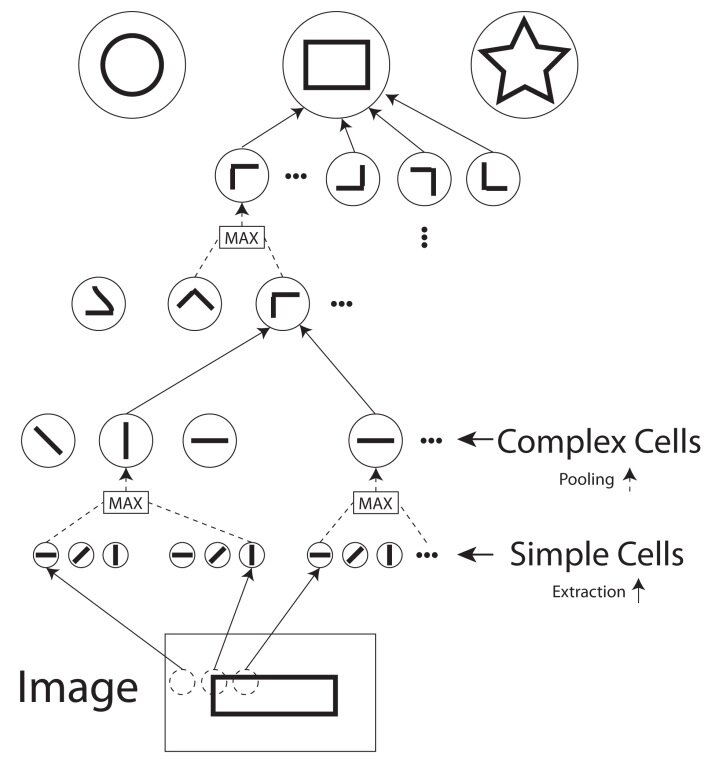
Convolutional Neural Networks (CNNs) are the masters of spatial data, particularly images. They use special layers called convolutional layers that apply filters to an input image, detecting features like edges, corners, and textures. As data passes through the network, these features are combined to recognize more complex objects. This hierarchical feature detection is what allows a CNN to tell the difference between a cat and a dog.
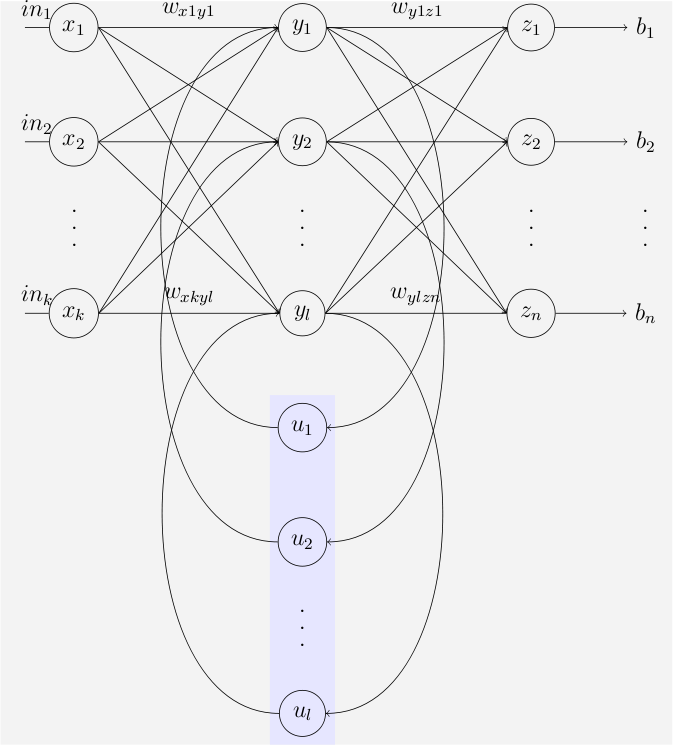
Recurrent Neural Networks (RNNs) are designed to handle sequential data, like text, speech, or time-series data. Unlike other networks, RNNs have a 'memory'. They have loops that allow information to persist, so the network's understanding of the current input is informed by the inputs that came before it. This makes them ideal for tasks like language translation, where the meaning of a word depends on the words surrounding it.
Fine-Tuning Your Model
Building a powerful model is only half the battle. We also need techniques to handle common real-world data problems and prevent our models from making simple mistakes.
Two key challenges in applied machine learning are dealing with imbalanced datasets and preventing a model from overfitting.
An imbalanced dataset occurs when one class is heavily overrepresented. For example, in fraud detection, the number of fraudulent transactions is tiny compared to legitimate ones. A naive model might achieve high accuracy by simply predicting 'not fraud' every time, but it would be useless. Techniques to handle this include:
- Resampling: This involves either undersampling the majority class (removing samples) or oversampling the minority class (creating synthetic samples, often using an algorithm called SMOTE).
- Using different performance metrics: Instead of accuracy, metrics like Precision, Recall, and F1-score give a better picture of performance on the minority class.
Overfitting happens when a model learns the training data too well, including its noise and random fluctuations. It becomes an expert on the data it has seen but fails to generalize to new, unseen data. It's like a student who memorizes the answers to a practice exam but can't solve slightly different problems on the real test.
Regularization is a set of techniques used to combat overfitting. The goal is to reduce the model's complexity. Two common methods are:
- L1 (Lasso) and L2 (Ridge) Regularization: These techniques add a penalty to the model's loss function based on the size of its coefficients. L2 regularization penalizes large coefficients, encouraging the model to use all features but with smaller weights. L1 regularization can shrink some coefficients all the way to zero, effectively performing feature selection.
- Dropout: Used in neural networks, dropout randomly 'turns off' a fraction of neurons during each training step. This forces the network to learn redundant representations and prevents it from becoming too reliant on any single neuron.
Ready to test your knowledge on these advanced techniques?
What is the key difference between how Bagging and Boosting ensemble methods train their models?
In a Support Vector Machine (SVM), what are 'support vectors'?
By mastering these advanced methods, you can build more sophisticated models that are better equipped to handle the complexities and nuances of real-world data.