Advanced Data Engineering Mastery
Advanced Data Engineering Principles
Beyond the Basics: Architecting for Complexity
Simple data pipelines move data from A to B. But when you're dealing with massive volumes of data from dozens of sources, the game changes. You're no longer just building a pipe; you're designing a city's water supply system. It needs to be robust, handle fluctuating demand, and be easy to repair and expand without shutting everything down.
This is where advanced data engineering principles come into play. We move from simply making things work to designing systems that are scalable, reliable, and maintainable over the long haul. The goal is to build data infrastructure that doesn't just function, but thrives under pressure.
The key shift is from thinking about data flow to thinking about data systems. A system anticipates failure, adapts to growth, and maintains its integrity over time.
Designing for Scale
Scalability isn't just about handling more data. It's about how gracefully your system adapts to growth. A system that requires a complete, costly overhaul every time data volume doubles isn't truly scalable. The two primary approaches are vertical and horizontal scaling.
- Vertical Scaling (Scaling Up): This involves adding more resources like CPU or RAM to a single machine. It's simple to implement but has a hard limit. Eventually, you can't buy a bigger server.
- Horizontal Scaling (Scaling Out): This means adding more machines to your system. It's more complex to manage but is practically limitless, making it the standard for modern, large-scale data systems.
Achieving horizontal scalability requires specific architectural choices. Instead of one big program, you build modular, distributed systems. Technologies like Apache Spark distribute processing tasks across a cluster of machines. Message queues like Apache Kafka act as a buffer, allowing different parts of your pipeline to process data at their own pace without overwhelming the system.
System design is talked about a lot in software engineering—but in data engineering, it’s a whole different game.
Reliability and Maintenance
A scalable system that constantly breaks is useless. Reliability means your pipelines produce accurate, timely data, even when things go wrong. Maintainability means you can fix, update, and improve the system without heroic effort.
A core principle here is designing for failure. Don't assume everything will work perfectly. What happens if a data source is unavailable? What if a transformation job fails mid-process? Robust pipelines have built-in error handling, retry logic, and monitoring to alert you when something is wrong.
Modularity is key to maintainability. Break down complex pipelines into smaller, single-purpose tasks. This makes it easier to test individual components, isolate problems, and update one part of the system without affecting others. Using a workflow orchestrator like Apache Airflow helps manage these complex dependencies and visualize the entire process.
# Example Airflow DAG task definition
# Each task is a modular, independent step

extract_from_api = PythonOperator(
    task_id='extract_from_api',
    python_callable=api_to_s3,
    dag=dag,
)

transform_data = SparkSubmitOperator(
    task_id='transform_data',
    application='/path/to/spark_job.py',
    dag=dag,
)

load_to_warehouse = PythonOperator(
    task_id='load_to_warehouse',
    python_callable=s3_to_snowflake,
    dag=dag,
)

extract_from_api >> transform_data >> load_to_warehouse
Data Modeling and Governance
All the sophisticated infrastructure in the world can't save you from messy, untrustworthy data. Data modeling and governance provide the structure and rules needed to ensure your data is a reliable asset.
Data modeling is the blueprint for how your data is organized and stored. The right model makes data easier to query and understand. The wrong one creates confusion and performance bottlenecks. The choice of model depends on the use case.
| Modeling Technique | Best For | Key Characteristic |
|---|---|---|
| Dimensional Modeling | Analytics & BI in Data Warehouses | Optimized for queries. Uses fact and dimension tables (Star Schema). |
| Data Vault | Integrating data from many systems | Designed for auditability and flexibility. Scales well for new data sources. |
| Denormalization | High-performance applications (NoSQL) | Duplicates data to reduce the need for joins, speeding up read operations. |
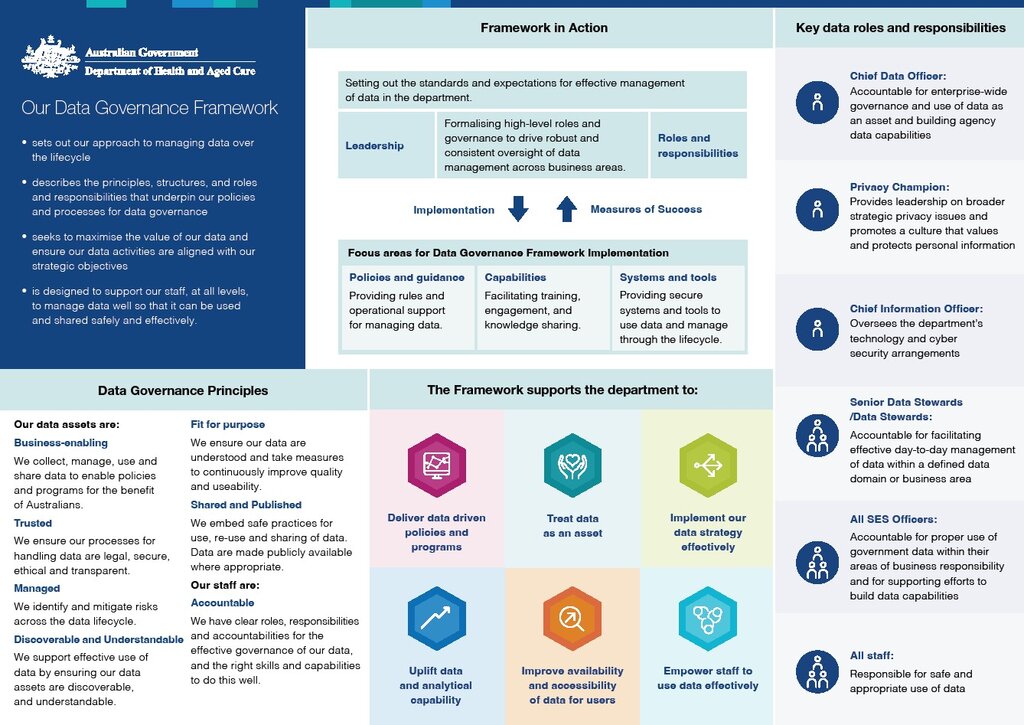
Data governance provides the overall framework for managing data. It's not just about locking data down; it's about enabling people to use it responsibly. Good governance establishes clear ownership, defines quality standards, and ensures compliance with privacy and security regulations.
A modern practice that bridges modeling and governance is the concept of a data contract. This is a formal agreement between data producers and consumers that defines the schema, semantics, and quality expectations for a dataset. It helps prevent downstream pipelines from breaking when an upstream source changes unexpectedly.
A data engineering team's single, powerful server can no longer handle its increasing data load. To solve this, they decide to add several more machines to their cluster to distribute the processing. Which scaling strategy are they using?
In the context of data governance, what is the primary purpose of a 'data contract'?
Building robust data systems requires a deep understanding of these advanced principles. By focusing on scalability, reliability, modeling, and governance from the start, you can create data infrastructure that delivers lasting value.