Advanced Data-Driven Market Research
Data Pipeline Automation
Automating Your Market View
Your existing ETL pipelines are powerful for processing internal data like sales logs and customer records. But a complete market picture requires looking outside your own walls. This means pulling in data from social media, competitor websites, public financial filings, and industry reports. Manually gathering this information is slow and quickly becomes outdated. The solution is to automate data collection through robust, scheduled pipelines.
This process extends your ETL skills into the realm of continuous market intelligence. Instead of just handling your own structured data, you'll build systems that programmatically extract messy, unstructured data from the wider web and transform it into a valuable asset for analysis. The goal is to create a dynamic, comprehensive 'market-view' dataset that integrates seamlessly with your existing data warehouse.
Programmatic Extraction
The two primary methods for programmatic data extraction are APIs and web scraping. Many modern platforms offer a market research API, which is a structured, reliable way to request and receive data. Think of it as ordering from a menu. You send a request for specific information, like all tweets mentioning your brand in the last 24 hours, and the service returns it in a clean, predictable format like JSON or XML.
Using an API is always the preferred method. It's more stable, less likely to break, and respects the data provider's terms of service.
When an API isn't available, you can turn to s. This involves writing a script that navigates a website just like a human user, identifies the HTML elements containing the data you need—such as a competitor's product prices or customer reviews—and extracts that information. While powerful, scraping is more brittle. A website redesign can easily break your script, requiring frequent maintenance.
# A simple Python example using the 'requests' library to get data from a hypothetical API
import requests
import json

# API endpoint for market data
api_url = "https://api.marketdata.com/v1/stocks?ticker=XYZ&range=1y"

# Headers might be required for authentication (e.g., API key)
headers = {
    "Authorization": "Bearer YOUR_API_KEY"
}

# Make the request to the API
response = requests.get(api_url, headers=headers)

# Check if the request was successful
if response.status_code == 200:
    # Parse the JSON response into a Python dictionary
    market_data = response.json()
    print("Successfully fetched data:")
    print(json.dumps(market_data, indent=2))
else:
    print(f"Failed to fetch data. Status code: {response.status_code}")
Integration and Normalization
Once you've extracted external data, the 'Transform' step of your ETL process becomes critical. Data from different sources will arrive in varied formats. For example, one source might list prices in USD, another in EUR. Dates might be formatted as MM-DD-YYYY or YYYY/MM/DD. Your pipeline must standardize, or normalize, this information into a consistent structure.
ensures that you can perform meaningful analysis across your entire dataset. It involves tasks like:
- Standardizing units: Converting all currencies to a single currency, or weights and measures to a uniform system (e.g., metric).
- Consistent formatting: Ensuring all dates, names, and addresses follow the same pattern.
- Schema mapping: Aligning fields from different sources.
user_idfrom one source andcustomer_idfrom another might both map to aCustomerIDcolumn in your data warehouse.
This normalized dataset is then loaded into your data warehouse. By integrating external market data with your internal operational data, you unlock the ability to answer complex strategic questions. For example, you can correlate a competitor's price drop with your own sales figures or measure the impact of a social media sentiment shift on customer churn.
Scaling for Volume
A one-time data pull is useful, but true market monitoring requires your pipelines to run continuously. This means designing them for scalability and reliability. A pipeline that checks ten product pages once a day is very different from one that monitors thousands of social media posts per hour.
To manage this, you'll need to use workflow orchestration tools like or cloud-native services. These platforms allow you to schedule your data extraction tasks, automatically retry failed jobs, and log everything for easy debugging. They help you manage dependencies, ensuring that a data cleaning job doesn't run until the corresponding web scraping task has successfully completed.
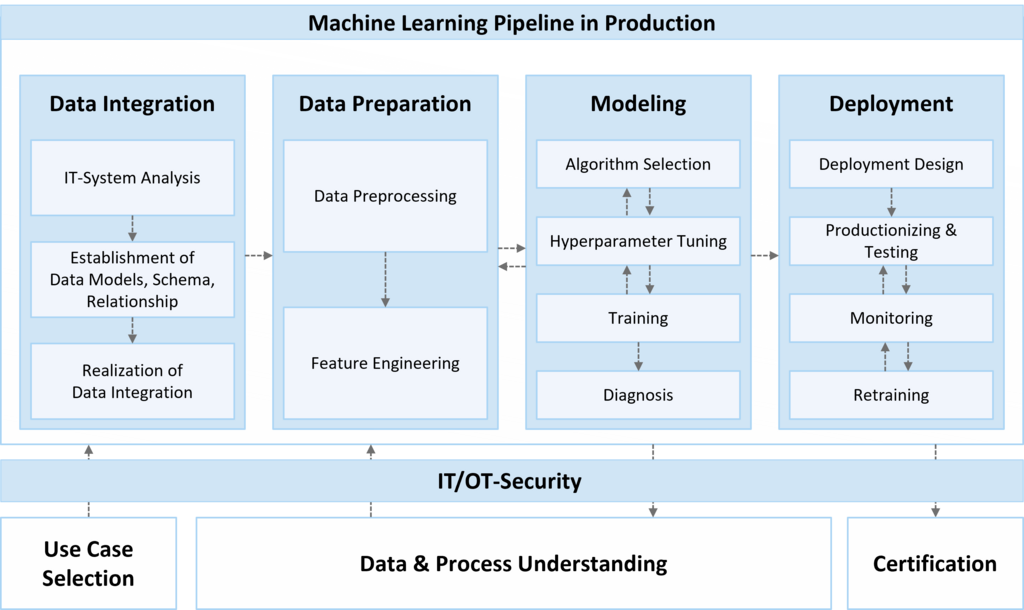
Scaling also involves optimizing your code for performance. This could mean using asynchronous requests to scrape multiple pages simultaneously or distributing data processing tasks across multiple machines. Efficient error handling is just as important. Your pipeline should be robust enough to handle unexpected changes, like a missing data field or a website being temporarily down, without crashing entirely.
What is the primary advantage of using an API for data extraction compared to web scraping?
A data pipeline ingests customer data from two sources. Source A has a field named customer_id, and Source B has a field named user_id. During the ETL process, both fields are mapped to a single CustomerID column in the data warehouse. This process is an example of __________.
Automating external data collection transforms market research from a periodic report into a live, continuous feed of insights. By building and scaling these pipelines, you create a powerful strategic asset that keeps your business aware of and responsive to the competitive landscape.