Advanced Cybersecurity Mastery
Network Security Architecture
Beyond the Castle Wall
For decades, network security followed the castle-and-moat model. You built a strong perimeter with firewalls and assumed everything inside was safe. If you were on the internal network, you were trusted. This approach is broken. Today's networks are borderless, with remote employees, cloud servers, and personal devices connecting from everywhere. An attacker who breaches the perimeter can move freely inside, accessing sensitive data because of this implicit trust.
The old model of 'trust but verify' is obsolete. The new model is 'never trust, always verify'.
This shift in mindset leads to a modern security strategy called Zero Trust Architecture. Instead of trusting devices or users based on their location (inside vs. outside the network), Zero Trust demands verification for every single access request. It operates on the assumption that a breach is not a matter of if, but when. The goal is to contain the damage by ensuring a compromised account or device can't access anything it doesn't absolutely need.
Zero Trust Architecture
noun
A security framework requiring all users, whether in or outside the organization’s network, to be authenticated, authorized, and continuously validated for security configuration and posture before being granted or keeping access to applications and data.
The core principles are simple but powerful. First, enforce least privilege access. This means users and devices only get the bare minimum permissions required to perform their function. Second, assume breach. Design your network with the expectation that an attacker is already inside. This forces you to build internal controls, not just a strong wall. Finally, verify explicitly. Always authenticate and authorize based on all available data points, including user identity, location, device health, and the resource being requested.
A Zero Trust security model relies on these core principles: never trust, always verify; assume breach; and apply least-privileged access.
Building Defensible Enclaves
So how do you implement Zero Trust? The foundational technique is micro-segmentation. Instead of having one large, flat internal network, you divide it into many small, isolated zones or segments. Think of a submarine with multiple watertight compartments. If one compartment floods, the seals prevent the entire vessel from sinking. Micro-segmentation works the same way for your network. A breach in one segment is contained and cannot easily spread to others.
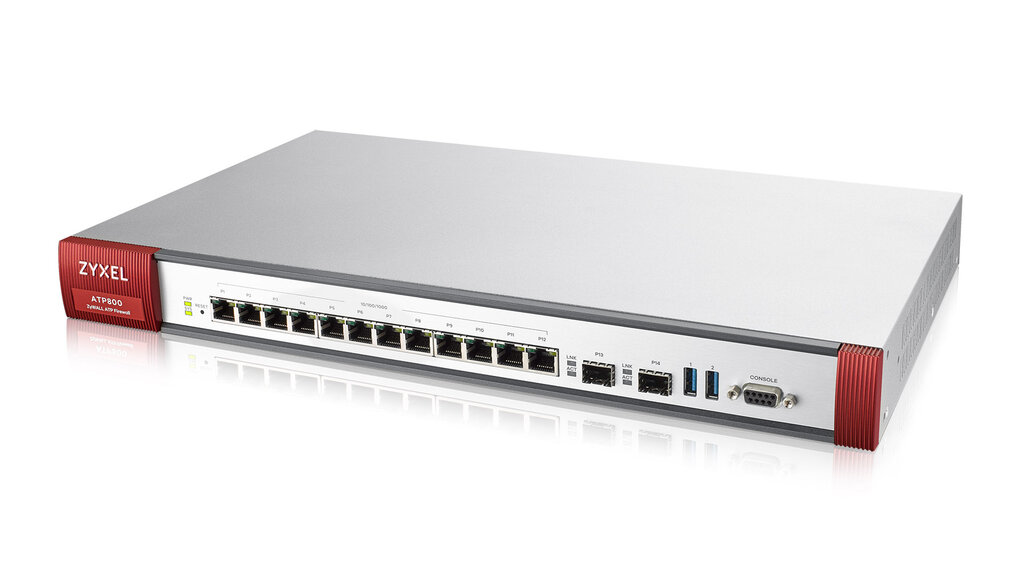
This granular control is made possible by Next-Generation Firewalls (NGFWs). Unlike traditional firewalls that only inspect traffic based on ports and IP addresses (Layers 3 and 4), NGFWs perform Deep Packet Inspection (DPI) at the Application Layer (Layer 7). This means the firewall understands what the traffic is. It can distinguish between a user accessing a sales database and that same user trying to exfiltrate data using a file-sharing application, even if they both use the same web port (443).
NGFWs come in two main flavors: physical hardware appliances and virtual or cloud-native firewalls. Hardware offers raw performance for high-traffic data centers, but virtual firewalls provide the flexibility needed for dynamic cloud environments, allowing you to spin up and configure security policies as code.
| Feature | Hardware NGFW | Virtual / Cloud-Native NGFW |
|---|---|---|
| Performance | Highest throughput, low latency | Depends on underlying host resources |
| Scalability | Clustered for high availability | Highly elastic, scales on demand |
| Environment | Best for on-premise data centers | Ideal for public/private cloud, hybrid |
| Management | Physical deployment and racking | Deployed via code (IaC), API-driven |
| Cost Model | High initial capital expense (CapEx) | Subscription-based, operational expense (OpEx) |
Layering Your Defenses
A strong architecture uses defense-in-depth, combining multiple security controls. NGFWs are the centerpiece, but they work best with other specialized tools. An Intrusion Prevention System (IPS) is often integrated into an NGFW. It actively scans for network traffic that matches known attack patterns, or signatures, and blocks it in real-time. For example, it can stop a server exploit before it succeeds.
A Web Application Firewall (WAF) provides another critical layer, focusing specifically on protecting web applications from attacks like SQL injection and cross-site scripting (XSS). While an NGFW and IPS protect the network, a WAF protects the application code itself.
These layers come together when designing secure network zones. A common design pattern is the DMZ (Demilitarized Zone), a perimeter network that protects an organization's internal LAN from untrusted traffic. In a modern context, this extends to hybrid environments. To connect a corporate network to the cloud, legacy VPNs are being replaced by Zero Trust Network Access (ZTNA) solutions.
ZTNA, also known as a Software-Defined Perimeter (SDP), creates a secure, encrypted tunnel between an authenticated user and a specific application, not the entire network. Access is granted on a one-to-one basis after the user and their device have been verified. This perfectly aligns with the principle of least privilege and prevents the broad network access that makes traditional VPNs risky.
Ready to test your knowledge on modern network defense?
What is the primary flaw of the traditional "castle-and-moat" security model that Zero Trust aims to correct?
Which of the following actions best demonstrates the Zero Trust principle of "least privilege access"?
By moving beyond perimeter-based thinking and embracing Zero Trust principles like micro-segmentation and least-privilege access, you can build a network architecture that is resilient, flexible, and prepared for modern threats.