Advanced Cryptocurrency Trading Strategies
Order Book Dynamics
The Heartbeat of the Market
You understand the fundamentals of blockchain and how to hold assets in a wallet. Now, let's look at the engine that drives crypto trading: the order book. It’s not just a list of numbers; it’s a live, dynamic battlefield where buyers and sellers meet, and where prices are born.
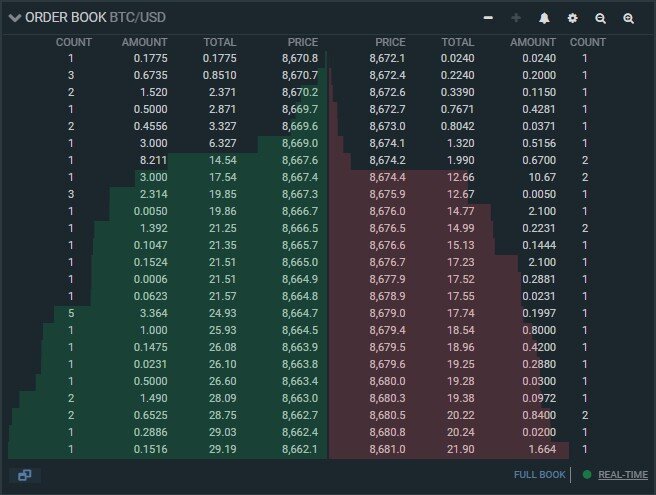
At its core, an exchange’s job is to match a buyer with a seller. The order book is the mechanism that makes this happen. It’s a real-time list of all open orders to buy and sell a specific asset. It's split into two sides: the bids (buy orders) and the asks (sell orders). Think of it as a double-sided auction, constantly in motion.
Bids represent demand, showing what buyers are willing to pay. Asks represent supply, showing what sellers are willing to accept.
The two most common ways to participate in this auction are through market orders and limit orders. Your choice between them determines whether you are a price taker or a price maker.
| Order Type | How it Works | Best For |
|---|---|---|
| Market Order | Buys or sells immediately at the best available current price. | Speed and certainty of execution. |
| Limit Order | Sets a specific price at which you are willing to buy or sell. The order only executes if the market reaches your price. | Price control and patience. |
When you place a market order, you're a market taker. You accept the current price and take liquidity from the order book. When you place a limit order, you become a market maker. You add liquidity to the order book, waiting for a taker to come along and match your price. This distinction is crucial for understanding market dynamics.
The Bid-Ask Spread
The difference between the highest bid price (what someone is willing to pay) and the lowest ask price (what someone is willing to sell for) is called the bid-ask spread. It's a key indicator of an asset's liquidity.
Imagine the highest bid for CryptoToken A is $99, and the lowest ask is $101. The spread is $2. If you place a market buy order, you’ll pay $101. If you place a market sell order, you’ll get $99. That $2 gap is where market makers often find their profit.
A narrow spread suggests high liquidity and strong agreement on the asset's value. A wide spread indicates lower liquidity or high volatility, meaning it's harder to trade without affecting the price.
Depth and Slippage
The order book doesn't just show the best prices; it shows the depth of the market. This is the volume of orders stacked up at each price level. A 'deep' market has a lot of orders, meaning you can execute large trades without significantly impacting the price. A 'thin' market has very few orders, making it vulnerable to big price swings.
This leads us to an important risk in trading: slippage happens when you get a different price than you expected. If you place a large market buy order in a thin market, you might exhaust all the sell orders at the lowest price, then the next lowest, and so on. Your average entry price will be higher than the price you saw when you clicked 'buy'.
Slippage
noun
The difference between the expected price of a trade and the price at which the trade is actually executed. It is more likely to occur during high volatility or in markets with low liquidity.
Huge clusters of orders at a specific price point create 'buy walls' or 'sell walls'. These can act as psychological support or resistance levels, as it would take a massive amount of buying or selling pressure to break through them.
DEXs vs CEXs
Centralised Exchanges (CEXs) like Binance or Kraken use the traditional limit order book system we've just discussed. A central matching engine pairs buyers and sellers. It's fast, efficient, and familiar to anyone from traditional finance.
There are two major types of perpetual DEXs - (1) automated market makers (AMM) and (2) order books.
Decentralised Exchanges (DEXs), especially early ones like Uniswap, often use a different model: the (AMM). Instead of matching individual buyers and sellers, traders trade against a pool of assets supplied by other users. These are called liquidity pools.
Users who provide their tokens to these pools are called liquidity providers. They earn a small fee from every trade that uses their liquidity. This model was a breakthrough for DeFi, as it allowed for decentralized, permissionless trading of any token. However, some newer DEXs are adopting on-chain order books to offer a more traditional trading experience with the benefits of decentralization.
Understanding how liquidity is provided and how orders are matched is fundamental to moving beyond just holding crypto and into the world of active trading. It helps you anticipate market movements, manage risk, and make more informed decisions.
Ready to test your knowledge?
What is the primary function of an order book on a cryptocurrency exchange?
An investor who places a limit order to buy a cryptocurrency at a price below the current market price is known as a:
By mastering these concepts, you've gained a crucial insight into the mechanics that power cryptocurrency markets every second of the day.