Advanced Critical Theory and Social Critique
Traditional versus Critical Theory
Theory for What?
In 1937, Max Horkheimer published an essay that drew a sharp line between two ways of thinking. Titled "Traditional and Critical Theory," it wasn't just an academic debate. It was a manifesto that asked a fundamental question: What is the purpose of knowledge? Is it to describe the world as it is, or to change it?
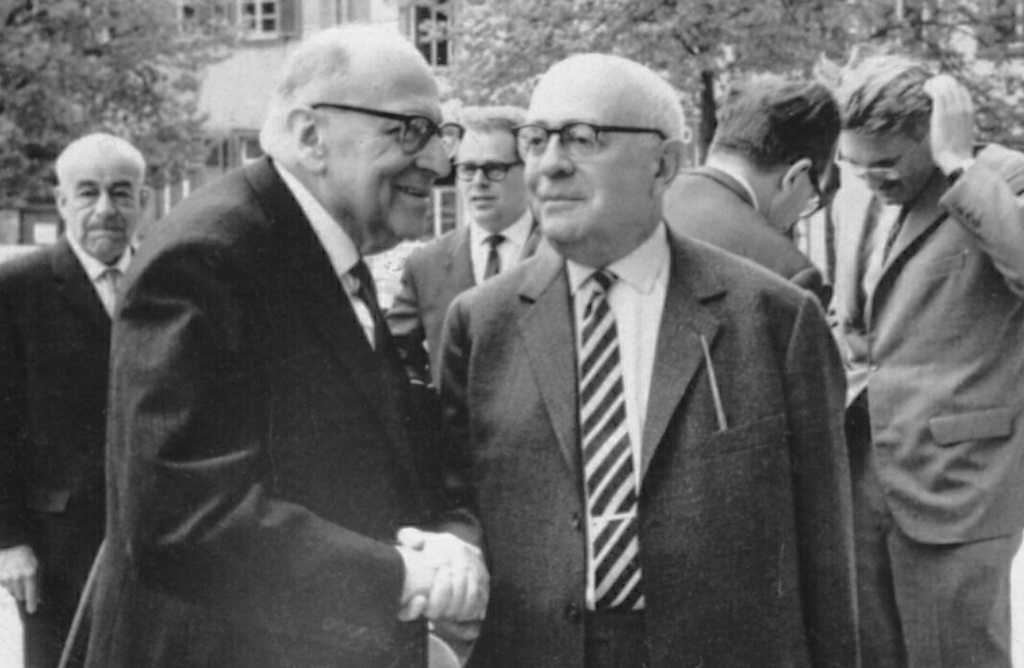
Horkheimer argued that most scientific and philosophical work fell into the "traditional" camp. This approach treats knowledge as a neutral tool for observation and classification. It aims to build a coherent system of propositions about the world, much like a well-organised database.
The Traditional Model
Think of traditional theory as a highly efficient, closed system. It functions like a key-value cache in computing. Its job is to store and retrieve data with maximum speed and accuracy. The system takes the world as a given set of facts and processes them. It doesn't question the structure of the cache itself, or why certain data is being stored and not other data. Its primary goal is descriptive power and predictive accuracy.
This is the essence of positivism in the social sciences. It applies the methods of natural science to study society, assuming that social facts are objective, external things that can be observed and measured without bias. The theorist is a detached observer, separate from the object of study. The theory produced is seen as a neutral map of social reality.
In the traditional view, the theory is a mirror held up to society. Its only job is to reflect what's there as accurately as possible.
The Critical Turn
Critical Theory breaks from this model entirely. Horkheimer argued that a theory about society can never be truly neutral because the theorist is always part of that society. Knowledge isn't produced in a vacuum; it's shaped by historical conditions, power structures, and social interests. A theory is always for someone and for some purpose.
Critical theory refers to a broad school of thought that critiques society, culture, and politics, aiming not just to understand the world but to change it.
From this perspective, traditional theory often ends up reinforcing the status quo. By treating the existing social order as a set of natural, objective facts, it implicitly legitimises it. The goal of Critical Theory, by contrast, is not just to describe but to critique. It seeks to uncover the hidden assumptions and power dynamics that structure society, with the ultimate aim of human emancipation—liberating people from oppression.
This introduces the concept of reflexivity. A critical theory must be self-aware. It has to analyse its own social and historical standpoint. It understands that the language and concepts it uses—the signifiers—don't just point to a pre-existing reality (the signified). Instead, they actively help construct that reality. The theory is not outside the system it describes; it is an active participant.
The distinction represents a profound epistemological break. It's a shift from viewing knowledge as a passive reflection of reality to understanding it as an active, socially-embedded practice. Traditional theory seeks to eliminate the subject's influence to achieve objectivity. Critical Theory insists that acknowledging the subject's position is the only way to produce genuine, transformative insight.
According to Max Horkheimer, what is the primary purpose of Traditional Theory?
What does Critical Theory mean by the term 'reflexivity'?
This fundamental split continues to influence how we think about knowledge, from sociology and philosophy to cultural studies and beyond.