Advanced Construction Site Safety UK
UK Construction Safety Laws
The Foundation of UK Site Safety
In the UK, health and safety on construction sites isn't just about common sense; it's governed by specific laws. The most important of these is the Health and Safety at Work etc. Act 1974 (HSWA). This act is the cornerstone of all workplace safety regulations in Great Britain, including those for construction.
The HSWA establishes a broad framework. Instead of listing every possible hazard, it sets out general duties that employers have towards their employees and the public. It also outlines the responsibilities employees have to themselves and each other.
The core principle is that employers must protect the health, safety, and welfare of their workers "so far as is reasonably practicable." This means they must identify risks and take sensible measures to tackle them. The effort and cost of these measures should be proportionate to the level of risk.
Essentially, the HSWA requires a continuous, proactive approach to safety, not just a reaction to accidents.
| Who | Key Duty Under HSWA 1974 |
|---|---|
| Employers | Ensure the health, safety, and welfare of all employees. This includes providing safe equipment, safe systems of work, and necessary training. |
| Employers | Protect non-employees (like the public or contractors) from risks arising from their work activities. |
| Employees | Take reasonable care of their own health and safety and that of others who may be affected by their actions. |
| Employees | Co-operate with their employer to help them comply with health and safety duties. |
Rules for Construction Projects
While the HSWA provides the general foundation, construction is a high-risk industry that needs more specific rules. That's where the Construction (Design and Management) Regulations 2015, known as CDM 2015, come in.
These regulations apply to all construction work, from small domestic projects to large-scale commercial developments. Their main goal is to improve health and safety by ensuring that risks are considered and managed from the very start of a project—the design phase—all the way through to its completion and even future maintenance.
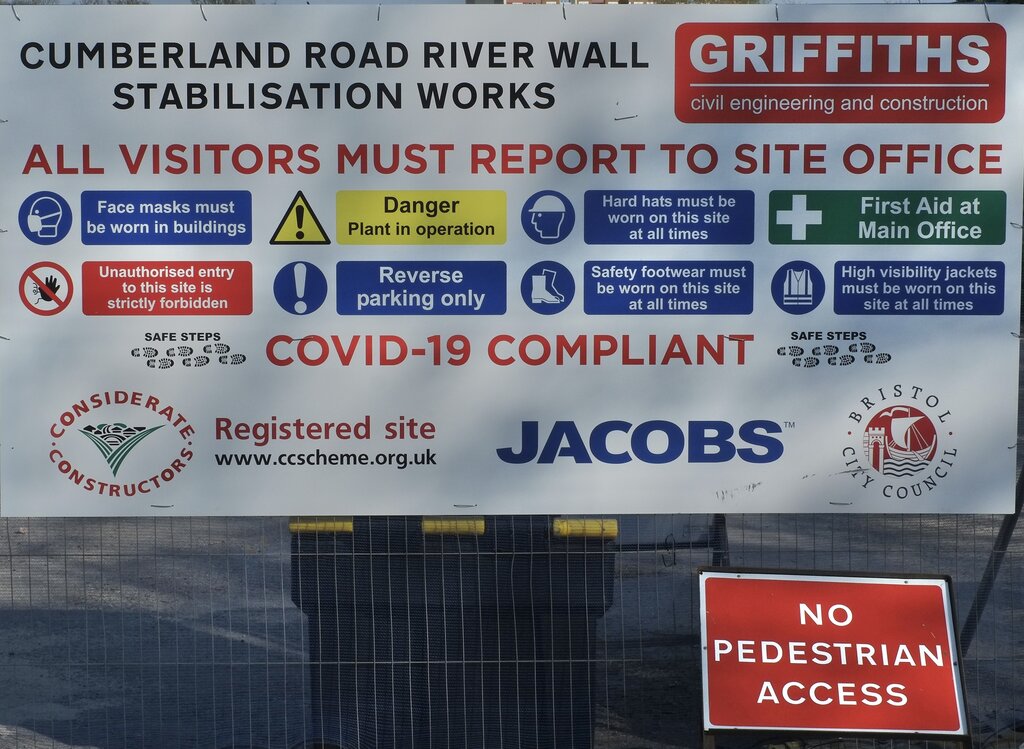
CDM 2015 is all about making sure the right people are doing the right job at the right time. It achieves this by assigning specific legal duties to different roles within a project. These roles are called 'duty holders'.
The Key Duty Holders
Understanding who is responsible for what is central to the CDM regulations. The main duty holders have distinct responsibilities for managing health and safety throughout the project's lifecycle.
Clients are the individuals or organizations for whom a construction project is carried out. They have a major influence over the project. Their key duties include making suitable arrangements for managing the project, such as allocating sufficient time and resources. They must also appoint a Principal Designer and a Principal Contractor for projects with more than one contractor.
The Principal Designer is a designer appointed by the client to take control of the pre-construction phase. This is the planning and design stage. Their main job is to plan, manage, and monitor health and safety during this phase. This includes identifying and eliminating or controlling foreseeable risks and ensuring other designers carry out their duties.
The Principal Contractor is appointed by the client to manage the construction phase of any project with more than one contractor. They are in charge of planning, managing, monitoring, and coordinating the entire construction phase. This involves liaising with the client and principal designer, preparing the construction phase plan, and ensuring site rules are followed.
Beyond these main roles, all Designers (architects, engineers, etc.) and Contractors (builders, electricians, etc.) also have duties to manage health and safety in their own work and to cooperate with others.
Together, the HSWA 1974 and CDM 2015 create a robust legal structure. They ensure that safety is not an afterthought but a core part of a project's management from concept to completion.
Now, let's test your understanding of these critical regulations.
What is the core principle of the Health and Safety at Work etc. Act 1974 (HSWA)?
What is the main goal of the Construction (Design and Management) Regulations 2015 (CDM 2015)?
Understanding these legal duties is the first step toward creating a safer environment for everyone on a construction site.