Advanced Composite Materials and Engineering
Matrix Systems Synergy
The Unsung Hero: The Matrix
In any composite material, the reinforcement fibers or particles get all the attention. They're the superstars, providing the stiffness and strength. But the reinforcement can't work alone. It needs a partner to hold it all together, transfer stress, and shield it from the outside world. That partner is the matrix.
The matrix is the continuous phase that surrounds the reinforcement. Think of it as the glue and the shield, all in one.
When a composite part is put under load, the matrix has two critical jobs. First, it distributes the stress evenly across the reinforcement fibers. This prevents a single fiber from taking the entire load and failing prematurely. Second, it protects the often-delicate reinforcement from moisture, chemicals, and physical abrasion. The synergy between these two components is what gives a composite its remarkable properties.
A Trio of Binders
Composites are typically classified by the type of matrix material used. This choice dictates the composite's overall temperature resistance, toughness, and how it can be manufactured. There are three main families: Polymer Matrix Composites (PMCs), Metal Matrix Composites (MMCs), and Ceramic Matrix Composites (CMCs).
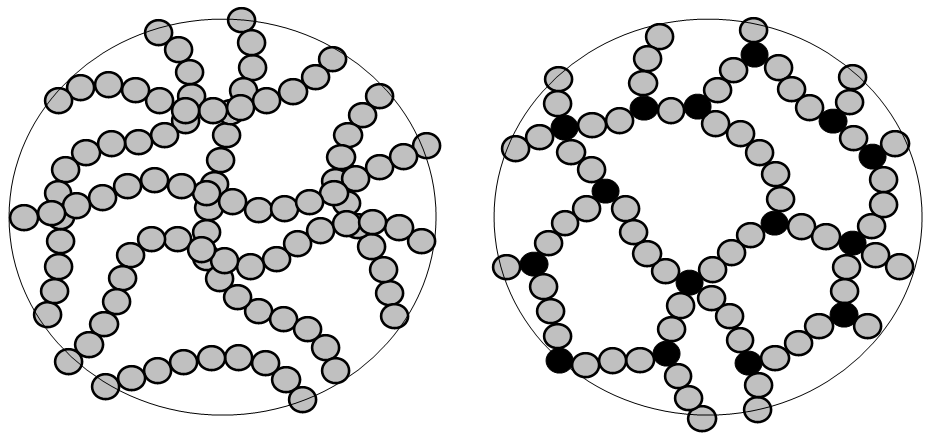
Polymer Matrix Composites are by far the most common. The matrix is a polymer, which can be either a thermoset or a thermoplastic. Thermosets, like epoxy or polyester, cure into a rigid, cross-linked structure that can't be remelted. They offer excellent stiffness and temperature resistance. Thermoplastics, on the other hand, can be remelted and reformed. High-performance thermoplastics like PEEK provide superior toughness and are often used in aerospace applications.
Metal Matrix Composites use metals like aluminum, titanium, or magnesium as the binder. These materials offer much higher temperature capabilities than polymers and are excellent conductors of heat and electricity. Reinforcing an aluminum matrix with ceramic particles, for example, can create a material that is light, strong, and wear-resistant, perfect for high-performance automotive parts like brake rotors or pistons.
Ceramic Matrix Composites represent the pinnacle of high-temperature performance. By embedding ceramic fibers (like silicon carbide) within a ceramic matrix, you get a material that can withstand extreme environments, far beyond the limits of metals. Their primary application is in jet engines, rocket nozzles, and thermal protection systems for spacecraft. The main challenge with CMCs is their inherent brittleness, although the reinforcing fibers help mitigate catastrophic failure by holding the material together even after cracks form. The manufacturing process often involves complex, high-temperature techniques like to fuse the matrix particles together.
| Composite Type | Common Matrix | Key Advantages | Common Applications |
|---|---|---|---|
| PMC | Epoxy, PEEK, Polyester | Lightweight, high strength-to-weight, corrosion resistant | Aerospace, sporting goods, automotive |
| MMC | Aluminum, Titanium | High temperature stability, conductivity, wear resistance | Engine components, electronics, brakes |
| CMC | Silicon Carbide, Alumina | Extreme heat resistance, low thermal expansion | Jet engines, turbines, heat shields |
Where It All Comes Together
A composite is only as strong as the bond between its matrix and reinforcement. This crucial connection doesn't happen at a simple boundary line; it occurs in a distinct region called the layer. This isn't just the surface where two materials touch—it's a transitional zone with its own unique properties, influenced by the chemistry of both the fiber and the matrix.
Think of it like a translator between two people who speak different languages. The interphase ensures that the 'message' of stress is passed clearly and efficiently from the matrix to the reinforcement. Bonding within this layer can be mechanical (where the matrix physically grips a rough fiber surface) or chemical (where atoms from the matrix and fiber form covalent bonds). For high-performance composites, achieving a strong, stable interphase is the primary goal of material design.
Choosing the right matrix is a balancing act. Engineers must consider the operating temperature, the types of loads the part will experience, and the manufacturing process. A matrix for a tennis racket has very different requirements than one for a turbine blade in a jet engine. The matrix system is what truly turns a collection of strong fibers into a cohesive, engineered material.
Ready to test your knowledge on how these material systems work together?
What are the two primary functions of the matrix in a composite material?
Which type of composite matrix is best suited for an application requiring extreme temperature resistance, such as a rocket nozzle?
Understanding the matrix is key to understanding the performance of any composite. It's the enabling component that allows the reinforcement to do its job effectively.