Advanced Chromosomes and DNA PTB Guide
Chromosomal Composition and Structure
The Architecture of a Chromosome
A eukaryotic chromosome is more than just a long strand of DNA. It's a highly organized complex of DNA and specialized proteins. The main protein players are called histones, which act as spools around which the DNA winds. This combination of DNA and protein is known as chromatin.
Chromatin
noun
The material of which the chromosomes of organisms other than bacteria (i.e., eukaryotes) are composed. It consists of protein, RNA, and DNA.
The sheer length of DNA in a single cell is staggering. If you were to stretch out all the DNA from one human cell, it would be about two meters long. To fit this immense molecule into a microscopic nucleus, it must be condensed in an incredibly efficient way. This is accomplished through several hierarchical levels of packaging.
Level 1: Nucleosomes
The most basic level of DNA packaging involves histones. There are five main types: H1, H2A, H2B, H3, and H4. Two copies of each of the core histones (H2A, H2B, H3, and H4) come together to form a protein complex called a histone octamer.
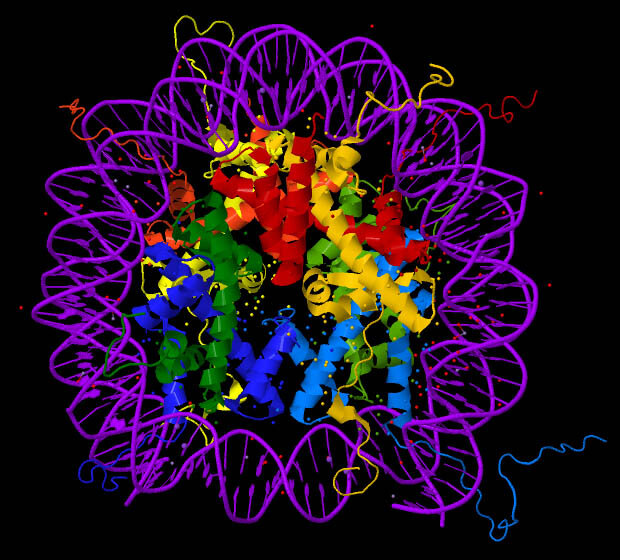
About 147 base pairs of the DNA double helix wrap around this histone octamer, much like thread around a spool. This combined structure of the DNA and the histone octamer is called a nucleosome. These nucleosomes are connected by short stretches of DNA called linker DNA. When viewed under an electron microscope, this arrangement looks like beads on a string.
The nucleosome is the basic structural unit of chromatin, consisting of approximately 147 base pairs of DNA wrapped around a histone octamer, which includes two copies each of histones H2A, H2B, H3, and H4.
The fifth histone, H1, is not part of the octamer core. Instead, it acts like a clamp, binding to the linker DNA and the DNA wrapped around the octamer. This helps to lock the DNA in place and pull the nucleosomes closer together, beginning the next level of compaction.
Higher-Order Packing
The 'beads on a string' structure is just the beginning. The string of nucleosomes is then coiled into a more compact structure called a solenoid, or 30-nanometer fiber. The H1 histone plays a crucial role here, helping to guide the coiling process.
This solenoid fiber is then arranged into loops, which are anchored to a central protein framework called a scaffold. This scaffold, made of non-histone proteins, helps to further condense the chromatin. This looping and scaffolding creates a structure that is much thicker and more compact, leading eventually to the fully condensed chromosome visible during cell division.
Active vs. Inactive Chromatin
Not all chromatin is packed with the same density. The cell needs to access certain genes to transcribe them into RNA, so some parts of the chromosome must be more accessible than others. This leads to two distinct types of chromatin:
Euchromatin: This is a less condensed form of chromatin. It appears as the 'beads on a string' or 10 nm fiber. Because it's more open, the DNA is accessible to the enzymes responsible for transcription. Euchromatin contains the vast majority of genes that are actively being used by the cell.
Heterochromatin: This is a highly condensed form, where the 30 nm fibers are further packed and coiled. This dense packing makes the DNA inaccessible to transcription machinery, so the genes within heterochromatin are generally inactive or 'silenced'. It's often found near the centromeres and telomeres of chromosomes.
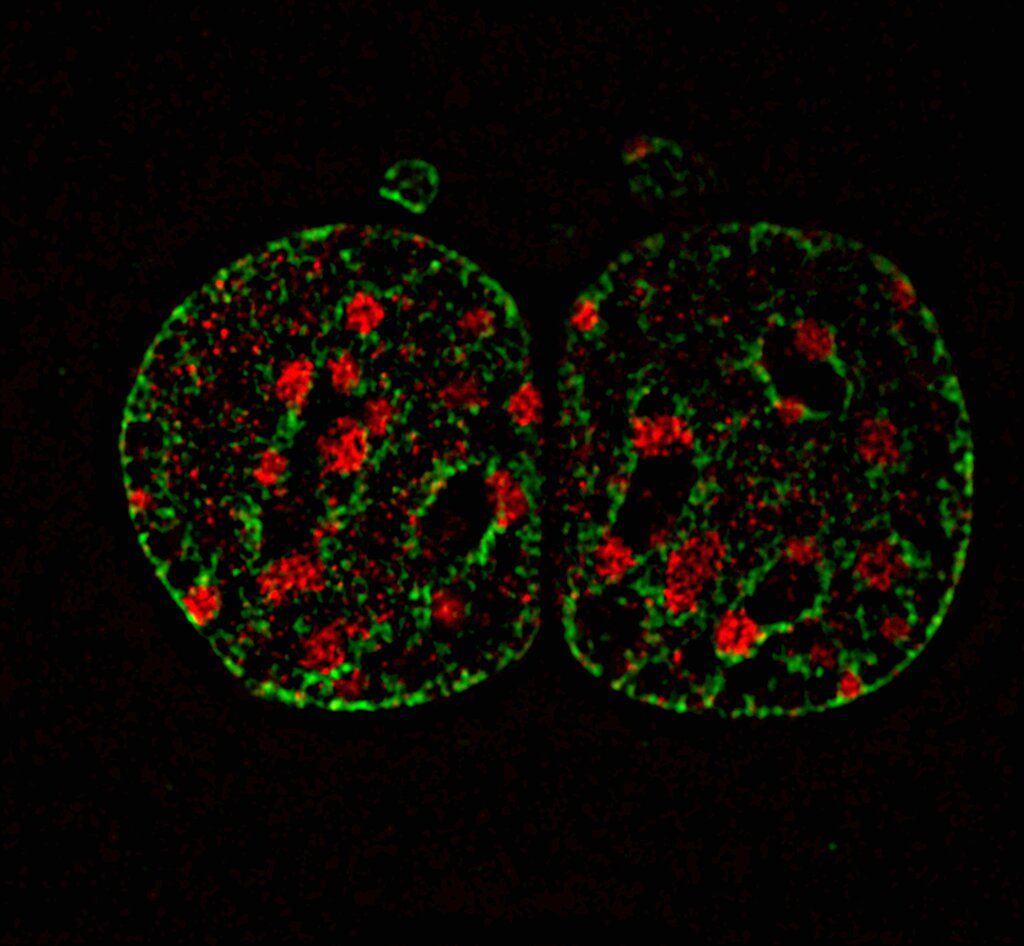
The balance between euchromatin and heterochromatin is dynamic. A cell can convert a region from one state to another to regulate gene expression in response to its needs.
Viewing the Whole Set
When a cell prepares to divide, its chromatin condenses to its maximum extent, forming the distinct X-shaped structures we recognize as chromosomes. At this stage, all the chromosomes from a single cell can be photographed and arranged in a standardized order. This organized profile is called a karyotype.
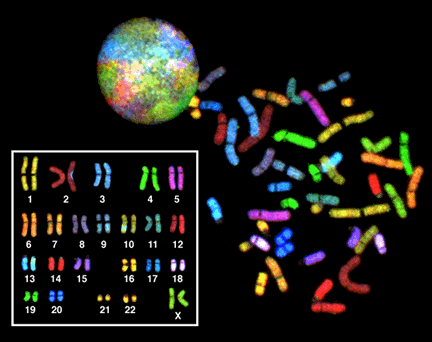
A karyotype displays the chromosomes in homologous pairs, ordered by size from largest to smallest. It allows scientists to examine the number and overall structure of the chromosomes, providing a powerful tool for identifying genetic abnormalities, such as missing or extra chromosomes.
Check your understanding of chromosome structure.
What is the basic, repeating structural unit of chromatin, consisting of DNA wrapped around a core of histone proteins, often described as a 'bead on a string'?
Which of the following histone proteins is NOT part of the core octamer but instead binds to the linker DNA, helping to compact the chromatin further?
This intricate system of packaging ensures that an enormous amount of genetic information is stored safely and accessibly within the tiny confines of the cell nucleus.