Advanced Chemical Equation Balancing
Systematic Balancing Principles
Chemistry's Golden Rule
A chemical reaction is a bit like rearranging building blocks. You start with a set of atoms bonded together in one way (reactants) and end up with the same atoms bonded together differently (products). Nothing is lost, and nothing is created from thin air. This fundamental principle is the —matter cannot be created or destroyed.
Balancing a chemical equation is simply the accounting that proves this law holds true. It ensures that the number of atoms of each element on the left side of the arrow equals the number on the right. The equation itself becomes a balanced ledger.
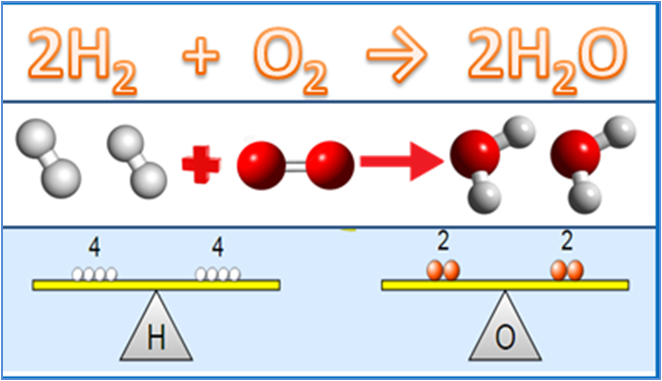
From Guesswork to System
For simple reactions, you might balance the equation by intuition. But as reactions get more complex, a systematic approach is essential. The most reliable method is to create an inventory of atoms for both the reactants and the products. This removes the guesswork.
The first step is always to start with the most complex-looking molecule—the one with the most atoms or the greatest variety of elements. By placing a '1' as its initial coefficient, you establish a firm starting point to balance the rest of the equation against.
Let's try balancing the combustion of octane, a major component of gasoline:
Octane () is clearly the most complex molecule, so we'll start there. Let’s build an inventory table to track our atoms.
| Element | Reactant Side | Product Side | Balanced? |
|---|---|---|---|
| C | 8 | 1 | No |
| H | 18 | 2 | No |
| O | 2 | 3 | No |
First, we balance the carbon atoms. With 8 carbons in octane, we need 8 molecules of carbon dioxide () on the product side.
Next, hydrogen. We have 18 hydrogens on the reactant side, so we need 9 molecules of water () on the product side, since each water molecule has 2 hydrogen atoms (9 x 2 = 18).
Finally, we tackle oxygen. Now, count the oxygen atoms on the product side, which is now fixed. We have (8 x 2) in and (9 x 1) in , for a total of 16 + 9 = 25 oxygen atoms. To get 25 oxygen atoms on the reactant side, we need 12.5 molecules of (12.5 x 2 = 25).
It's convention to use whole numbers. To eliminate the fraction, we multiply the entire equation by 2.
| Element | Reactant Side | Product Side | Balanced? |
|---|---|---|---|
| C | 2 * 8 = 16 | 16 * 1 = 16 | Yes |
| H | 2 * 18 = 36 | 18 * 2 = 36 | Yes |
| O | 25 * 2 = 50 | (16 * 2) + (18 * 1) = 50 | Yes |
The Polyatomic Shortcut
In many reactions, groups of atoms called move from the reactant to the product side without breaking apart. Ions like sulfate (), nitrate (), and phosphate () often act as single, unbreakable units.
When you spot this, don't count their individual atoms (like sulfur and oxygen separately). Instead, balance the entire polyatomic ion as a single block. This dramatically simplifies the inventory process.
Consider this reaction:
Instead of tracking Al, S, O, Ca, and H, we see that sulfate () and hydroxide () stay intact. Our inventory becomes much simpler.
| Unit | Reactant Side | Product Side | Balanced? |
|---|---|---|---|
| Al | 2 | 1 | No |
| 3 | 1 | No | |
| Ca | 1 | 1 | Yes |
| 2 | 3 | No |
Again, let's start with the most complex compound, .
-
Balance Al: We have 2 Al on the left, so we need a 2 in front of on the right.
-
Balance : We have 3 units on the left, so we need a 3 in front of on the right.
-
Balance Ca and : The changes on the right side now tell us what to do on the left. We have 3 Ca on the right, so we need a 3 in front of . This also gives us 3 x 2 = 6 units. On the right, we have 2 x 3 = 6 units. Everything is balanced.
Applying these systematic rules—starting with the most complex molecule, taking inventory, and treating polyatomic ions as blocks—transforms balancing from a puzzle into a straightforward procedure.