Advanced Business Decision Making for Analytics Leaders
Decision Theory Frameworks
Three Lenses for Decision-Making
Every business decision, from launching a product to hiring a new CEO, is a bet on the future. To make better bets, we need frameworks for thinking about choices. Decision theory offers three distinct lenses: normative, descriptive, and prescriptive.
Normative models tell us how a perfectly rational agent should decide. Descriptive models show us how humans actually decide. Prescriptive models aim to bridge the gap, helping real people make better decisions.
Think of it like this: a normative model is like the blueprint for a perfect engine, designed for maximum efficiency in a vacuum. A descriptive model is the diagnostic report of your actual car engine, showing its quirks, inefficiencies, and carbon buildup. A prescriptive model is the mechanic’s recommendation: a specific adjustment or part replacement to make your real-world engine run closer to its ideal performance.
| Model Type | Core Question | Foundation | Example |
|---|---|---|---|
| Normative | How should I decide? | Logic, Economics, Probability | Maximizing expected financial return |
| Descriptive | How do people actually decide? | Psychology, Behavioral Economics | Avoiding loss, even at the cost of a greater gain |
| Prescriptive | How can we improve decisions? | Data Analytics, Machine Learning | Using a model to recommend the best marketing spend |
The Rational Ideal and Its Cracks
Normative theories are built on the idea of a rational actor, an homo economicus who always makes the logical choice to maximize their own interests. The cornerstone of this view is , which argues that a rational decision-maker will always choose the option with the highest combined value, weighted by probabilities.
This framework is powerful for its clarity. If you can assign probabilities and values to outcomes, the best choice becomes a matter of calculation. However, its major limitation is that people rarely behave this way. We don't have perfect information, and our personal values are not always consistent or easily quantifiable. We fear loss more than we value an equivalent gain, a key insight that normative models miss.
How We Really Choose
Descriptive models don't judge; they observe. They explain the systematic biases and mental shortcuts, or heuristics, that define human decision-making. The most influential descriptive framework is Prospect Theory, developed by psychologists Daniel Kahneman and Amos Tversky. It revealed that our choices are highly dependent on a reference point, usually our current state.
The value function of Prospect Theory has two key features:
- Reference Dependence: We evaluate outcomes as gains or losses relative to our current situation, not in absolute terms.
- Loss Aversion: The psychological pain of losing a certain amount is much greater than the pleasure of gaining that same amount. This is why the curve is steeper in the loss domain.
This explains why we might reject a 50/50 bet to win $150 or lose $100, even though its expected value ($25) is positive. The fear of the $100 loss outweighs the appeal of the $150 gain.
From Data to Decision
Prescriptive analytics is where theory meets practice. It leverages our understanding of both rational models and human biases to build systems that guide us toward better outcomes. This is the heart of modern, data-driven business strategy. The process follows a clear path: Data → Prediction → Decision.
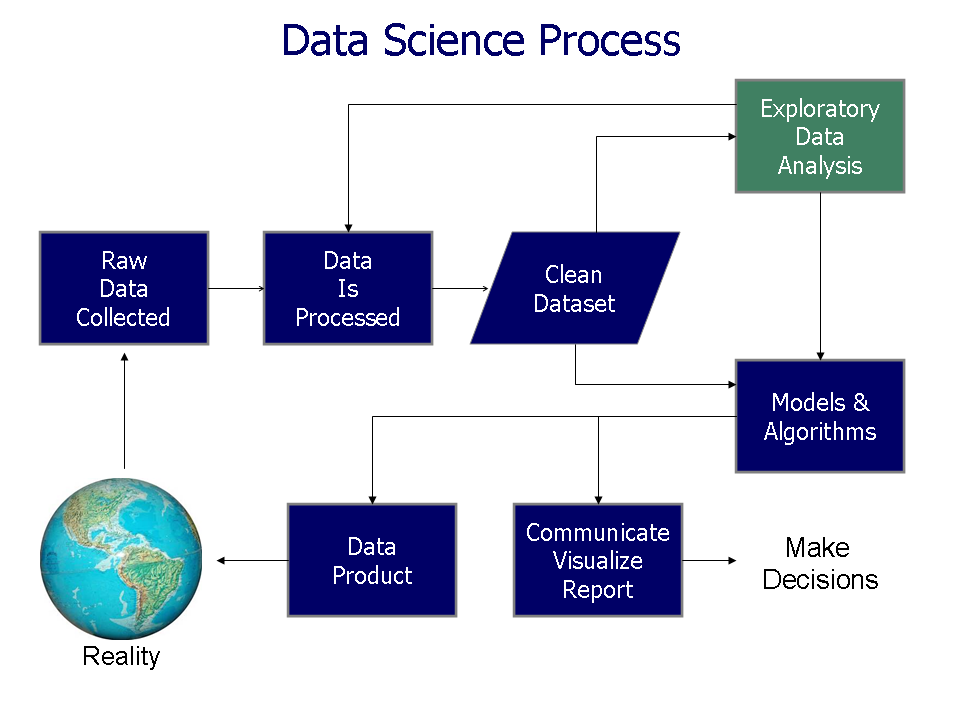
Data is the raw material. It might be customer purchase histories, supply chain logs, or market trends.
Prediction is the output of a model. We use the data to train algorithms to forecast future events, such as customer churn, product demand, or the likelihood of a loan default.
Decision is the action you take based on that prediction. If the model predicts a high churn risk for a valuable customer, the decision is to offer them a discount. If it predicts high demand, the decision is to increase inventory.
This paradigm forces a clear link between analysis and action. However, it also introduces a crucial trade-off: model complexity versus interpretability. A highly complex neural network might produce incredibly accurate predictions, but if you can't explain why it's making them, it's difficult to trust its recommendations, especially in high-stakes environments like finance or healthcare. A simpler model, like a decision tree, might be slightly less accurate but far easier to understand and justify to stakeholders.
Data-driven decision frameworks provide a structured approach to decision-making, using data as a primary driver.
The goal isn't just to build the most accurate model, but the most useful one. A useful model provides predictions that are not only accurate but also transparent enough to inform intelligent, confident business decisions. This balance is the core challenge for the modern analyst and manager.