Advanced Brick Veneer Crack Analysis
Crack Identification
Reading the Cracks
Cracks in a brick wall are like symptoms of a potential problem. Some are as harmless as a common cold, while others can signal a serious issue with the building's health. The key is learning to distinguish between the two. By examining a crack's size, shape, and location, you can start to understand the forces acting on the wall.
Structural Cracks
A structural crack is a red flag. It suggests that the building's foundation or frame is shifting, which is a problem that goes deeper than just the brick veneer. These cracks indicate that the load-bearing parts of the structure are compromised.
Think of a structural crack as a sign of an unstable foundation. The bricks are just showing the stress from a problem below.
Key characteristics of structural cracks include:
- Size: They are typically wider than 1/4 inch (about 6mm).
- Pattern: They often run in a diagonal, stairstep pattern, following the path of least resistance along the mortar joints.
- Displacement: One side of the crack may be pushed out or be higher than the other. This shows the wall is moving.
- Continuation: The crack might extend up to the roofline or down into the concrete foundation.
If you see a crack like this, it's a sign of differential settlement, where one part of the foundation is sinking more than another. This is a serious issue that requires professional assessment.
Non-Structural Cracks
Non-structural cracks are more common and usually less alarming. They are typically related to the natural behavior of the building materials themselves, not a failing foundation. They occur as bricks and mortar expand and contract with changes in temperature and moisture.
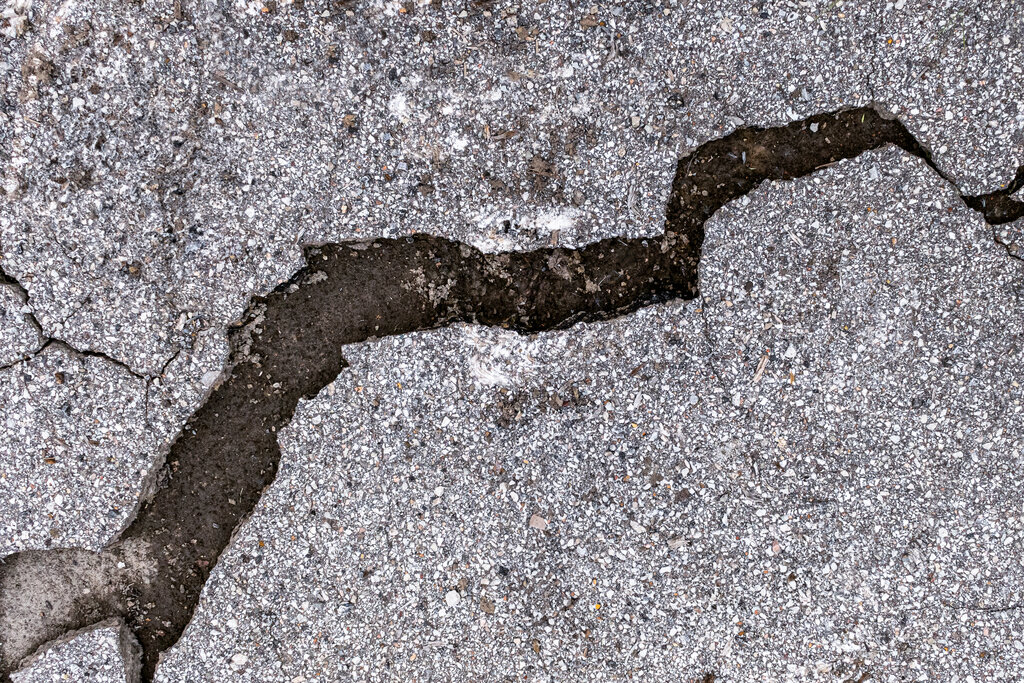
You can often identify non-structural cracks by these traits:
- Size: They are very thin, usually hairline cracks less than 1/8 inch (about 3mm) wide.
- Location: They are often confined to a single area, like around a window or door opening.
- Pattern: They tend to be vertical and follow mortar joints rather than breaking through the bricks themselves.
From a structural point of view, masonry is a material characterised by a low tensile strength and reduced tensile stress values can induce the cracking process and damage to material.
While not an immediate danger, these cracks should still be sealed to prevent water from getting into the wall cavity, which could cause more significant problems over time.
Common Patterns and What They Mean
The pattern of a crack provides strong clues about its cause. Recognizing these patterns is a crucial step in diagnosing the health of a brick wall.
| Crack Pattern | Common Cause | Severity Level |
|---|---|---|
| Stairstep | Foundation Settlement | High |
| Vertical (Hairline) | Thermal Expansion/Contraction | Low |
| Vertical (Wide) | Foundation Settlement | High |
| Horizontal | Foundation Heaving / Wall Pressure | High |
Horizontal cracks are particularly concerning. They can be caused by frost heave, where freezing soil expands and pushes up against the foundation, or from the pressure of soil and water against a basement wall. A horizontal crack often means the wall is bowing and at risk of failure.
Beyond the pattern, several visual indicators can help you assess a crack's severity. First, the width. A simple rule is that the wider the crack, the more serious the problem is likely to be. Second, look for displacement. If the bricks on one side of the crack are no longer flush with the other side, it's a clear sign of movement.
Finally, observe the crack over time. Is it getting longer or wider? A static crack is less of a concern than a dynamic one that continues to grow. You can place a piece of tape over the crack and see if it breaks, or use a dedicated crack monitor for more precise tracking.
You notice a crack in your brick wall that runs in a diagonal, stairstep pattern and is about 1/2 inch wide. What is the most likely cause?
A horizontal crack in a basement brick wall is particularly concerning because it often indicates that the wall is bowing inward.
Understanding these differences is the first step in properly assessing any brick wall.