Advanced Bodyweight Mastery and Skill Progressions
Explosive Pulling Power
From Pull-Up to Liftoff
You've mastered the standard pull-up. Getting your chin over the bar is a milestone, but the muscle-up requires a different kind of strength. It's not just about pulling; it's about launching. The goal shifts from simply reaching a target to generating enough upward velocity to transition into a dip. This requires explosive power.
Think of it like this: a regular pull-up is like climbing a ladder, one rung at a time. An explosive pull is like jumping to a higher rung, skipping several in between. To do this, you need to train your body to pull not just harder, but faster. The first step in this progression is the chest-to-bar pull-up.
The High Pull
The chest-to-bar pull-up is your new benchmark. As the name implies, the objective is to make contact with the bar somewhere on your chest, typically at the sternum. This demands significantly more power than a chin-over-bar pull-up. The key is improving your rate of force development. This isn't just about building bigger muscles; it's about enhancing your , training your central nervous system to activate motor units more quickly and forcefully.
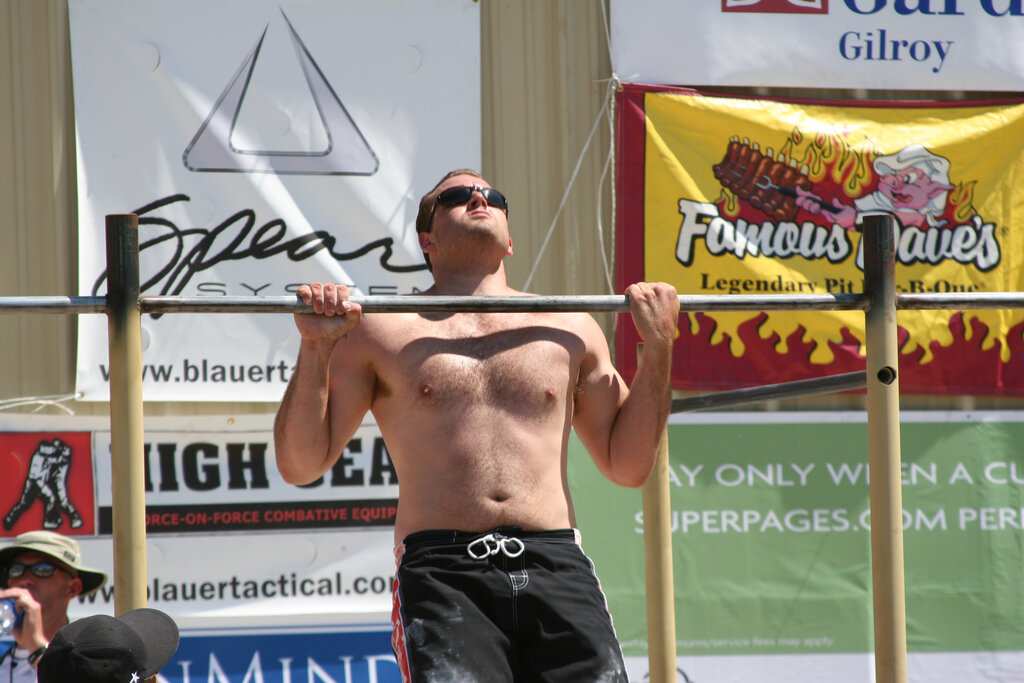
Once you can consistently perform chest-to-bar pull-ups, the next target is pulling the bar to your waist or hips. This level of height is impossible with a straight vertical pull. You need to change your trajectory.
The C-Curve Trajectory
A standard pull-up follows a mostly vertical path. For a muscle-up, you need to pull your body up and around the bar in a C-shaped arc. This movement creates the space and momentum needed for the transition over the bar.
Instead of thinking 'up,' think 'around.' Your body moves away from the bar as you pull, then curves back in towards it at the peak of the movement.
This arc is initiated by a slight swing or 'kip', but for a strict muscle-up, it's generated by aggressively pulling your chest away from the bar as you ascend. This creates the horizontal displacement you need. To manage this movement and prepare for the final push, you need to adjust your grip.
The False Grip
The transition from pulling to pushing is the most common failure point in a muscle-up. A normal grip makes it nearly impossible to get your hands into a pressing position. This is where the comes in. Instead of wrapping your thumb around the bar, you place the bar on the meaty part of your palm, with your wrists draped over the top.
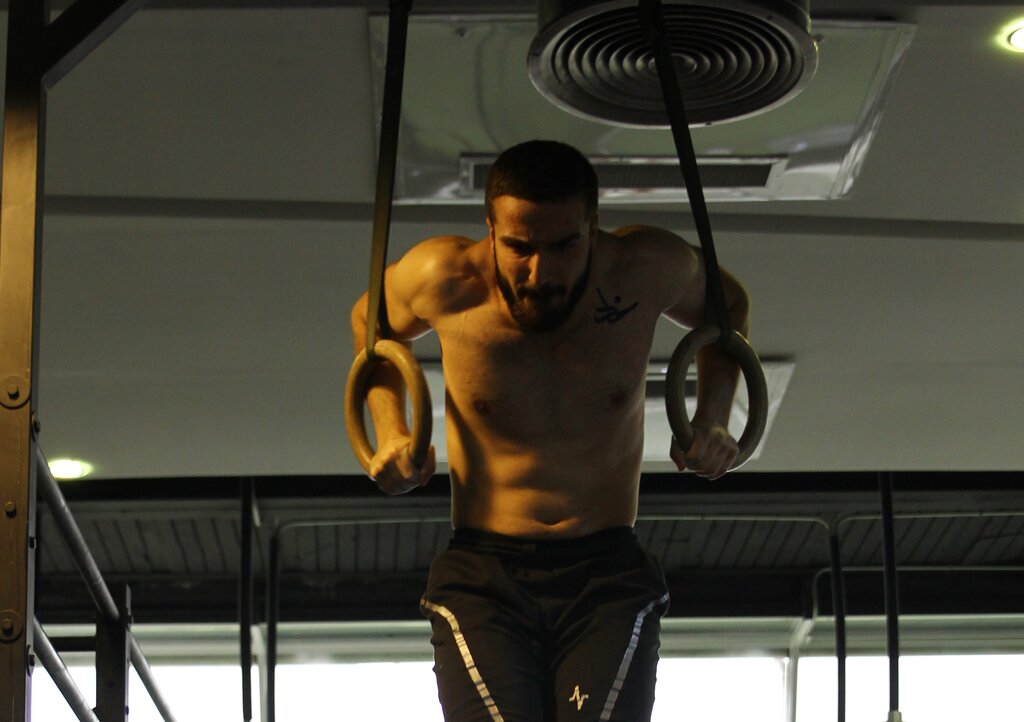
This grip feels awkward and weak at first, so it's vital to practice it with simple hangs and bodyweight rows before attempting a full muscle-up. The false grip essentially pre-rotates your wrists, placing your hands in a perfect position to push down once your chest clears the bar. It is the mechanical key that unlocks the transition.
With an explosive C-curve pull and a solid false grip, you create a moment of near-weightlessness at the top. This is the window of opportunity. You're not pulling anymore. You're aggressively throwing your head and chest forward over the bar, allowing your elbows to flip up, ready to press out of the bottom of the dip.
What is the primary goal of an explosive pull for a muscle-up, as opposed to a standard pull-up?
What is the key physiological adaptation, besides muscle size, that is trained by practicing explosive pull-ups like the chest-to-bar pull-up?
Combining these elements—high-velocity pulling, the C-curve path, and the false grip—turns the impossible transition into a smooth, powerful movement.