Advanced Body Recomposition and Fitness Optimization
Progressive Overload Variables
Beyond More Weight
You already know that to get stronger and build muscle, you need to challenge your body. The principle of progressive overload is simple: you must consistently increase the demand placed on your muscles. But most people think that just means adding more plates to the barbell. That's a reliable method, but it's only one tool in the toolbox. True long-term progress comes from strategically manipulating several training variables to ensure you're always providing a new stimulus for adaptation, without stalling or getting injured.
Progressive overload is the gradual increase of stress placed on the body during exercise training.
Let's move beyond the simple idea of "lift heavier" and explore the numbers that truly drive change. The three main variables you can control are volume, intensity, and frequency.
Calculating Your Workload
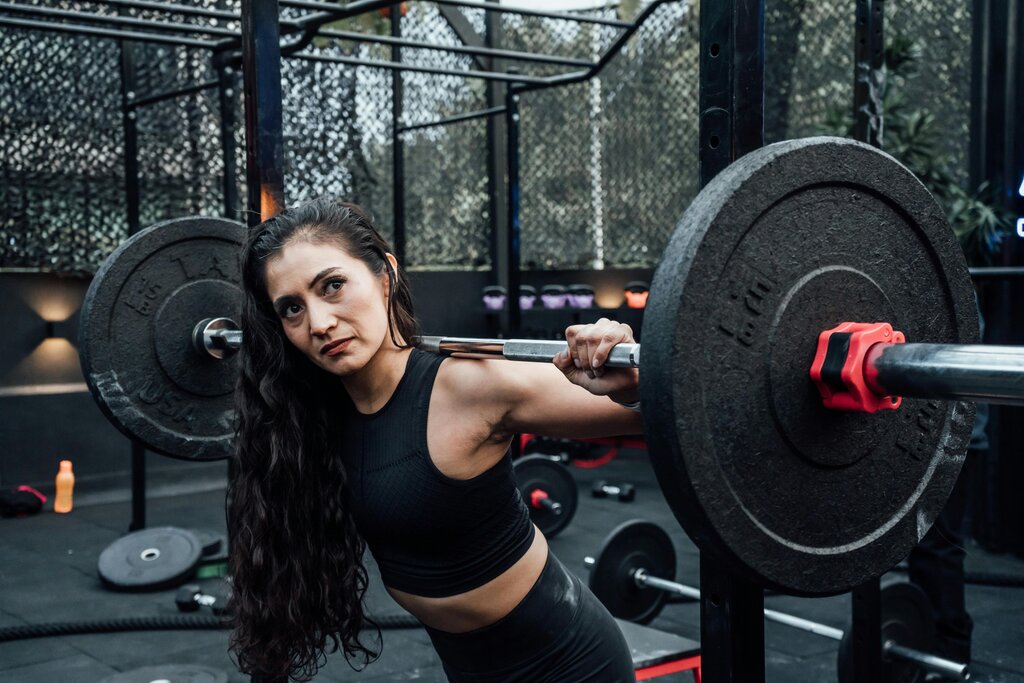
Volume is the total amount of work you perform. It's the most straightforward way to measure your training dose. We calculate it by multiplying the weight you lift by the number of repetitions and sets you complete for a given exercise.
If you squat 100 kg for 3 sets of 10 repetitions, your volume is 3,000 kg. To apply progressive overload, you could increase any of these components next week. You could aim for 3 sets of 11 reps (3,300 kg), add a fourth set (4,000 kg), or increase the weight to 102.5 kg. Small, consistent increases in total volume are a reliable driver of muscle growth.
Intensity and Effort
Intensity isn't just about how heavy the weight feels; it's a measure of how close you are to failure. While percentage-based training (e.g., lifting 80% of your one-rep max) is a precise way to manage intensity, it can be rigid. Your strength fluctuates daily. A more flexible and auto-regulated method is to use scales of perceived exertion.
The two most common scales are RPE (Rate of Perceived Exertion) and RIR (Reps in Reserve). RPE is a scale from 1-10 rating how hard a set felt. RIR is more direct: it's how many more reps you could have done with good form before failing. They are two sides of the same coin.
| RPE | Reps in Reserve (RIR) | Description |
|---|---|---|
| 10 | 0 | Absolute maximum effort, no more reps possible. |
| 9 | 1 | Could have done one more rep. |
| 8 | 2 | Could have done two more reps. |
| 7 | 3 | Weight feels challenging, but several reps left. |
| 6 | 4 | Moderate effort, used for warm-ups or recovery. |
Instead of prescribing a fixed weight, a programme might say, "3 sets of 8 reps at RPE 8." This means you choose a weight that allows you to complete 8 reps feeling like you could have done two more. This approach adapts to your daily energy levels, ensuring you're always training hard enough to cause adaptation but not so hard that you can't recover.
Other less common variables include manipulating rest periods. Shortening the rest time between sets increases [{
}] and cardiovascular demand, another valid way to make a workout progressively harder without changing weight, sets, or reps.
Stimulus vs Fatigue
Every exercise provides a muscle-building stimulus but also generates fatigue. The goal is to choose exercises that give you the most bang for your buck: the highest stimulus for the least amount of overall fatigue. This is known as the (SFR).
An exercise with a high SFR targets the desired muscle group effectively with minimal stress on your joints, nervous system, or other muscle groups. For example, a heavy, high-rep set of barbell deadlifts has a very low SFR. It creates an enormous amount of systemic fatigue for a relatively modest stimulus to your hamstrings and glutes. In contrast, a Romanian Deadlift (RDL) provides a massive stimulus directly to the hamstrings with far less overall body fatigue, giving it a much better SFR for hypertrophy.
Optimising your training involves selecting exercises with a good SFR and then applying progressive overload through volume, intensity, and frequency. This ensures the stimulus is directed where you want it, allowing for consistent gains and better recovery between sessions.
Time to review the key terms we've covered.
Now, let's see how well you can apply these concepts.
What is the principle of progressive overload?
You performed 4 sets of 8 repetitions of squats with 100 kg. What was your total training volume for that exercise?
By thoughtfully adjusting these variables, you move from simply exercising to intelligently training. You now have a framework for making continuous progress, breaking through plateaus, and building a stronger, more muscular physique over the long term.