Advanced Behavioral and Social Science
Advanced Research Methods
Beyond the Basics of Study Design
Moving beyond simple experiments, researchers often need more complex designs to answer nuanced questions about human behavior. Instead of just looking at one factor, we might want to know how multiple factors interact. This is where factorial designs come in.
Imagine you're testing a new therapy for anxiety. You also suspect that the therapy might work differently depending on whether patients also practice mindfulness. In a factorial design, you wouldn't run two separate studies. You'd create groups that cover all combinations: therapy only, mindfulness only, both, and neither (the control group). This approach is efficient and reveals interactions you'd otherwise miss. For example, you might find the therapy is only effective when combined with mindfulness.
Sometimes, you can't randomly assign people to groups for ethical or practical reasons. You can't assign someone to be a smoker, for instance. In these cases, researchers use quasi-experimental designs. These designs are like experiments but lack random assignment. They are less powerful for proving cause and effect but are invaluable for studying real-world situations where controlled experiments are impossible.
Research Through Time
How do experiences in early childhood affect adult life? How do social attitudes change over decades? To answer questions about change over time, researchers use longitudinal studies. These involve tracking the same individuals, or cohorts, over a period that can span years or even a lifetime. This method provides powerful insights into development, aging, and the long-term effects of events.
Of course, following people for decades is challenging. A major hurdle is attrition, which is when participants drop out of the study. If the people who drop out are different from those who stay, it can bias the results. These studies are also expensive and time-consuming, but the rich data they yield is often worth the effort.
| Study Type | Description | Best For... |
|---|---|---|
| Panel Study | Follows the exact same group of individuals over time. | Tracking individual changes and development. |
| Cohort Study | Follows a group of people who share a common characteristic (e.g., born in the same year). | Understanding how a specific generation or group changes. |
| Retrospective Study | Looks backward by collecting data on past events from a sample. | Quickly studying the history of a particular outcome. |
Blending Methods for Deeper Insights
Some questions can't be fully answered with just numbers or just stories. Mixed-method approaches strategically combine quantitative (numerical) and qualitative (descriptive) data to gain a more complete understanding. The numbers tell you what is happening, while the narratives tell you why or how.
For example, a survey might show that a new public health program is effective (quantitative). But interviews with participants could reveal the specific reasons for its success, providing context and personal stories that numbers alone can't capture (qualitative). This combination provides a richer, more robust conclusion.
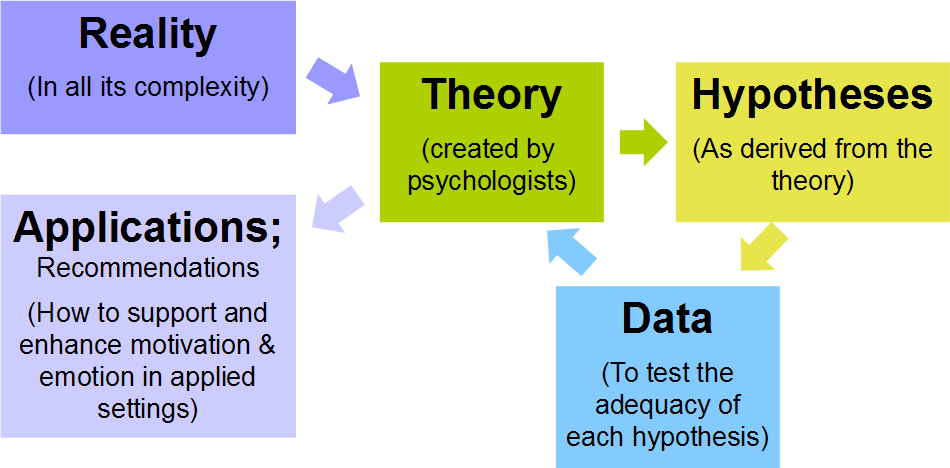
There are different ways to mix methods. In a convergent parallel design, you collect both types of data at the same time and then merge them. In an explanatory sequential design, you start with quantitative data and then use qualitative data to help explain your initial findings. The choice of design depends on the research question.
Building Trustworthy Research
For research to be valuable, its findings must be trustworthy. This comes down to two key concepts: reliability and validity.
Reliability
noun
The consistency of a measure. If you repeat the study under the same conditions, will you get the same results?
Validity
noun
The accuracy of a measure. Is the study actually measuring what it claims to be measuring?
Ensuring reliability might involve checking that different researchers rating a behavior (inter-rater reliability) agree. Ensuring validity is about making sure your conclusions are sound (internal validity) and that they apply to the real world (external validity).
Beyond technical rigor, trustworthy research must be ethical. This is non-negotiable. Researchers have a duty to protect the dignity, rights, and welfare of their participants. This involves getting informed consent, ensuring participants know what they're signing up for, protecting their confidentiality, and allowing them to withdraw at any time without penalty. All research involving human subjects must be reviewed and approved by an Institutional Review Board (IRB) to ensure it meets strict ethical standards.
The core ethical principle is to minimize harm and maximize benefits for all participants involved in a study.
Computational Tools
Modern social science research is inseparable from computational tools. The sheer volume and complexity of data require powerful software for analysis. Programming languages like R and Python have become standard in many fields. They offer vast libraries for statistical analysis, data visualization, and even machine learning.
For example, a researcher might use Python with the pandas library to clean and organize a massive dataset from a national survey. Then, they might use scikit-learn to build a predictive model. For qualitative data, software like NVivo or ATLAS.ti helps researchers code interview transcripts and identify emerging themes in a systematic way.
# A simple Python example using the pandas library
# to load a dataset from a CSV file.

import pandas as pd

# Define the file path to the data.
file_path = 'study_data.csv'

# Use pandas to read the CSV into a DataFrame.
data = pd.read_csv(file_path)

# Display the first 5 rows of the data.
print(data.head())
These tools don't replace critical thinking; they augment it. They allow researchers to explore data in more sophisticated ways, test complex hypotheses, and handle datasets that would be unmanageable by hand. Proficiency with these tools is now a core skill for conducting advanced research.
Ready to check your understanding of these advanced methods?
A researcher wants to study the effect of a new cognitive training program on memory. They also hypothesize that the program's effectiveness might differ between younger and older adults. What is the most appropriate research design to test both the program's overall effect and its differential effect across age groups simultaneously?
What is the primary characteristic that distinguishes a true experimental design from a quasi-experimental design?
Mastering these methods allows us to ask deeper questions and find more reliable answers about the complexities of human behavior.