Advanced Banking Compliance and Financial Crime Prevention
Advanced Risk Assessment
Beyond the Checklist
Anti-Money Laundering (AML) compliance used to be a matter of ticking boxes. If a bank followed the prescribed rules, it was considered compliant. Today, that's not enough. Regulators worldwide, guided by standards like the 's Recommendation 1, demand a more intelligent approach: the Risk-Based Approach (RBA).
The RBA shifts the focus from rigid, one-size-fits-all rules to a dynamic assessment of specific risks. Instead of treating every customer and transaction the same, a bank must identify where its greatest vulnerabilities lie and apply its resources accordingly. This means more stringent controls for high-risk scenarios and simplified measures for low-risk ones. The goal is not just compliance, but effectiveness.
Building the Risk Profile
The cornerstone of the RBA is the Institutional Risk Assessment (IRA). This is a comprehensive, bank-wide analysis to identify, measure, and understand its unique money laundering and terrorist financing risks. It's a living document, not a one-time exercise, that must be updated as threats evolve.
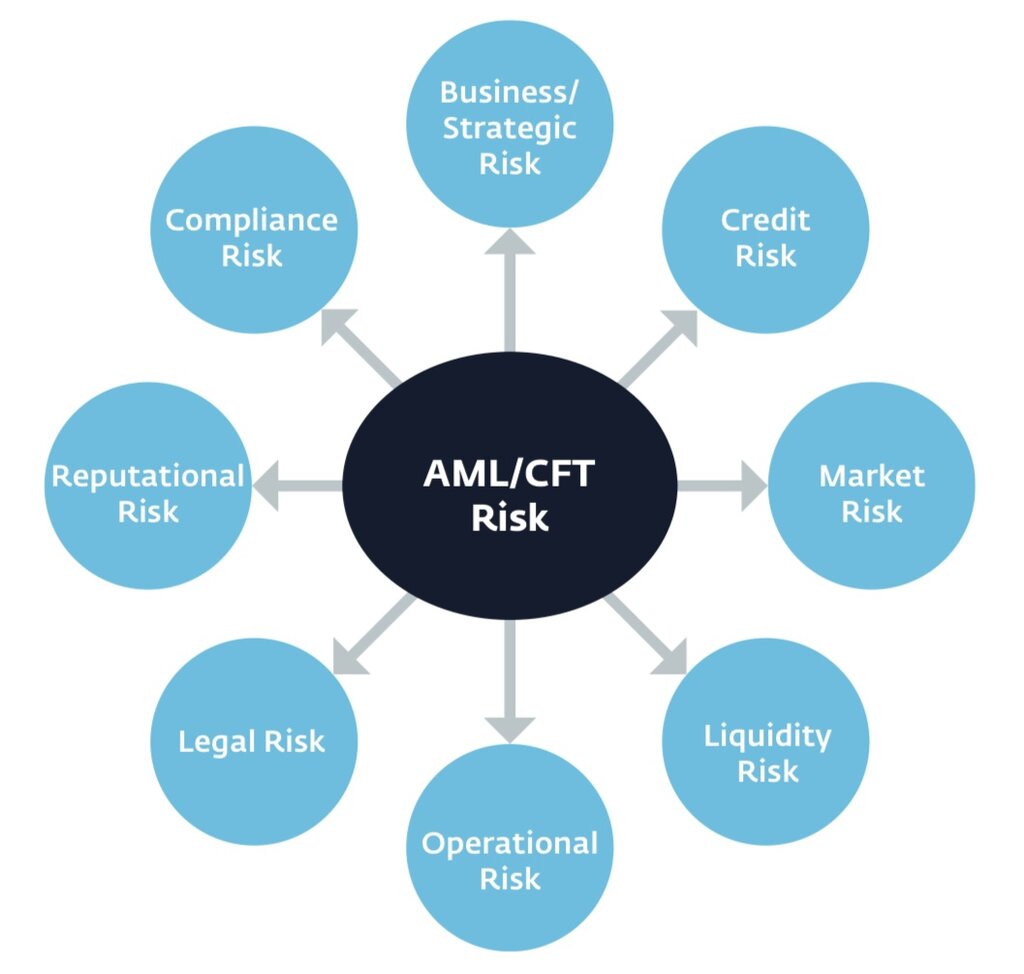
An IRA requires a bank to look inward at its own operations and outward at the environment it operates in. The assessment breaks down risk into several key categories.
| Risk Category | Key Considerations |
|---|---|
| Customers | Are they politically exposed persons (PEPs)? Do they operate in high-risk industries like casinos or real estate? Are they non-resident clients? |
| Products/Services | Does the bank offer services like anonymous accounts, private banking, or large-scale wire transfers that are attractive to launderers? |
| Delivery Channels | How do customers interact with the bank? Non-face-to-face relationships (online banking) or the use of intermediaries can elevate risk. |
| Geography | Where does the bank operate and where are its customers from? Transactions involving countries with weak AML controls or high levels of corruption pose a greater threat. |
By evaluating these factors, a bank determines its Inherent Risk. This is the raw risk exposure before any controls are applied. But no bank operates without safeguards. The next step is to evaluate the strength of its AML policies, procedures, and technologies. This is its Control Effectiveness. The risk that remains after controls are applied is the Residual Risk, or Net Risk.
The Nepalese Context
The (NRB) has mandated the adoption of the RBA for all financial institutions in the country. The NRB's circulars provide specific guidance on conducting the IRA and defining risk appetite. For instance, the NRB expects certain customer types, such as PEPs or those from high-risk jurisdictions, to be automatically categorized as 'High Risk,' requiring enhanced due diligence.
Implementing this framework in Nepal presents a unique challenge: balancing stringent AML rules with the goal of financial inclusion. A significant portion of Nepal's economy is fueled by remittances from abroad, and many citizens may lack formal documentation. A poorly implemented RBA could lead to , where banks exit relationships with entire categories of customers they deem too risky.
This is counterproductive. The goal of the RBA is not to avoid risk, but to manage it intelligently. For Nepal, this means developing nuanced risk models that can differentiate between a low-income migrant worker sending money home and a high-risk transaction intended to launder illicit funds. It requires a sophisticated understanding of both global standards and local realities.
Ready to test your understanding? This quiz covers the core principles of the Risk-Based Approach.
What is the primary goal of the Risk-Based Approach (RBA) in AML compliance?
A bank assesses its vulnerabilities to money laundering based on its products, customers, and geography, before considering its internal AML policies. What is this initial assessment of risk called?
By moving to a risk-based framework, banks can better protect themselves and the financial system from abuse, all while serving their customers more effectively.