Advanced Artificial General Intelligence
AGI Foundations
Beyond Specialized Skills
Most AI today is what's known as narrow AI. It's incredibly good at specific tasks. An AI can beat the world champion at chess, identify certain types of cancer from medical scans, or write a poem in the style of Shakespeare. But the chess-playing AI can't write a poem, and the poetry AI can't read a medical scan. They are specialists, locked into their single domain.
Artificial General Intelligence, or AGI, is different. It's the pursuit of an AI that isn't limited to one task. The goal is to create a machine with the ability to understand, learn, and apply its intelligence to solve any problem, much like a human being. It's about versatility and adaptation, not just specialized skill.
Artificial General Intelligence
noun
A theoretical form of AI where a machine possesses the ability to understand or learn any intellectual task that a human being can.
The key word is "general." An AGI wouldn't need to be explicitly programmed for every new challenge it faces. Instead, it could draw on its existing knowledge and reasoning abilities to figure things out. If it learned how to play the piano, it might apply some of those principles to learning the guitar, without starting from scratch.
Artificial General Intelligence is the ability of an AI agent to learn, perceive, understand, and function completely like a human being.
A Long-Standing Dream
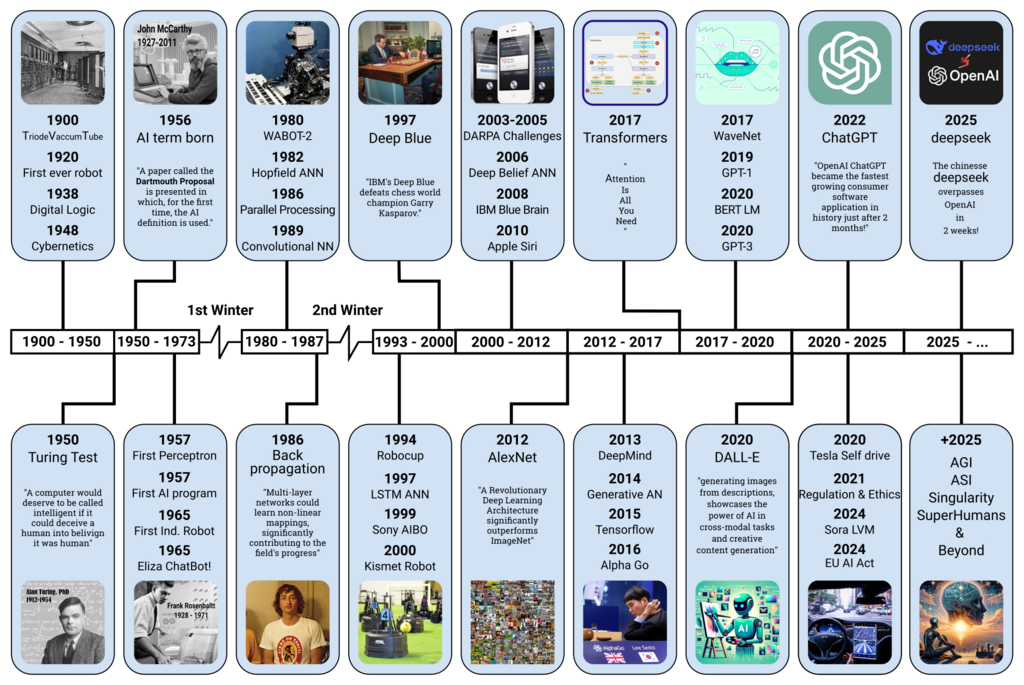
The dream of a machine with human-like intelligence is almost as old as computers themselves. Early pioneers like Alan Turing explored the idea of a "thinking machine" in the 1950s. The field of AI was formally born at the Dartmouth Workshop in 1956, where researchers gathered with a shared, ambitious goal: to make machines that could reason, use language, and think abstractly.
Initial optimism was high, but the immense difficulty of the task soon became clear. The field went through several "AI winters"—periods when progress stalled, and funding and interest waned. Despite these setbacks, the core ambition of creating a general intelligence never disappeared.
What AGI Aims to Do
Creating AGI isn't just about building a bigger database or a faster processor. It's about replicating the fundamental cognitive abilities that allow humans to navigate the world. Researchers are focused on several core objectives.
| Objective | Description |
|---|---|
| Common Sense Reasoning | Understanding the unwritten rules and basic facts about the world that humans know implicitly. |
| Transfer Learning | Applying knowledge gained from one task to solve a different, but related, problem. |
| Natural Language | Grasping the full context, nuance, and ambiguity of human language, not just recognizing words. |
| Abstract Thinking | The ability to think about concepts that are not tied to concrete, physical objects, like justice or humor. |
These aren't independent goals. True general intelligence requires all of them working together. A machine can't truly understand language, for instance, without a foundation of common sense.
Where We Are Now
We are not yet at AGI. However, recent years have seen remarkable progress. The development of large language models (LLMs) like those that power ChatGPT is a major milestone. These models show a surprising ability to handle a wide range of tasks they weren't explicitly trained for, suggesting a glimmer of the generality that AGI requires.
They can write code, summarize documents, and engage in creative brainstorming. This versatility is a step beyond the narrow AI of the past. But while they can mimic understanding, they still lack genuine comprehension, common sense, and the ability to truly learn from experience in the way a human does.
Current AI can generate a recipe for a cake, but it doesn't know what a cake is, why we eat it, or what it tastes like.
Despite this, there are clear signs of progress. But the gap between today's most advanced AI and a true AGI remains vast. The biggest hurdles are not just about scaling up current technology; they're about fundamental conceptual breakthroughs that have yet to be made.
Let's test your knowledge of what you've learned so far.
What is the primary distinction between the AI we have today (narrow AI) and the goal of Artificial General Intelligence (AGI)?
An AI system that can flawlessly translate between hundreds of languages but is unable to explain the plot of a simple children's story is an example of ________.
The path to AGI is long and full of complex challenges, but the pursuit continues to drive innovation across the entire field of artificial intelligence.