Advanced AP Human Geography Unit 5 Masterclass
Von Thünen Model Limitations
Beyond the Isotropic Plain
The Von Thünen model's foundational assumption of an isotropic plain—a featureless, uniform landscape—is its most significant and obvious departure from reality. In the real world, topography and infrastructure create complex spatial variations that warp the model's perfect concentric rings. A navigable river, for instance, dramatically lowers transport costs along its banks, elongating the zones for transport-sensitive goods in a linear fashion. Conversely, a mountain range acts as a barrier, compressing the rings against it and creating a 'transport shadow' on the leeward side where land use patterns are sharply truncated.
Modern infrastructure, particularly highways and rail networks, creates corridors of reduced transport cost, effectively pulling the zones outward along these arteries. The resulting land-use map is not a set of circles, but a star-shaped or amoebic pattern dictated by the efficiency of the transport grid. The model's logic remains—cost-distance is key—but the calculation of that distance is no longer a simple Euclidean measure from a single point.
The Cold Chain Revolution
Perishability was a primary driver of Von Thünen's land-use rings. Dairy and produce, which spoiled quickly, had to be located close to the city. The advent of modern logistics, specifically refrigerated transport or '', has profoundly disrupted this logic. An unbroken, temperature-controlled supply chain means that perishability is no longer the hard constraint it once was.
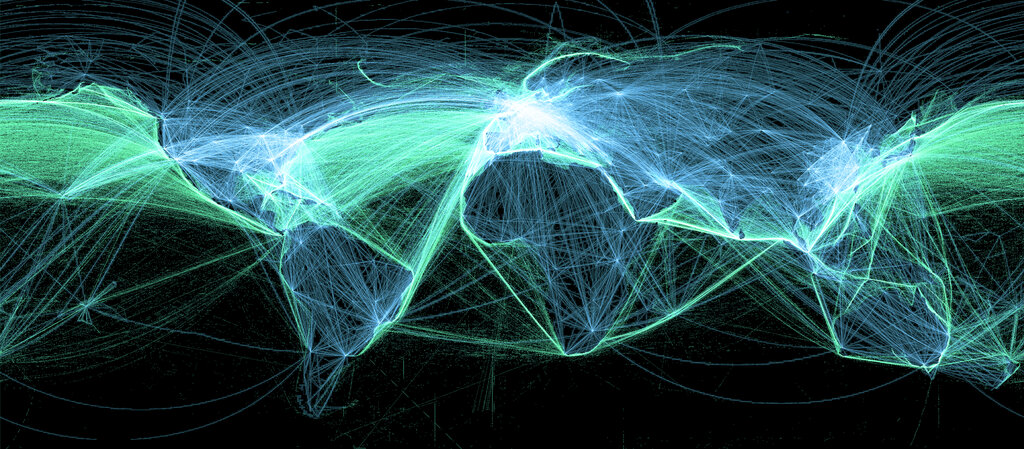
This technological shift allows for the spatial decoupling of production and consumption. Produce can be grown in regions with the best comparative advantage in climate or labor cost, not just proximity to a market. Consequently, the bid-rent curves for goods that were once steep are now significantly flatter. The key factor is no longer simply distance, but access to the global cool chain network. A farm located far from a city but adjacent to a major refrigerated port may have a significant advantage over a closer farm with poor transport links.
New Centers of Gravity
Globalization has replaced the single central market with a multi-nucleated system of production and consumption. We now see highly specialized agricultural zones that function as regional hubs, serving global, not local, demand. California's is a prime example, producing a vast percentage of certain crops for the entire United States and beyond. Its land use is determined not by its distance to San Francisco, but by its unique climate, access to water, and integration into national and international distribution networks.
Furthermore, government intervention introduces major distortions that the purely economic model cannot predict. Agricultural subsidies can make an otherwise unprofitable crop viable, propping up specific industries in regions where the bid-rent theory would suggest they shouldn't exist. Water rights, zoning laws, and environmental regulations also act as powerful non-market forces shaping land-use patterns in ways that defy simple cost-distance calculations.
| Feature | Von Thünen's Model (1826) | Modern Reality (21st Century) |
|---|---|---|
| Market | Isolated, single urban center | Global, multi-nucleated network |
| Transport | Horse-drawn cart; cost is a linear function of distance | Refrigerated trucks, cargo ships, air freight; cost varies by mode |
| Perishability | A primary constraint; dictates location of dairy/produce | Largely mitigated by cool chain technology |
| Land | Isotropic plain; uniform fertility and climate | Varied topography, soil quality, and microclimates |
| Economic Drivers | Profit maximization based on rent & transport cost | Subsidies, trade agreements, economies of scale, regulations |
Let's test your understanding of how these modern factors affect the classic model.
According to the Von Thünen model, how would the construction of a major highway from the central city outwards affect the shape of the agricultural zones?
What is the primary effect of modern refrigerated transport, or 'cool chains', on the logic of the Von Thünen model?
While Von Thünen's foundational logic about the trade-off between land rent and transport costs remains a core principle in economic geography, its original formulation is a poor fit for today's complex, interconnected world. The model serves best as a theoretical baseline against which we can measure the profound impact of technology, infrastructure, and policy on global land use.