Advanced Ant Studies: Behavior and Ecology
Ant Caste Polymorphism
Beyond Queen and Worker
You already know that ant colonies have a queen and workers. But this division of labor is often far more complex than just two roles. Many ant species exhibit a fascinating phenomenon called polymorphism, where individuals from the same colony come in different shapes and sizes, each tailored for specific jobs.
Polymorphism
noun
The occurrence of multiple distinct forms or types of individuals within the same species. In ants, this often refers to the different physical castes within a colony, such as minors, majors, and soldiers.
Think of an ant colony not as a simple factory with one boss and identical workers, but as a bustling city. You have builders, soldiers, foragers, and even living food storage containers. This diversity doesn't happen by chance. It's the result of a highly regulated developmental process that directs a larva toward a specific destiny.
Forging a Caste
How does an ant larva, which has the potential to become any caste, end up as a tiny forager or a massive soldier with powerful jaws? It's not usually determined by its genes alone. While genetics can set the boundaries of what's possible, the final outcome is often decided by environmental cues. This is a form of phenotypic plasticity, where an organism's environment shapes its physical traits.
The same genome can produce wildly different bodies. The key is which genes get turned on or off during development.
Nutrition is the most critical factor. A larva that receives more protein-rich food is more likely to develop into a larger caste, like a soldier or even a new queen. Temperature also plays a role; subtle shifts in the nest's climate can influence developmental pathways. Finally, the colony uses chemical signals called to regulate its own demographics. The queen, for example, releases pheromones that suppress the reproductive development of other females, ensuring she remains the primary egg-layer.
The Cast of Characters
While we often focus on the queen and her workers, the caste system is more layered. Let's break down the main players.
Queens and Males: These are the reproductive castes. Queens are typically the largest individuals, specialized for egg-laying. Males, often called drones, are usually winged and have one job: to mate with a queen. They don't participate in colony life and die shortly after mating.
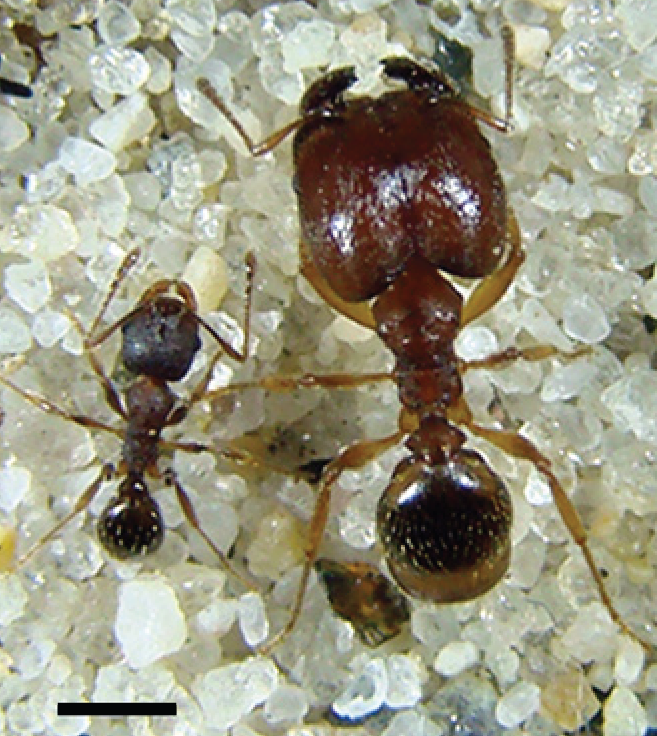
Worker Subcastes: This is where polymorphism truly shines. Workers are sterile females, and they can be divided into several groups based on size and function.
- Minors: The smallest workers. They often take on tasks inside the nest, like caring for the queen and her brood (eggs, larvae, and pupae).
- Majors (or Soldiers): Significantly larger workers, often with disproportionately large heads and powerful mandibles. Their primary role is colony defense, but they also help with heavy lifting, like cracking open tough seeds or transporting large food items.
Some species, like the leaf-cutter ants, have an even more graded system, with intermediate-sized workers specializing in tasks like cutting and transporting leaves.
Why Bother with Specialization?
This complex system of caste polymorphism is a powerful evolutionary strategy. By having specialized workers, the colony can perform many tasks at once with incredible efficiency. It's an assembly line of survival. While the minors are tending the nursery, the majors are guarding the entrance, and other workers are out foraging for food. This division of labor allows the colony to exploit resources more effectively, defend against predators, and raise new generations, ensuring the as a whole thrives.
This specialization creates a highly resilient and adaptable society. If one group of workers is lost, others can sometimes shift their roles. This adaptability, driven by the underlying principles of polymorphism, is a key reason why ants are one of the most successful groups of animals on the planet.
What is the primary factor that determines whether an ant larva develops into a small minor worker or a large major soldier?
Which of the following describes the main function of the 'major' worker subcaste, also known as soldiers?