Advanced Aibe Concepts
Advanced Constitutional Law
The Constitution's Conscience
Every constitution has a heart and a mind. The heart contains the fundamental rights—the core civil and political liberties guaranteed to individuals. These rights are legally enforceable, or justiciable. If a government violates them, you can take it to court. Think of them as the constitution's non-negotiable promises.
The mind, on the other hand, holds the directive principles. These are the long-term socio-economic goals the state aims to achieve, like ensuring a living wage or protecting the environment. They are aspirational guides for governance. Unlike fundamental rights, these principles are generally non-justiciable. You can't sue the government for failing to implement a directive principle.
Fundamental Rights act as a brake on state power, protecting individual liberty. Directive Principles are the steering wheel, guiding the state toward a just society.
This creates a natural tension. What happens when a government, in pursuing a directive principle like land reform, passes a law that infringes on the fundamental right to property? For decades, courts wrestled with this question. Early on, the judiciary held that fundamental rights were sacrosanct and could not be overridden by directive principles.
Over time, this view evolved. Courts began to see both parts of the constitution as complementary. While directive principles remained unenforceable on their own, the judiciary started using them as a lens to interpret laws and fundamental rights. A law enacted to further a directive principle might be viewed more favorably by a court, so long as it doesn't completely destroy a fundamental right. It's a delicate balancing act that continues to shape constitutional law.
The Unshakeable Core
The conflict between individual rights and state goals led to a major constitutional question: Is Parliament's power to amend the constitution unlimited? Could it, for example, amend the constitution to eliminate elections or abolish the courts? This question came to a head in the landmark Indian Supreme Court case, Kesavananda Bharati v. State of Kerala (1973).
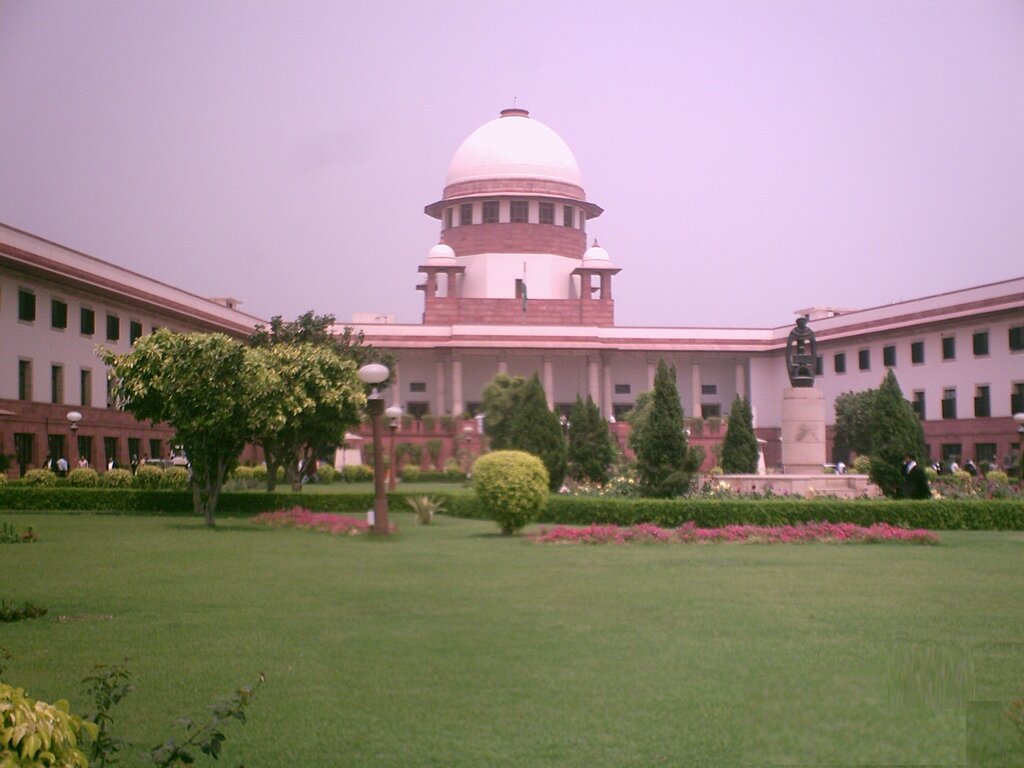
In a marathon hearing, the court concluded that while Parliament has the authority to amend the constitution, it cannot alter its "basic structure." This ruling was a monumental check on legislative power. It established that a constitution's fundamental identity cannot be destroyed, even through the formal amendment process.
Basic Structure Doctrine
noun
A judicial principle that a country's constitution has certain essential features that cannot be amended or repealed by the legislature. These features are not a fixed list but are determined by the judiciary and include principles like democracy, rule of law, secularism, and judicial independence.
The doctrine means that any constitutional amendment is subject to judicial review. If a court finds that an amendment damages or destroys a core feature of the constitution, it can declare that amendment void. This ensures that the foundational principles of the nation's governance remain intact for future generations.
Powers in Balance
At the heart of modern constitutionalism is the principle of separation of powers. This isn't about creating rigid, isolated silos of government. It's about distributing power among three branches to prevent any single one from becoming too dominant.
- The Legislature (Parliament/Congress): Makes the laws.
- The Executive (Government/President): Implements and enforces the laws.
- The Judiciary (Courts): Interprets the laws.
In theory, the lines are clear. In practice, they often blur. The executive might have law-making powers through ordinances or regulations. The judiciary, through its interpretations, can shape how a law is applied, a function that borders on law-making itself. This overlap is where the system of checks and balances becomes crucial.
This brings us to judicial review, one of the most powerful tools in a constitutional democracy. It is the authority of the judiciary to examine and decide whether a statute, treaty, or administrative regulation contradicts the laws and constitution of the land. Judicial review is the enforcement mechanism for the separation of powers and the basic structure doctrine.
When the legislature passes a law or the executive takes an action, the judiciary can scrutinize it. If the action is found to be ultra vires—beyond the powers granted by the constitution—the court can strike it down. This power ensures that the constitution remains the supreme law, and all branches of government remain accountable to it.
What is the primary difference between a constitution's fundamental rights and its directive principles?
According to the 'basic structure' doctrine, which of the following actions would a court most likely find unconstitutional?
These advanced concepts show that a constitution is not a static document. It's a living framework for resolving the fundamental tensions of governance: between the individual and the state, between the present's needs and the future's stability, and between the branches of power themselves.