Advanced AI Marketing Strategies
AI Marketing Fundamentals
What is AI Marketing?
At its core, AI marketing is about using artificial intelligence to make smarter, faster, and more effective marketing decisions. It's not about replacing marketers with robots. It's about giving them superpowers. Instead of guessing what customers want, AI tools can analyze vast amounts of data to predict behavior, automate tedious tasks, and create personalized experiences for each individual.
AI marketing refers to the use of artificial intelligence technologies to streamline, optimize, and enhance various aspects of your marketing strategy.
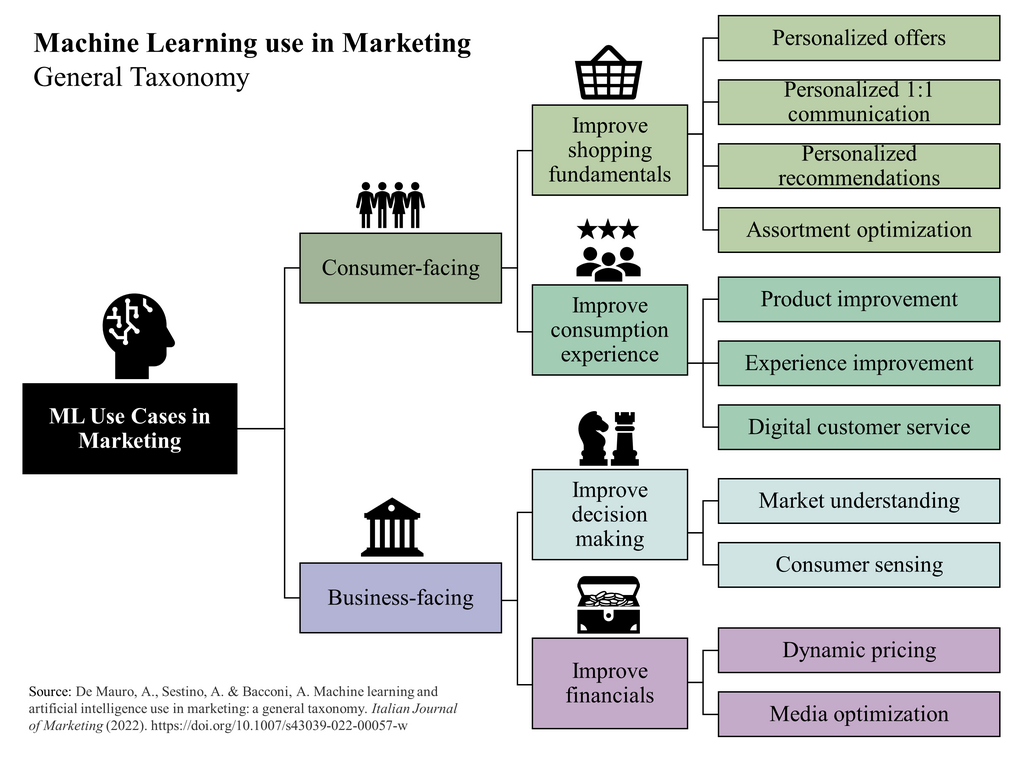
This isn't just one single technology. The scope of AI marketing is broad, covering everything from chatbots that provide instant customer service to complex algorithms that determine the perfect price for a product in real-time. It helps generate ad copy, segment audiences with incredible precision, and predict which customers are most likely to churn.
From Mad Men to Machines
Marketing has come a long way from the days of three-martini lunches and billboard campaigns aimed at the masses. Traditional marketing was often a shot in the dark, relying on intuition and broad demographic data. A TV commercial or a magazine ad was created for a huge, anonymous audience, with hopes that it would resonate with a small fraction of them.
AI-driven marketing flips that model on its head. It’s a shift from broadcasting a single message to many, to having a unique conversation with each one.
| Feature | Traditional Marketing | AI-Driven Marketing |
|---|---|---|
| Audience | Broad, mass-market segments | Hyper-targeted, individual-level |
| Decisions | Based on intuition, past experience | Based on real-time data, predictive models |
| Execution | Manual campaign setup and execution | Automated, continuous optimization |
| Personalization | Generic or basic (e.g., by city) | Deeply personal (e.g., based on browsing history) |
| Feedback Loop | Slow, based on weekly/monthly reports | Instant, with real-time adjustments |
The evolution is about moving from a monologue to a dialogue. Instead of shouting a message from a megaphone, brands can now listen to what customers are telling them through their actions—clicks, views, and purchases—and respond instantly with something relevant.
The Core Benefits
Why are so many businesses adopting AI in their marketing? It comes down to three major advantages: personalization, efficiency, and data-driven decision-making.
First, personalization at scale. Before AI, treating every customer as an individual was a logistical nightmare. Now, AI can tailor product recommendations, emails, and website content for millions of users simultaneously. It’s what allows Netflix to suggest your next binge-watch or Amazon to show you products you didn't even know you needed.
Think of it this way: traditional marketing segments your list. AI personalization learns from customer behavior and adapts as that behavior evolves.
Second, a massive boost in efficiency. Marketers spend a lot of time on repetitive tasks: scheduling social media posts, running A/B tests on ad copy, and pulling performance reports. AI automates these workflows, freeing up human marketers to focus on strategy, creativity, and building genuine customer relationships—the things machines can’t do.
Finally, AI enables truly data-driven decisions. The modern customer journey is complex, spanning multiple devices and channels. AI systems can process this enormous flood of data to uncover subtle patterns and insights that would be invisible to a human analyst. This leads to more accurate budget allocation, better campaign forecasting, and a higher return on investment.
How It All Works
An AI marketing system isn't a single piece of software, but an interconnected set of components that work together. At a high level, it can be broken down into three key parts: data collection, the AI engine, and the action layer.
1. Data Collection & Integration: This is the foundation. The system pulls in data from multiple sources: your customer relationship management (CRM) software, website traffic, social media interactions, email campaign results, and purchase history. The more clean, high-quality data the system has, the smarter it becomes.
2. The AI Engine: This is the brain of the operation. It uses machine learning algorithms, natural language processing (NLP), and other AI techniques to analyze the collected data. This engine is where patterns are identified, predictions are made, and audiences are segmented.
3. The Action Layer: This is where the insights from the AI engine are put to use. Based on the engine's analysis, this layer triggers actions. It might automatically send a personalized email to a customer who abandoned their shopping cart, serve a specific ad to a lookalike audience, or generate a report highlighting a new market trend.
Ready to check your understanding of these core concepts?
What is the primary goal of AI in marketing, as described in the text?
The evolution from traditional marketing to AI-driven marketing is best described as a shift from a monologue to a dialogue.
By integrating these components, businesses can create a marketing system that is not only automated and efficient but also deeply attuned to the needs of each customer.