Advanced AI Coding Workflows
Integrated AI IDEs
Beyond the Chatbot
Using a chatbot like ChatGPT for coding often feels like a broken conversation. You copy a block of code, paste it into the chat window, write a prompt, and then paste the AI's response back into your editor. Every time you do this, you lose context. The AI doesn't know about your other files, your project's dependencies, or the overall architecture you're building. It's helpful, but inefficient.
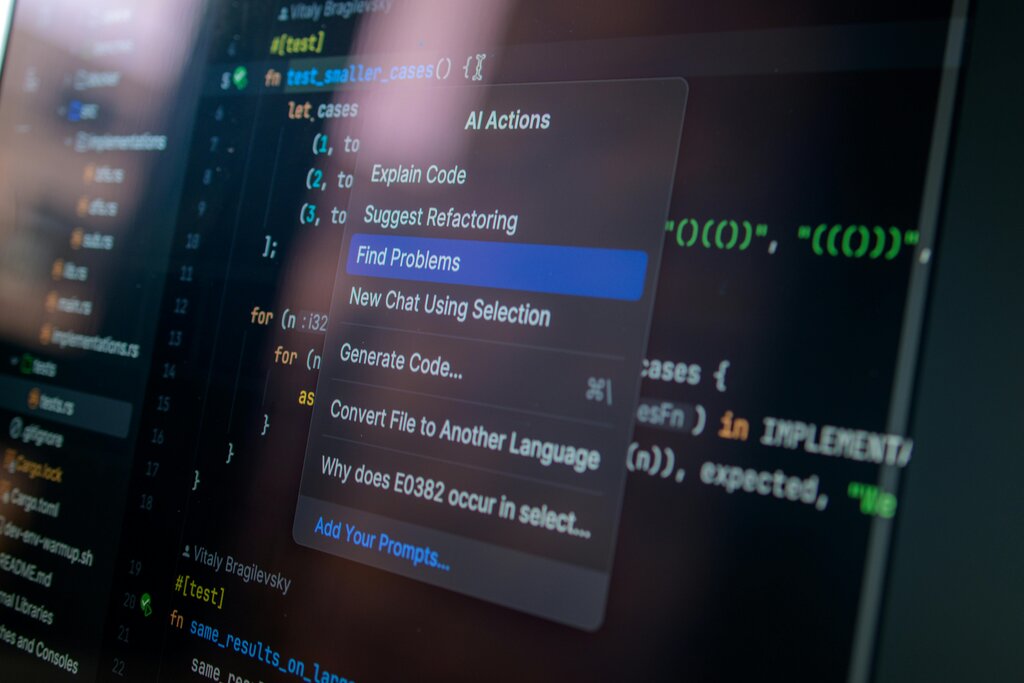
A new class of tools is designed to solve this problem: AI-integrated Integrated Development Environments (IDEs). These aren't just editors with a plugin. They are environments built from the ground up for AI-assisted development. They aim to create a seamless workflow where the AI has a deep understanding of your entire project.
At its core, Cursor is an AI-powered IDE (integrated development environment) – essentially a modified version of Visual Studio Code augmented with AI throughout.
Deep Context is King
The core difference between a simple plugin and an AI-first IDE is its understanding of your codebase. Tools like GitHub Copilot have long offered single-line or block completions. But newer environments like Cursor and Windsurf perform to build a comprehensive map of your entire project. This means the AI isn't just looking at the open file; it understands the relationships between components, functions, and modules across your whole directory.
Because these tools are tightly integrated, they can provide suggestions with extremely low latency. Cursor, which is a fork of VS Code, is optimized for these interactions and claims to achieve suggestion speeds that are 25% faster than standard plugins. This speed makes the AI feel like a natural extension of your own thought process rather than a separate tool you have to wait for.
Editing Across the Project
A significant challenge in software development is that a single logical change often requires edits to multiple files. You might add a new property to a UI component, which requires updating its parent, its associated stylesheet, and its unit tests. Doing this manually is tedious and error-prone. This is where multi-file editing features come into play.
Cursor's 'Composer' and Windsurf's 'Cascade' are features designed for these complex tasks. They allow you to describe a high-level change in natural language, and the AI will identify and apply the necessary edits across all relevant files. For example, you could instruct it to "refactor the getUserProfile function to also fetch the user's avatar URL and update all components that use it."
Windsurf takes this a step further with its 'Flow' modes, which facilitate s. Here, the AI can perform a sequence of actions to accomplish a goal, like creating a new API endpoint, writing the corresponding documentation, and adding integration tests. This moves beyond simple code generation into automated task completion, turning the IDE into an active partner in the development process.
| Feature | GitHub Copilot | Cursor | Windsurf |
|---|---|---|---|
| Core Idea | In-editor autocomplete | AI-first IDE (VS Code fork) | Agentic IDE for complex tasks |
| Context | Primarily file-based | Full project indexing | Full project indexing + workflows |
| Multi-file Edits | Limited | Yes, via 'Composer' | Yes, via 'Cascade' |
| Agentic Tasks | No (but evolving) | Limited | Yes, via 'Flow' modes |
Moving from a chatbot to an integrated AI IDE is a fundamental shift. It's the difference between asking a stranger for directions and having a navigator who knows your destination, your car, and all the possible routes. By embracing these native, high-velocity workflows, you can focus less on the mechanics of writing code and more on the creative and strategic aspects of building software.
What is the primary problem with using a standard chatbot for coding, as described in the provided text?
What key feature allows AI-first IDEs like Cursor and Windsurf to understand the relationships between components across an entire project?