Advanced AI Assistant Architectures
Introduction to Conversational AI
Talking with Machines
At its heart, conversational AI is technology that lets us talk to computers in our own language. Instead of clicking buttons or typing rigid commands, you can have a back-and-forth dialogue, much like you would with another person. The goal is to make interacting with technology feel natural and intuitive.
Conversational AI is a branch of artificial intelligence (AI) that uses natural language processing (NLP) to allow humans to have a context-driven dialogue with machines.
Think of it as the difference between using a vending machine and ordering from a barista. With a vending machine, you have to press specific buttons (B4 for a soda). If you press the wrong one, you get the wrong item. With a barista, you can say, "I'd like a coffee, but not too strong, and with a little bit of milk." The barista understands your nuances and gets you what you want. Conversational AI aims to be the barista, not the vending machine.
From Scripts to Smarts
Early chatbots were more like phone trees. They operated on a strict set of rules. If you said a specific keyword, they gave a pre-programmed response. This is called a rule-based system. It works for simple tasks, but it's very brittle. If you phrased your question in a way the programmer didn't anticipate, the bot would get stuck, often replying with a frustrating "I don't understand."
| Feature | Rule-Based System | Machine Learning System |
|---|---|---|
| How it Works | Follows explicit if-then rules | Learns patterns from data |
| Flexibility | Rigid, only understands programmed phrases | Flexible, can understand varied language |
| Example | If user says "opening hours," reply "9-5" | Understands "When do you close?" or "Are you open now?" |
| Improvement | Requires manual programming updates | Improves automatically with more data |
The big leap forward came with machine learning. Instead of hand-coding rules, developers started training AI models on huge amounts of real human conversations. By analyzing this data, the AI learns the patterns, context, and flow of natural dialogue on its own. It learns to predict the best response rather than just pulling one from a script.
The Core Components
Three key technologies power modern conversational AI.
Natural Language Processing
noun
A field of AI that gives computers the ability to read, understand, and derive meaning from human languages.
NLP is the bridge between human language and computer logic. It has two main parts. First is Natural Language Understanding (NLU), which focuses on figuring out the intent behind your words. Second is Natural Language Generation (NLG), which crafts a grammatically correct and coherent response in plain language.
Next is Machine Learning (ML). This is the engine that drives the learning process. The AI assistant isn't born smart; it's trained. It sifts through millions of examples of text and speech to learn what words mean in different contexts and what kinds of responses are appropriate.
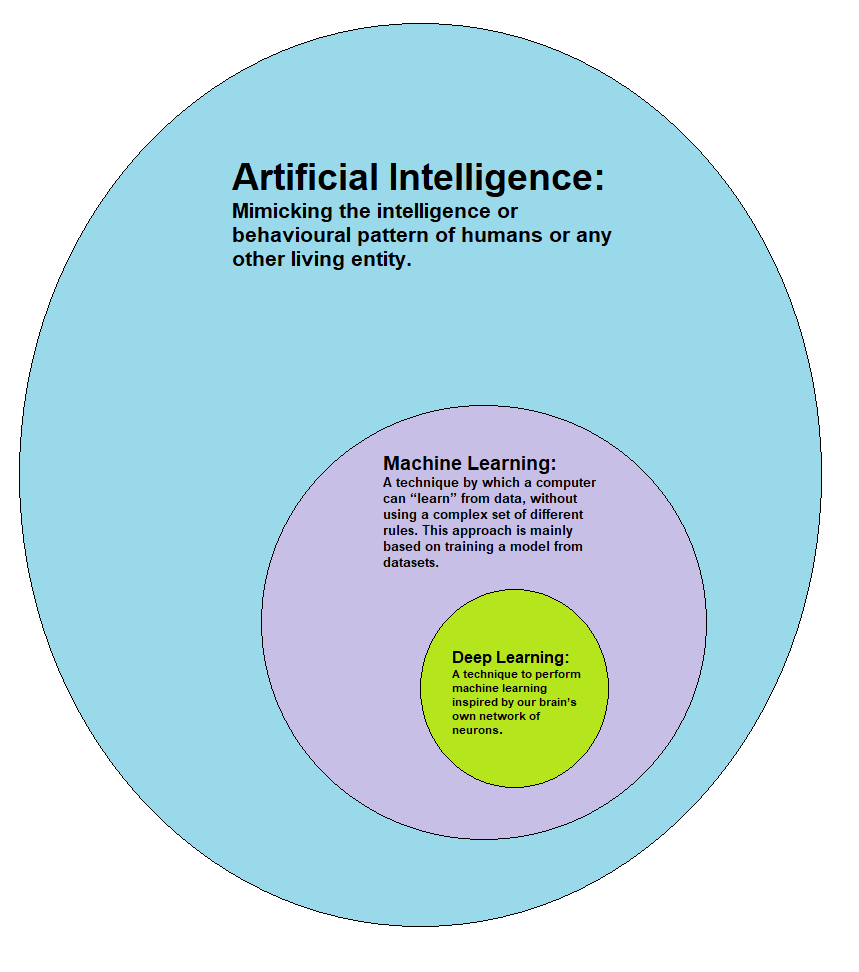
Finally, we have Large Language Models (LLMs). These are the giants of the AI world. An LLM is a massive machine learning model trained on an incredible amount of text data from the internet, books, and more. This vast training gives them a sophisticated grasp of language, allowing them to understand subtle queries, generate creative text, translate languages, and carry on complex conversations. They are the reason today's AI assistants feel so capable and human-like.
What is the primary goal of conversational AI?
In the analogy provided, a rule-based chatbot is like a vending machine, while modern conversational AI is like a barista. What does this comparison highlight?
This foundation—from simple rules to complex, learning-based models—is what makes modern conversational AI possible.