Advanced AI Applications in Agriculture
Advanced AI Models
Smarter Farming with Advanced AI
Moving beyond general principles, specialized AI models are changing how we grow food. These aren't just simple programs; they're complex systems designed to analyze the unique and shifting variables of a farm. By leveraging sophisticated algorithms, farmers can make more informed decisions, boosting efficiency and sustainability.
Machine Learning on the Farm
Machine learning (ML) forms the foundation of many agricultural AI applications. Instead of being explicitly programmed for a task, ML algorithms learn from data. They identify patterns and make predictions based on what they've seen before.
For example, regression algorithms can analyze historical data on weather, soil quality, and fertilizer use to forecast future crop yields. Classification algorithms, on the other hand, can look at satellite images and determine which type of crop is growing in a particular field or identify areas that are under stress.
| Algorithm Type | Common Agricultural Use | Example |
|---|---|---|
| Linear Regression | Yield Prediction | Forecasts corn yield based on rainfall and temperature. |
| Support Vector Machine (SVM) | Crop Classification | Distinguishes between wheat and barley from satellite imagery. |
| Random Forest | Soil Management | Predicts soil organic carbon levels from sensor data. |
These models act as powerful analytical tools, turning raw data into actionable insights for managing farm operations more effectively.
Predicting the Harvest with Deep Learning
Deep learning is a more advanced subset of machine learning that uses multi-layered neural networks, inspired by the structure of the human brain. These models excel at finding intricate patterns in massive datasets, making them ideal for complex tasks like crop yield prediction.
A deep learning model can simultaneously analyze satellite images, weather station data, soil sensor readings, and historical harvest information. By weighing all these factors, it can generate highly accurate forecasts weeks or even months in advance. This allows for better planning around logistics, storage, and sales.
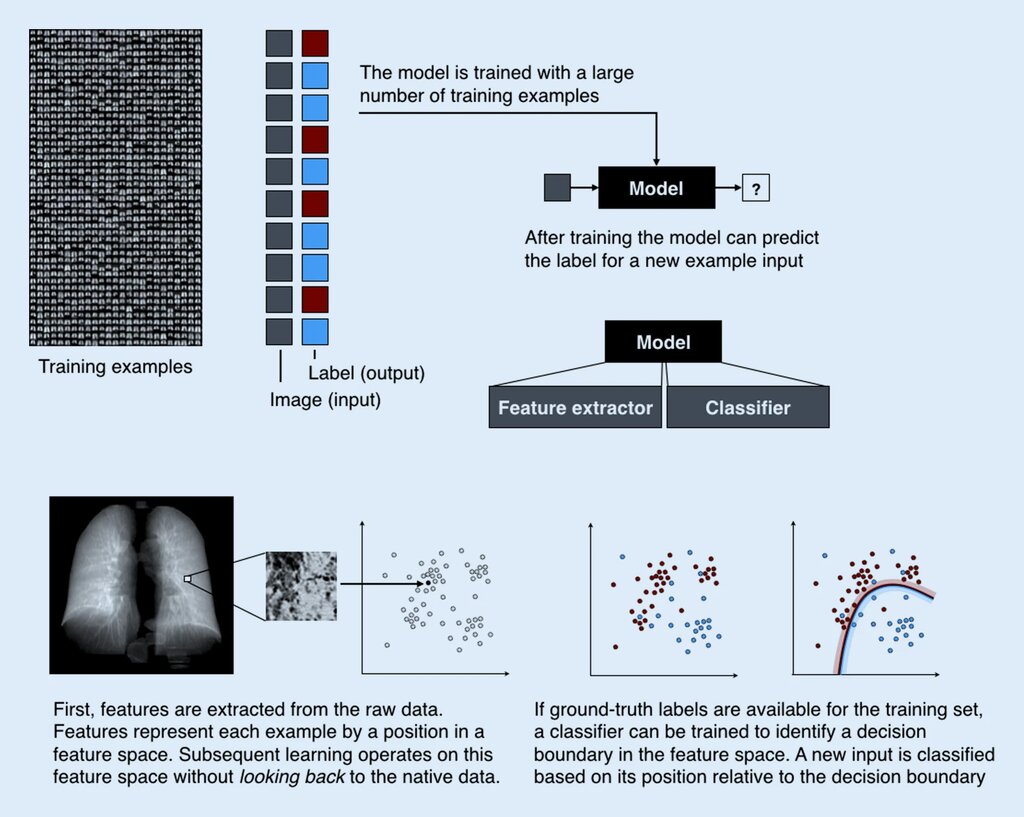
In an agricultural context, the features extracted might be things like the greenness of a crop, the moisture level of the soil, or the average daily temperature. The model learns the relationships between these features and the final yield, enabling it to make its predictions.
AI can predict crop yields, allowing for better planning and ensuring food security.
An Eye in the Sky
Computer vision is one of the most impactful applications of AI in agriculture. It gives machines the ability to 'see' and interpret the physical world from images and videos. Drones and satellites equipped with high-resolution cameras constantly gather visual data from fields.
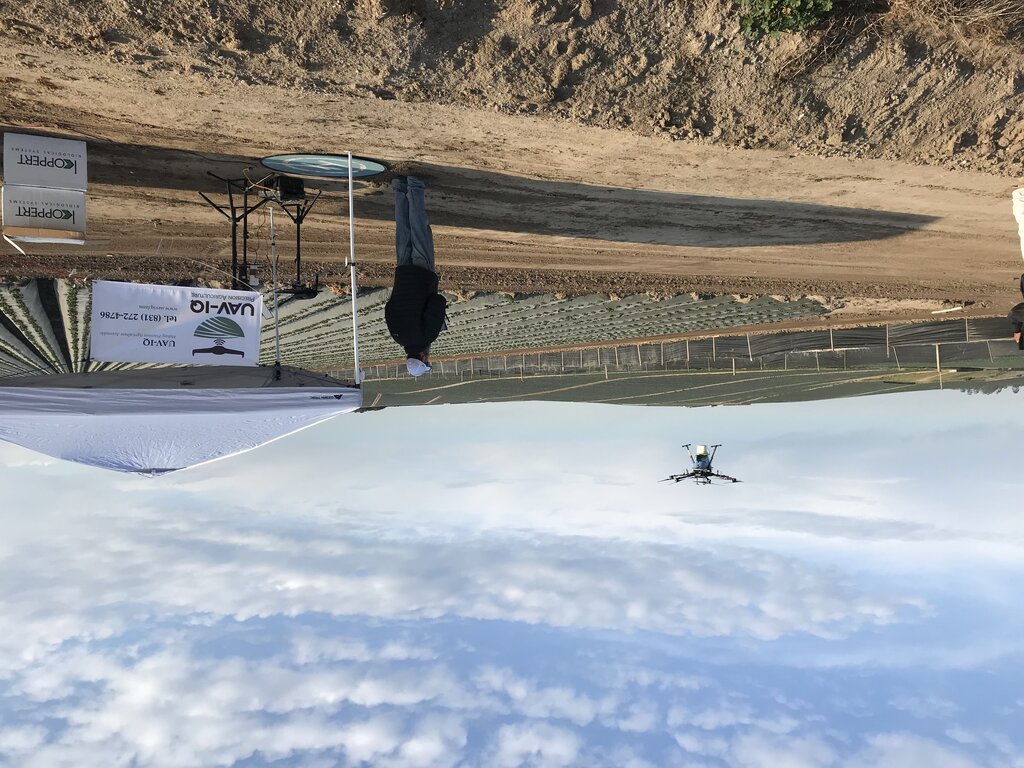
This imagery is then fed into computer vision models, often using a type of deep learning architecture called a Convolutional Neural Network (CNN). These models are trained to recognize specific visual patterns. They can spot the subtle discoloration on a leaf that signals the start of a fungal infection, identify a specific species of weed among crop plants, or even count individual fruits on a tree to estimate ripeness and yield.
This technology enables early detection of problems, allowing farmers to intervene precisely where needed, often before the issue becomes visible to the human eye. This targeted approach reduces the use of pesticides and herbicides, saving money and minimizing environmental impact.
Smarter Decisions, Better Outcomes
All of these advanced models feed into what are known as Decision Support Systems (DSS). A DSS is an integrated software tool that combines data, analytical models, and a user interface to help farmers make complex decisions about resource optimization.
For example, a DSS for irrigation might pull in real-time soil moisture data, weather forecasts, and information about the crop's specific water needs at its current growth stage. An AI model then analyzes this information and recommends exactly when and how much to water each section of a field. This prevents overwatering, which wastes a critical resource, and underwatering, which can stress crops and reduce yield.
Decision Support Systems translate complex data from various AI models into simple, actionable advice for optimizing resources like water, fertilizer, and pesticides.
By integrating these powerful predictive and diagnostic tools, farmers can manage their land with a level of precision that was previously unimaginable. This not only enhances productivity but also promotes a more sustainable and resilient agricultural system.