Advanced AI Agents with LangChain and LangGraph
Introduction to AI Agents
What is an AI Agent?
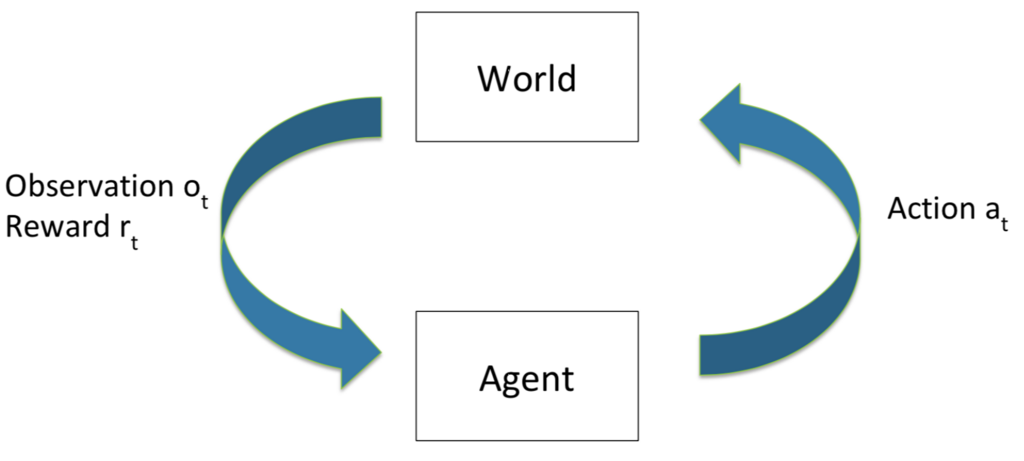
Think of an AI agent as an autonomous program designed to act on your behalf. It's not just a simple tool that waits for a command. Instead, it perceives its environment, makes decisions, and takes actions to achieve a specific goal. Imagine a smart thermostat. It senses the room's temperature (perception), decides if it's too hot or cold based on your preferences (decision-making), and then turns the heat or AC on or off (action). That's a basic agent at work.
agent
noun
An entity that perceives its environment through sensors and acts upon that environment through actuators.
This simple loop of perceiving, thinking, and acting is the foundation of all AI agents, from the one adjusting your home's temperature to sophisticated systems managing complex supply chains.
An AI agent is a system that can sense its environment, reason over what it perceives, and act to achieve a goal.
The Core Components
While agents vary in complexity, they generally share a few core components that allow them to function. These pieces work together, enabling the agent to operate intelligently and autonomously.
- Model: This is the brain of the agent, often a large language model (LLM). It provides the core reasoning and decision-making capabilities.
- Tools: Agents need to interact with the world. Tools are the functions or APIs they can use, like searching the web, accessing a database, or sending an email.
- Memory: To be effective, agents must remember past interactions and information. Memory can be short-term (remembering the current conversation) or long-term (storing key facts for future use).
- Planning: For complex tasks, the agent needs a plan. It breaks down a large goal into smaller, manageable steps, deciding which tools to use and in what order.
Types of Agents
Not all agents are created equal. They can be categorized based on how they make decisions. A simple reflex agent acts only on current information, like a Roomba bumping into a wall and immediately turning. It has no memory of the past.
More advanced are goal-based agents. These agents work toward a specific objective. A GPS navigation app is a goal-based agent. It knows the destination (the goal) and makes decisions, like which turn to take next, to reach it efficiently.
Utility-based agents take this a step further. They don't just try to achieve a goal; they try to achieve it in the best possible way. For a given destination, a utility-based navigation app might weigh factors like traffic, tolls, and travel time to find the optimal route, maximizing your "utility" or satisfaction.
Finally, learning agents can improve their performance over time. They learn from their experiences, adapting their actions based on what has or hasn't worked in the past. An AI that gets better at playing chess by analyzing thousands of games is a learning agent.
Applications and Challenges
AI agents are already transforming industries. In customer service, they power chatbots that can answer questions and resolve issues 24/7. In finance, they analyze market data to identify trading opportunities. They help doctors diagnose diseases, manage logistics for shipping companies, and even help scientists discover new materials.
| Industry | Application |
|---|---|
| E-commerce | Personalized product recommendations |
| Healthcare | Analyzing medical images for diagnosis |
| Finance | Algorithmic trading and fraud detection |
| Travel | Dynamic pricing and trip planning |
| Manufacturing | Predictive maintenance for machinery |
The main benefit is automation. Agents can handle repetitive, complex tasks, freeing up humans to focus on more creative and strategic work. They can process vast amounts of data far faster than any person, leading to better and quicker decisions.
However, building and deploying agents comes with challenges. They can be complex to design, require massive amounts of data to train, and raise important ethical questions about accountability and bias. As agents become more autonomous, ensuring they act safely and in alignment with human values is a critical and ongoing area of research.
Now let's test your understanding of these core concepts.
Which of the following best describes the fundamental loop of an AI agent's operation?
In the context of an AI agent's architecture, what is the primary function of its 'Tools'?
Understanding these fundamentals provides a solid base for exploring how AI agents are built and orchestrated.