Advanced AI Agent Logic Formalisms
Introduction to Agentive Logic
Logic for Actions
How do we reason about what we can and cannot do? Agentive logic is a field that tackles this question. It provides a formal way to represent agents, their actions, and their abilities. Think of it as a grammar for describing who can do what.
If you're familiar with modal logic, you know it deals with concepts like possibility and necessity. For example, modal logic can express "It is possible that it will rain tomorrow." Agentive logic is a powerful extension of this idea. It personalizes the concept of possibility. Instead of just saying something is possible, it specifies who can make it possible and how.
Agentive logic shifts the focus from what is generally possible to what a specific agent is able to do.
Agents, Actions, and Abilities
Agentive logic is built on three core concepts that work together.
Agent
noun
An entity that can perform actions. An agent can be a person, a robot, a software program, or even a group like a company.
Next, we have actions. An action is something an agent does, like flipping a switch, sending an email, or moving a chess piece. Actions are the verbs of agentive logic.
Finally, there's ability. This concept connects an agent to an action. An agent has the ability to perform an action if it possesses the necessary means and opportunity. You have the ability to open a door, but only if it's unlocked and you're physically capable of turning the handle. The logic doesn't just care about the action itself, but whether the agent can actually execute it.
| Concept | Description | Simple Example |
|---|---|---|
| Agent | The doer | You |
| Action | The deed | Flipping a light switch |
| Ability | The potential to act | You can flip the switch |
Where It's Used
This might seem abstract, but agentive logic has practical applications in several fields. In philosophy, it helps untangle complex ideas like free will and moral responsibility. To be responsible for an outcome, you must have had the ability to act otherwise.
In linguistics, it helps clarify the meaning of words like "can," "could," and "able to." The sentence "She can speak French" implies an ability that agentive logic can formally model.
But its biggest impact is in computer science and artificial intelligence. To build an AI that can plan and achieve goals, it needs to reason about its own capabilities. An autonomous robot must understand what actions it can perform to navigate a room, and a software agent needs to know what tools it can use to book a flight.
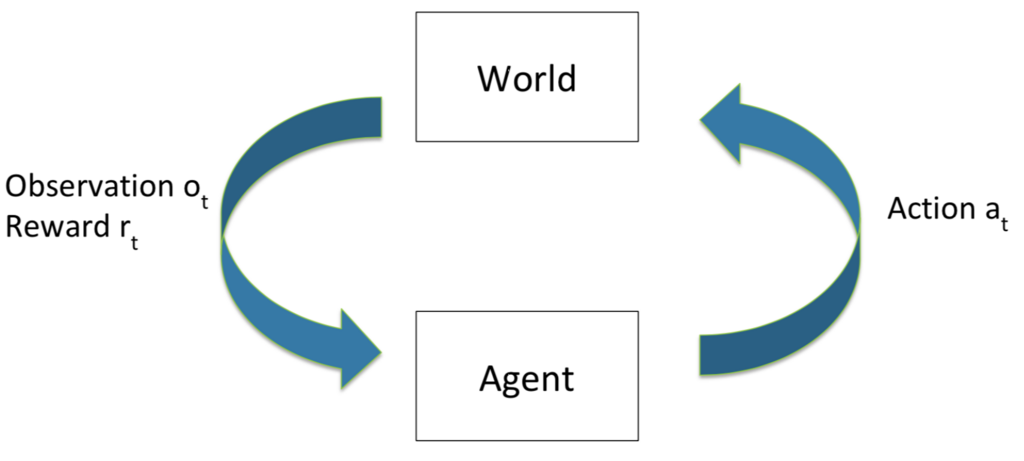
This framework allows developers to program agents that don't just follow a rigid script but can adapt to new situations. By reasoning about its available actions, an agent can form a plan to achieve a goal, even if it has never faced that exact problem before. It's the foundation for creating more flexible and intelligent autonomous systems.
What is the primary focus of agentive logic?
An autonomous robot needs to navigate a cluttered room. How would agentive logic be most useful in this scenario?