Advanced Agentic App Development
Introduction to AI-Driven Software Development
Software That Builds Itself
Software development has always been about giving computers instructions. We write code, line by line, to tell a machine exactly what to do. But what if the tools we use to build software were smart enough to help us write it? That’s the core idea behind AI-driven software development.
It’s not about robots taking over keyboards. It’s about integrating artificial intelligence into every step of the software development lifecycle, from planning and design to coding, testing, and deployment. Think of it as upgrading from a simple hammer to a power tool that anticipates your next move. The goal is to make the process of creating software faster, more efficient, and less prone to human error.
It's not just about using AI tools; it's about adopting a completely different approach to software development where you focus on the "what" while AI handles the "how."
From Helper to Partner
AI’s role in building software didn't appear overnight. In the early days, AI was mostly used in the form of “expert systems.” These were rule-based programs that could help with simple, repetitive tasks, like checking code for common mistakes. They were helpful, but limited. They could only do what they were explicitly programmed to do.
The game changed with the rise of machine learning. Suddenly, tools could learn from vast amounts of existing code and data. They could predict which parts of a program were most likely to have bugs, suggest more efficient ways to write a function, or even automate complex testing procedures. AI evolved from a simple assistant following a checklist to a knowledgeable partner that could spot patterns and make intelligent recommendations.
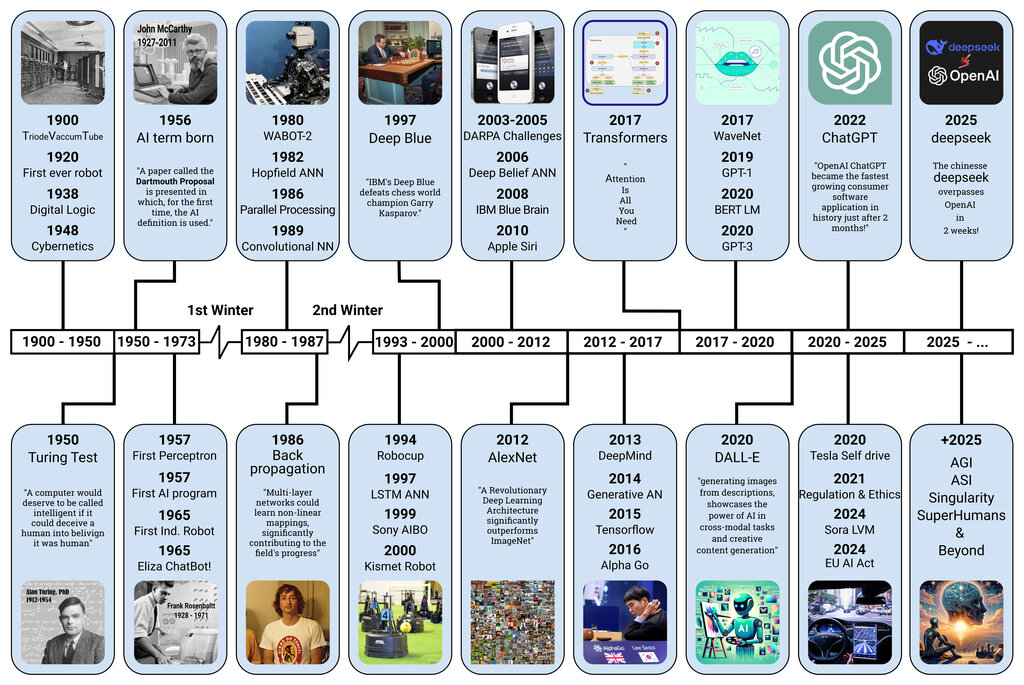
Today, we're in the era of generative AI and large language models (LLMs). These models can understand and generate human-like text and, more importantly, code. Tools built on LLMs can act as a “pair programmer,” writing entire blocks of code from a simple English description, explaining complex algorithms, or translating code from one programming language to another. AI is no longer just optimizing the process; it's actively participating in the creation.
The Perks and the Problems
Integrating AI into software development brings a host of powerful advantages. The most obvious is speed. AI can automate tedious tasks, generate code in seconds, and run tests continuously, freeing up developers to focus on creative problem-solving and high-level design. This doesn't just accelerate timelines; it often leads to higher-quality software by catching bugs earlier and ensuring code adheres to best practices.
But it's not a magic bullet. Adopting these tools comes with its own set of challenges. AI systems can be complex and expensive to implement and maintain. There’s also the risk of relying too heavily on AI-generated code, which might contain subtle errors or security vulnerabilities. And, of course, there are ethical questions about data privacy and the potential for bias in AI algorithms.
| Benefits | Challenges |
|---|---|
| Increased speed and efficiency | High implementation cost and complexity |
| Improved code quality | Risk of errors in AI-generated code |
| Automation of repetitive tasks | Potential for security vulnerabilities |
| Enhanced developer productivity | Ethical concerns like data privacy and bias |
The Tools of the Trade
Several key AI technologies power this new wave of software development. Understanding them helps clarify what’s happening behind the screen.
Machine Learning (ML) is the foundation. It’s a type of AI that allows systems to learn from data without being explicitly programmed. In software development, ML models are trained on millions of lines of code to learn patterns of good (and bad) programming. This is how they can predict bugs, suggest optimizations, or estimate how long a project will take.
Natural Language Processing (NLP) focuses on enabling computers to understand and interpret human language. This is what allows you to write a requirement in plain English, like “Create a login page with a username and password field,” and have an AI tool translate that into functional code. It bridges the gap between human ideas and machine instructions.
Large Language Models (LLMs) are an advanced form of NLP. These are the massive models, like those behind ChatGPT or GitHub Copilot, that have been trained on a huge portion of the internet’s text and code. Their deep understanding of language and context allows them to generate remarkably coherent and functional code, answer technical questions, and even help with high-level software design.
These technologies are already at work in tools many developers use every day. Code assistants integrated into development environments suggest lines of code as you type. Automated testing platforms use AI to intelligently explore an application and find vulnerabilities a human might miss. Project management tools even use machine learning to analyze team progress and flag potential delays before they become critical.
The true power of AI in software development isn't replacing human ingenuity, but augmenting it. It handles the tedious work, allowing developers to focus on the creative challenges of building great software.
Now, let's test what you've learned about the fundamentals of AI-driven development.
What is the core idea behind AI-driven software development?
How did the role of AI in software development evolve from early "expert systems" to modern machine learning models?
By blending artificial intelligence with the craft of coding, we are fundamentally changing how software is made, turning a manual process into a collaborative one between human and machine.