Advanced ADU Facebook Ad Funnel Optimization
Advanced A/B Testing
Beyond Basic Splits
You already know how to test a blue button against a green one. Now, let’s get serious. For a high-consideration product like an Accessory Dwelling Unit (ADU), successful advertising isn't about finding a single winning ad. It’s about building a system of insights that consistently attracts high-quality leads—homeowners ready to invest time and money.
This means moving beyond simple A/B tests and designing experiments that isolate the most impactful variables in your funnel. We're not just looking for more clicks; we're hunting for the specific combination of message, visual, and targeting that resonates with a future ADU owner.
Isolating Key Variables
The foundation of advanced testing is strict variable isolation. If you change the headline, the image, and the audience all at once, you’ll learn nothing. Your goal is to pinpoint exactly what drives performance. For ADU campaigns, your primary testing pillars are ad creatives, audience segments, and bidding strategies.
Focus on one variable per test. Test your images against each other using the same copy and audience. Then, take the winning image and test different headlines. This methodical approach builds a library of proven elements.
Let's start with what your potential clients see first: the ad creative. Homeowners considering an ADU are driven by different motivations. Some want a source of rental income, others need space for aging parents, and some are planning a home office. Your creative strategy must test these different value propositions.
Consider testing:
- Imagery: High-quality architectural renderings vs. photos of completed, lived-in units.
- Video: Fast-paced slideshows of multiple projects vs. a slow, detailed walkthrough of a single ADU.
- Headlines: Benefit-driven ("Add $2,500/Month to Your Income") vs. solution-driven ("The Perfect In-Law Suite for Your Backyard").
| Variable | Variation A | Variation B | Key Metric |
|---|---|---|---|
| Primary Image | Architectural rendering of a modern ADU | Photo of a family in a finished ADU backyard | Click-Through Rate (CTR) |
| Headline | "Unlock Your Property's Potential" | "Generate Rental Income with a Backyard Home" | Cost Per Lead (CPL) |
| Call to Action | "Get a Free Quote" | "Download Our ADU Guide" | Lead Quality (Post-submission) |
After you identify winning creative elements, you can test them across different audience segments. Generic targeting like "homeowners" in a specific zip code is a starting point, not a strategy. You need to find the pockets of homeowners who are most likely to convert.
Create distinct ad sets to test:
- Lookalike Audiences: Build a 1% Lookalike from your past clients or highest-quality leads. Test this against a broader 3-5% Lookalike to see if you get better efficiency with a more targeted group.
- Interest Targeting: Layer interests like "home improvement," "real estate investing," and brands like Home Depot or Houzz.
- Demographics: Target homeowners within specific age brackets (e.g., 45-65) who have lived at their property for 5+ years, suggesting they have equity to leverage.
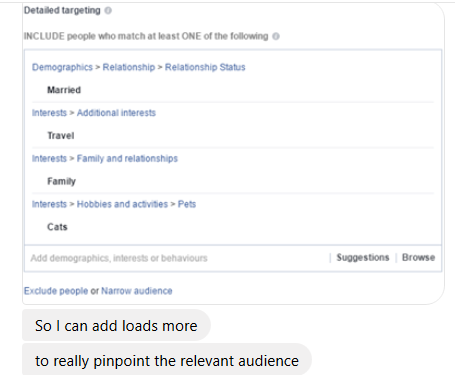
Finally, consider your bidding strategy. While Meta's algorithm is powerful, guiding its approach can sometimes unlock better performance. A simple test is to run two identical ad sets, one with the default "Highest Volume" bid strategy and another with a "Cost Per Result Goal." This tells Meta you aren't willing to pay more than a certain amount for a lead. This can sometimes lower your volume but significantly increase the quality and profitability of the leads you receive.
Letting the AI Take Over
After manually testing variables, you'll have a strong sense of what works. This is the perfect time to leverage Meta's AI with an Advantage+ leads campaign.
Advantage+ campaigns automate many of the variables you've been testing. You provide the machine with your best-performing creative assets (images, videos, headlines, copy) and set a budget. The algorithm then takes over, dynamically testing combinations of these assets and delivering them to the audience segments it predicts will be most likely to convert. It essentially runs thousands of micro-tests on your behalf.
Set up Advantage+ campaigns to let Meta’s AI test multiple audiences and creatives automatically.
The key is to feed the algorithm with proven ingredients. Use the images, headlines, and audience insights you discovered during your isolated A/B tests. This gives the AI a running start, allowing it to optimize from a foundation of what you already know works for your ADU business.
Interpreting the Results
Data from your tests is useless without correct interpretation. When analyzing an A/B test, don't just declare a winner based on a single metric. Look at the full picture.
An ad creative might have a lower Click-Through Rate (CTR) but a much lower Cost Per Lead (CPL). This could indicate the ad is better at pre-qualifying clicks, scaring away those who aren't serious but attracting those who are. The "losing" ad, in terms of CTR, is actually the winner for your business goals.
Always let your tests run long enough to achieve statistical significance. For ADU campaigns with longer conversion cycles, this usually means at least 7-10 days to get past initial volatility. Look for a clear trend, not just a single day's results. Once you have a winner, turn off the losing ad set and iterate. Your new control is the winning ad, and you can now test a new variable against it.
What is the primary goal of using strict variable isolation when testing different elements of an ADU advertising campaign?
An advertiser is analyzing a test where Ad A has a higher Click-Through Rate (CTR) but Ad B has a much lower Cost Per Lead (CPL). Which ad should be considered the winner for the business?
By moving from simple tests to a structured, iterative system, you turn advertising from a guessing game into a predictable engine for generating high-quality ADU leads.