Advanced Academic Presentation Mastery
Academic Narrative Architecture
Start with Your Message
Forget about fonts, colours, and templates for a moment. The most effective academic presentations are built on a solid intellectual foundation, not on fancy slide designs. This is the 'Message-First' approach. Before you open PowerPoint or Google Slides, you should be able to articulate the core argument of your presentation on a single piece of paper.
This method forces you to clarify your thinking. What is the single most important idea you want your audience to remember? What evidence directly supports it? By outlining your narrative flow first—from introduction to conclusion—you create a logical spine for your presentation. The slides then become a visual aid to your spoken argument, rather than a script you read from.
The Assertion-Evidence Model
A powerful way to structure your slides is the . Instead of a generic title and a list of bullet points, each slide is designed with a specific purpose. The slide title becomes a full, declarative sentence—an assertion or a claim. The body of the slide is then dedicated to providing visual evidence for that claim, such as a graph, a diagram, a key image, or a short quote.
This structure significantly reduces the audience's mental effort, a concept known as cognitive load. When the audience doesn't have to split their attention between reading your bullet points and listening to you speak, they can focus entirely on your argument.
From Thesis to Storyboard
Your research paper already has a narrative. The key is to translate it from a dense, text-based format into a compelling visual story. This process is called . Start by identifying the main sections of your paper: introduction, methodology, key findings, and conclusion. These will form the major acts of your presentation.
For each section, distill the most critical point into a single assertion. What is the central question your research addresses? That's your introduction. How did you go about answering it? That's your methodology. What were your most surprising or significant results? Those are your analysis slides. Finally, what does it all mean, and what are the implications? That's your conclusion. This creates a clear narrative arc that guides the audience through your research journey logically.
Structuring for Assessment
For high-stakes assessments like IB and IGCSE orals, how you structure your presentation is critical. You need to balance a clear narrative with the ability to respond to questions. There are two primary approaches: linear and modular.
A linear structure is a straightforward story, moving from beginning to end without deviation. It's excellent for building momentum and ensuring your core argument is understood. However, it can be rigid if an examiner interrupts with a question about a later slide.
A modular structure designs each section (e.g., methodology, a specific finding) as a self-contained chunk. While they all connect to the central thesis, you can navigate between them more freely. This is ideal for an oral defense where the discussion might leap between different parts of your research. The trade-off is that it can sometimes feel less like a cohesive story if not managed carefully.
| Structure | Best For | Pros | Cons |
|---|---|---|---|
| Linear | Standard presentations, internal assessments | Strong narrative flow, easy for audience to follow | Can be rigid, difficult to deviate from |
| Modular | Oral defenses, Q&A-heavy formats | Flexible, allows easy navigation to specific topics | Can feel disjointed, requires strong transitions |
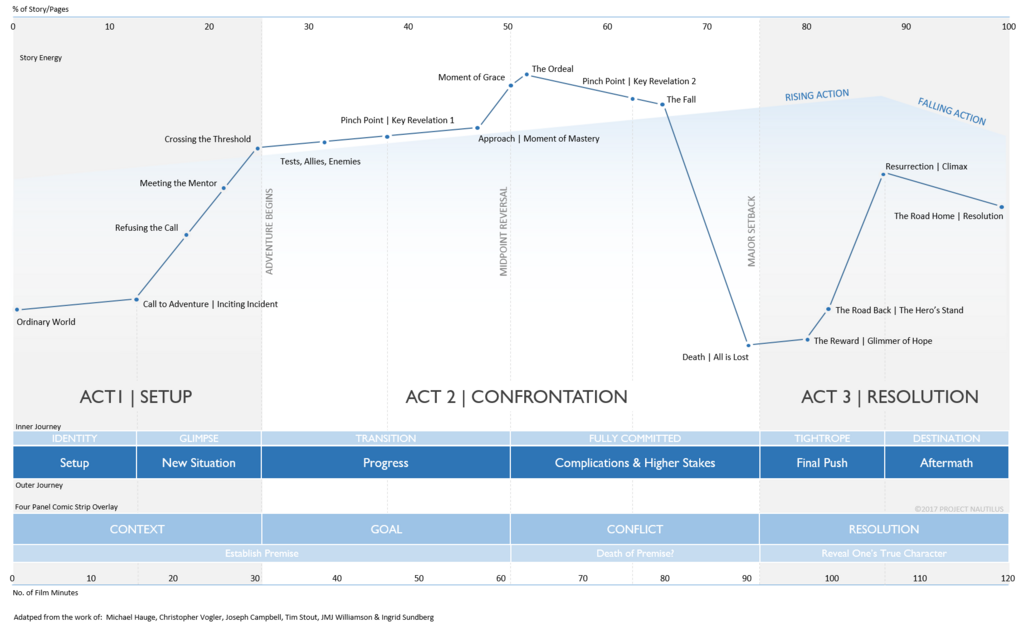
A narrative structure can guide your audience through your points, holding their attention and making your presentation more memorable.
Ultimately, the best approach depends on the format of your assessment. For a standard internal assessment presentation, a clear linear narrative is usually best. For a defense, a modular approach with a strong introduction and conclusion to tie it all together provides the flexibility you need to demonstrate deep knowledge.
Let's check your understanding of these structural concepts.
What is the primary principle of the 'Message-First' approach to presentations?
In the Assertion-Evidence model, what is the ideal format for a slide's title?
By focusing on your message and structuring it thoughtfully, you transform your presentation from a simple report into a persuasive academic narrative.