Advaita Vedanta Explained
Introduction to Advaita Vedanta
The Ocean and the Wave
Have you ever watched a wave rise from the ocean, travel to the shore, and then merge back into the water? Was the wave ever truly separate from the ocean? Or was it just the ocean expressing itself in a temporary form? This simple image gets to the heart of Advaita Vedanta, one of the most influential schools of Hindu philosophy.
The name itself is a guide. "Advaita" is a Sanskrit word that literally means "not two." It points to a philosophy of radical non-dualism. "Vedanta" means the "end of the Vedas," the most ancient Hindu scriptures. So, Advaita Vedanta offers a perspective based on the concluding wisdom of the Vedas: the idea that reality, at its core, is a single, unified whole.
Advaita Vedanta is a non-dualistic philosophy that asserts the fundamental unity of all existence.
It suggests that the individual self, what you might think of as "you," is not fundamentally separate from the ultimate reality of the universe. The wave is not separate from the ocean; it is the ocean.
A Philosopher's Journey
The ideas of non-duality are ancient, with roots stretching back thousands of years. But they were powerfully consolidated and systematized by a brilliant philosopher and theologian named Adi Shankaracharya in the 8th century CE.
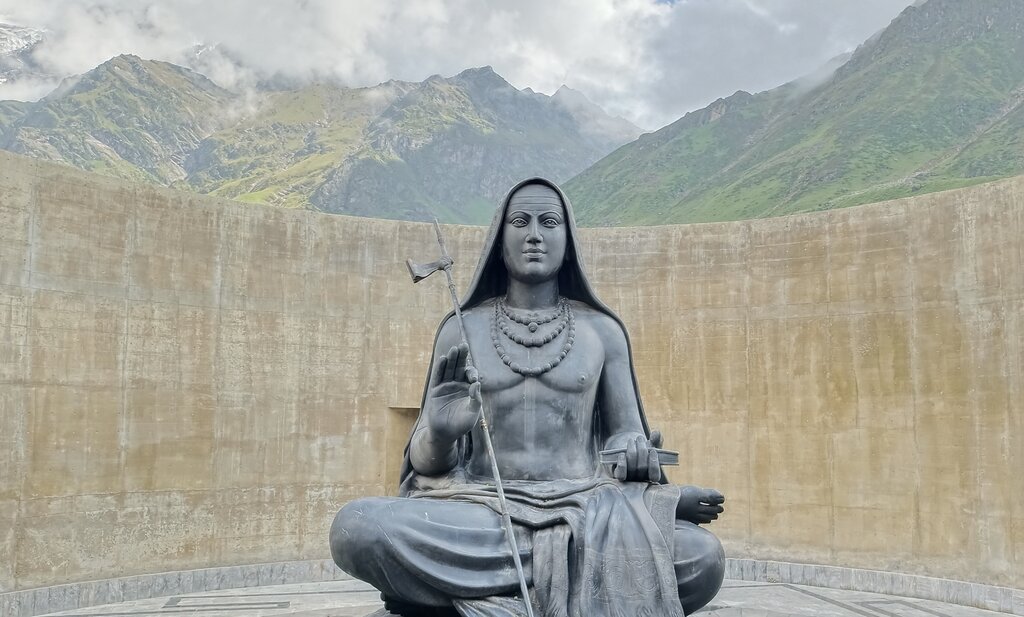
Shankara, as he is often called, traveled the length and breadth of India. He engaged in debates with other scholars, wrote insightful commentaries on sacred texts, and established four major monastic centers that continue to be important seats of learning to this day. His work didn't invent Advaita, but it gave the philosophy a clear, logical structure that ensured its influence for centuries to come.
The Three Pillars
Advaita Vedanta rests on three foundational sources, collectively known as the Prasthanatrayi, or the "three points of departure."
| Text | Description |
|---|---|
| The Upanishads | Philosophical dialogues that form the final part of the Vedas. They shift the focus from external rituals to internal inquiry about the nature of reality. |
| The Bhagavad Gita | A celebrated part of the epic Mahabharata. It's a conversation between the warrior Arjuna and his charioteer Krishna, exploring duty, action, and the path to spiritual understanding. |
| The Brahma Sutras | A concise text that attempts to systematize the teachings of the Upanishads. It's dense and requires commentary, like the one Shankara wrote, to be fully understood. |
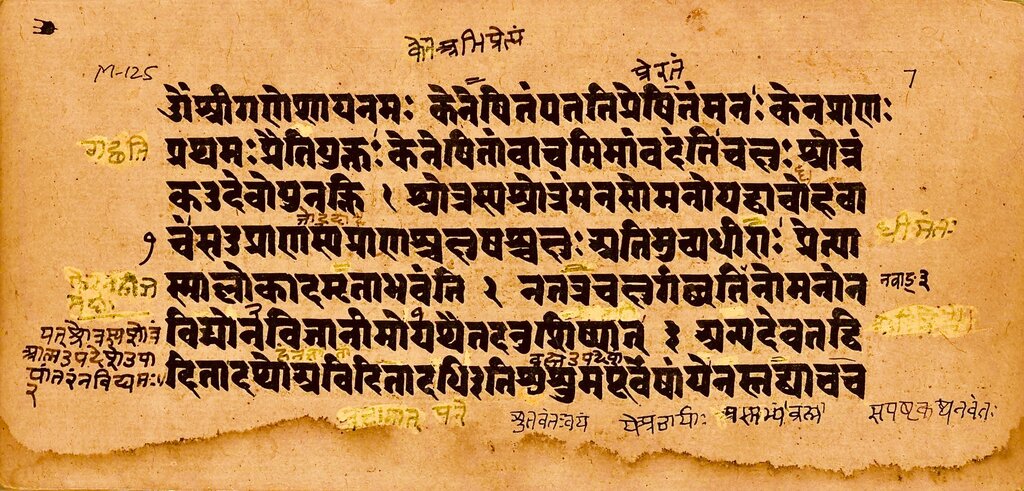
These three texts provide the scriptural authority and philosophical foundation for Advaita Vedanta. They are the wellspring from which its core ideas are drawn and debated.
A Lasting Influence
Within the diverse landscape of Hindu philosophy, Advaita Vedanta holds a significant place. It is one of several schools of Vedanta, each with a different view on the relationship between the individual and the ultimate reality. Some schools propose a qualified non-dualism, while others are dualistic, seeing the individual and God as eternally separate.
Advaita's uncompromising non-dualism provides a powerful counterpoint. It has profoundly shaped Hindu spiritual life and has also engaged thinkers from other traditions around the world. Its focus on self-inquiry and the direct experience of unity offers a timeless path for understanding our place in the cosmos.
What is the literal meaning of the Sanskrit word "Advaita"?
Which 8th-century philosopher is credited with consolidating and giving a clear, logical structure to Advaita Vedanta?