Advaita Vedanta A Journey Into Non-Duality
Introduction to Advaita Vedanta
The World Is Not Two
Advaita Vedanta is a school of Hindu philosophy with a simple, yet profound, core idea. The name itself gives us a clue. "Advaita" is Sanskrit for "not two," and "Vedanta" means the "end or culmination of the Vedas," which are ancient Hindu scriptures. Put them together, and you get a philosophy that points to a non-dual reality.
The term itself (from Sanskrit "advaita" meaning "not two") points to the understanding that the apparent separation between self and other, subject and object, observer and observed, is ultimately an illusion, a convenient but limited construction of our minds.
At its heart, Advaita Vedanta asserts that all the diversity we see in the world, all the different people, objects, and experiences, are fundamentally expressions of one single, ultimate reality. This isn't just an intellectual concept; it's presented as a truth that can be directly experienced.
The One Reality: Brahman
So, what is this one reality? Advaita Vedanta calls it Brahman. Brahman is not a god in the sky, but the very fabric of existence. It is the formless, unchanging, and infinite essence of everything. Think of the ocean. It has countless waves, all with different shapes and sizes. We can name them, watch them, and see them as individual things. But are they really separate from the ocean? No. They are all just temporary forms of the one body of water.
In the same way, everything in the universe, from a star to a stone to a thought, is a manifestation of Brahman.
Brahman
noun
The ultimate, unchanging reality of the universe in Hindu philosophy; the singular, formless essence of all existence.
Brahman is described as Sat-Chit-Ananda: existence, consciousness, and bliss. It is the absolute, pure awareness that underlies and permeates everything, yet it is beyond all description and concepts.
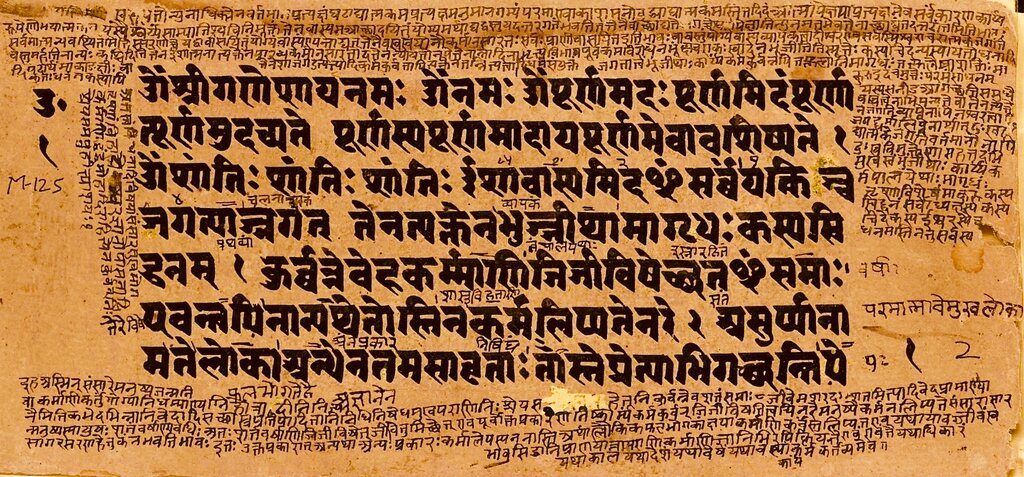
You Are That
If Brahman is the ultimate reality of everything, what does that mean for you? This is where the concept of Atman comes in. Atman is the individual self, the consciousness that says "I am." It's the inner essence of a person, often translated as the soul or spirit.
The most radical and central teaching of Advaita Vedanta is that Atman is not just part of Brahman, or connected to Brahman. Atman is Brahman. Your innermost self is identical to the ultimate reality of the entire universe. This is famously expressed in the Sanskrit phrase "Tat Tvam Asi," which means "You are That."
Tat Tvam Asi (तत् त्वम् असि) You Are That
Imagine a single drop of water. It has its own temporary identity, but its fundamental nature is the same as the entire ocean. When it merges back into the ocean, it doesn't become something new; it simply returns to its true, boundless state. According to Advaita, recognizing that your Atman is Brahman is not about becoming divine, but about realizing the divinity that you already are.
The Veil of Maya
If Atman and Brahman are one, why don't we feel that way? Why does the world appear to be full of separate and distinct things? The answer, in Advaita Vedanta, is Maya. Maya is the cosmic illusion, the power that makes the one reality appear as the many. It's a veil that obscures our true nature.
Maya isn't a statement that the world is fake or doesn't exist. Rather, it means the world is not what it appears to be. Its apparent reality of separateness is an illusion.
A classic analogy used to explain Maya is mistaking a rope for a snake in a dimly lit room. The rope is real, but your perception of it as a snake is an illusion projected by your mind. Because of this illusion, you experience fear and react as if a snake were truly there. Similarly, Brahman is the real "rope," but through the veil of Maya, we perceive it as the varied and separate world of "snakes." This misperception is the root of suffering.
The spiritual journey in Advaita Vedanta is about seeing through Maya. It's the process of using knowledge and self-inquiry to lift the veil of illusion and realize the fundamental unity of Atman and Brahman. This realization is called moksha, or liberation.
Let's review these core concepts before moving on.
Now, test your understanding of these foundational ideas.
What is the literal meaning of the Sanskrit word "Advaita"?
In Advaita Vedanta, what is the relationship between Atman and Brahman?
Understanding these principles—Brahman, Atman, and Maya—is the first step into the deep and transformative philosophy of Advaita Vedanta.