ADHD-Focused Programming for Startup Founders
Optimizing Development Environment
Your Personalized Cockpit
Think of your development environment as the cockpit of an airplane. A well-organized cockpit allows a pilot to focus on flying, not fumbling for controls. For a developer with ADHD, designing this digital cockpit isn't a luxury; it's essential for staying focused and productive. The goal is to create a space that minimizes distractions and automates routine tasks, freeing up your cognitive energy for what truly matters: solving problems and writing great code.
Developers can maximize their cognitive resources for the task at hand by reducing unneeded complications and distractions.
A personalized setup helps you work with your brain's unique wiring. By reducing unnecessary choices and visual clutter, you create a clear path forward. This turns your workspace from a source of overwhelm into a powerful tool for focus.
Choosing Your Tools
The right Integrated Development Environment (IDE) or code editor can make a world of difference. Modern tools are highly customizable, allowing you to create a minimalist, distraction-free interface. Look for features like a "zen mode" or "distraction-free mode," which hide unnecessary panels and UI elements.
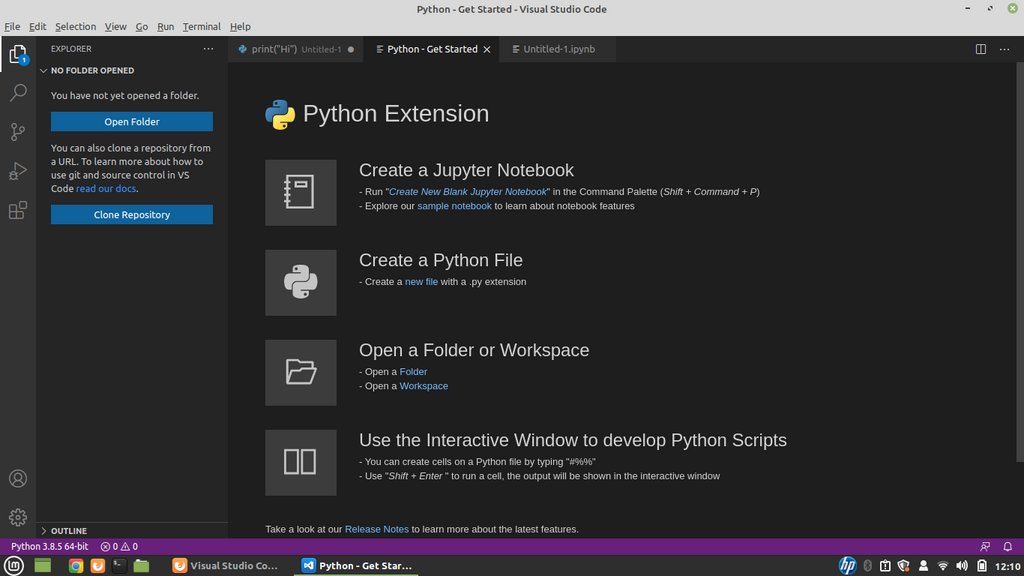
Visual Studio Code (VS Code), for instance, lets you tailor almost every aspect of its appearance and functionality. You can hide the activity bar, status bar, and minimap to create a clean writing space. You can also choose color themes with lower contrast to reduce visual strain. Spend some time in the settings to turn off anything you don't use regularly.
// Example settings.json for a minimal VS Code setup
{
  "workbench.activityBar.visible": false,
  "workbench.statusBar.visible": false,
  "editor.minimap.enabled": false,
  "editor.fontFamily": "Fira Code",
  "editor.fontLigatures": true,
  "window.zoomLevel": 1
}
Automate to Concentrate
Automation is your best friend. Every manual, repetitive task you eliminate is one less thing to pull you out of a state of flow. This is where tools for version control, testing, and integration come in.
You're already familiar with version control, but think of it as a cognitive safety net. Knowing your work is saved at every step reduces the anxiety of making a mistake. It lets you experiment freely, knowing you can always revert back. This frees you from the mental burden of remembering every change.
Automated testing frameworks take this a step further. Instead of manually checking your application after every change, you write tests that do it for you. This provides instant, clear feedback. Did your change break something? The test will tell you immediately. This tight feedback loop is perfect for an ADHD brain, which thrives on immediate results and clear signals.
A failing test isn't a failure, it's a clear, actionable to-do list item. Fix the test, and you've made progress.
Continuous Integration (CI) pipelines tie everything together. A CI server automatically runs your tests every time you push new code. It's the ultimate automation. You commit your code, push it, and a few minutes later you get a simple green check or red X. This binary, unambiguous feedback removes the mental load of managing the testing and build process, letting you focus on the next coding task.
By integrating these automated systems, you offload the responsibility of remembering to run tests or build the project. The system handles the routine, and you handle the creativity.
For a developer with ADHD, what is the main purpose of creating a well-organized, personalized development environment?
Which of the following is a recommended strategy for making an IDE like VS Code more ADHD-friendly?
Building the right environment is an ongoing process. Don't be afraid to experiment with different themes, extensions, and settings. The goal is to find a setup that feels calm, efficient, and uniquely yours.