Addition and Subtraction Essentials
Number Sense
What is Number Sense?
Number sense is an intuitive feel for numbers and how they work. It's not about memorizing formulas, but about understanding what numbers mean, how they relate to each other, and how you can use them in flexible ways. Think of it like learning the alphabet before you learn to read. Number sense is the foundation for everything else in math.
Number sense is the foundation for all higher-level mathematics, she noted.
It’s the ability to see a small group of objects and know how many there are without counting, or to know that 99 is just one away from 100. This core understanding helps make math less about rules and more about making sense of the world.
Counting with Purpose
The first step in building number sense is counting. This might sound simple, but it’s more than just reciting numbers in order. True counting means connecting each number to a specific object. This is called one-to-one correspondence. When you count three apples, you touch or point to each apple only once, saying "one," "two," "three."
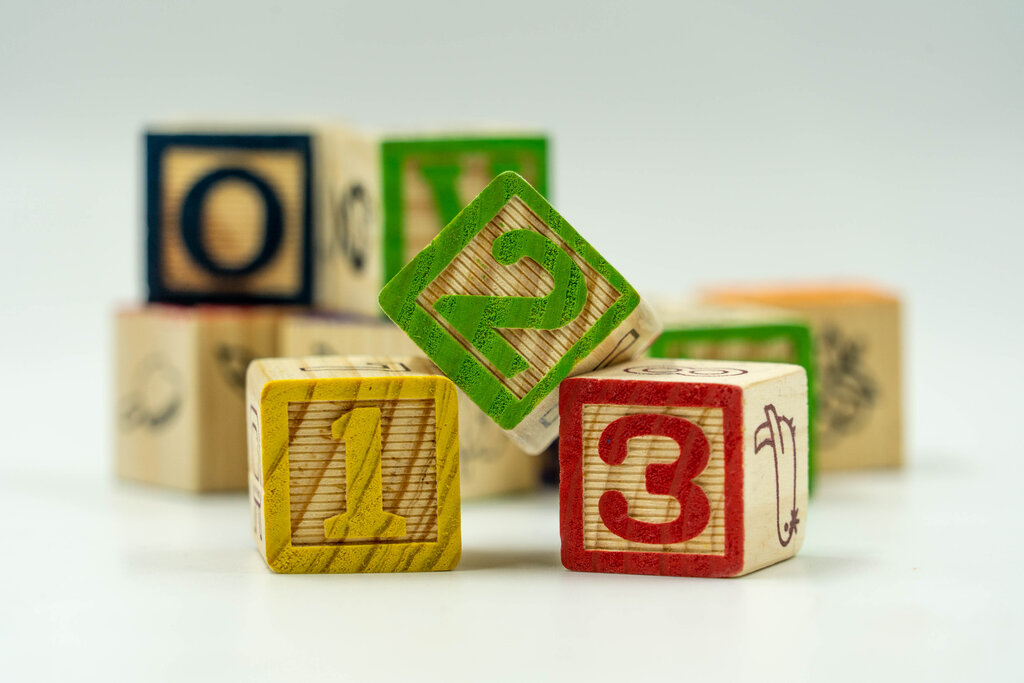
An important idea connected to counting is cardinality. This principle states that the last number you say when counting a group of items represents the total number of items in that group. So, when you count those three apples, the word "three" tells you the total quantity. It’s the answer to the question, "How many?"
Counting isn't just reciting a list; it's about understanding quantity.
Comparing Quantities
Once we can count, we can start comparing. Number sense allows us to look at two groups of objects and figure out which one has more, which has less, or if they are equal. This is a visual and mental exercise that builds on our counting skills.
Comparing quantities helps us make decisions every day. Do I have enough chairs for my guests? Which line at the grocery store is shorter? These simple questions are answered using a basic sense of "more" or "less."
Finding Number Patterns
The world is full of patterns, and so are numbers. Recognizing these patterns is a key part of number sense. When we see a sequence of numbers, we can often predict what will come next. The simplest pattern is counting by ones: 1, 2, 3, 4, 5... We know 6 is next.
But patterns can be more interesting. Consider skip-counting, which is the basis for multiplication. Counting by twos or fives reveals a different kind of order.
| Counting by Twos | 2 | 4 | 6 | 8 | 10 |
|---|---|---|---|---|---|
| Counting by Fives | 5 | 10 | 15 | 20 | 25 |
Noticing these relationships helps build a mental map of how numbers are organized. It shows that numbers aren't just random symbols, but part of a predictable system. This skill is crucial for understanding more complex math later on.
Time to check your understanding of these core concepts.
Which of the following best describes "number sense"?
A child counts four balls by touching each one and saying "one, two, three, four." When asked how many balls there are, the child answers "four!" What principle does this final answer demonstrate?
Developing number sense is the first major step in your math journey. By mastering counting, comparing, and spotting patterns, you're building a strong foundation for the road ahead.