Adding Fractions
Understanding Fractions
What is a Fraction?
Fractions are a way of talking about parts of a whole. Imagine you have a pizza that you cut into four equal slices. If you eat one of those slices, you haven't eaten the whole pizza, just a fraction of it. Specifically, you ate one out of four pieces.
In math, we write that as 1/4. This simple expression tells a story about a whole being divided into parts.
Whether it's a pizza, a chocolate bar, or an hour, fractions help us describe the pieces. Every fraction has two key parts that work together: a top number and a bottom number.
Numerator and Denominator
Let's look at the two numbers in a fraction. They have specific names and jobs.
The bottom number is called the denominator. It tells you how many equal parts the whole is divided into. If the denominator is 8, it means a whole item was cut into 8 identical pieces. The bigger the denominator, the smaller each piece is.
denominator
noun
The number below the line in a fraction, indicating the number of equal parts into which the whole is divided.
The top number is the numerator. This number tells you how many of those equal parts you are talking about. If you have 3 slices of that 8-slice pizza, the numerator is 3. You have 3/8 of the pizza.
numerator
noun
The number above the line in a fraction, showing how many of the parts of the whole are being considered.
So, in the fraction 3/4, the 4 tells us the whole was split into four equal parts, and the 3 tells us we're dealing with three of those parts.
Seeing Fractions Everywhere
Once you start looking, you'll see fractions all around you. They're not just for math class. When you follow a recipe that calls for a 1/2 cup of sugar, you're using a fraction. When you check the time and see it's a quarter past the hour, that's 1/4 of an hour.
Sharing a chocolate bar with a friend is a great example. If the bar has 10 squares and you give your friend 4, they get 4/10 of the bar, and you have 6/10 left.
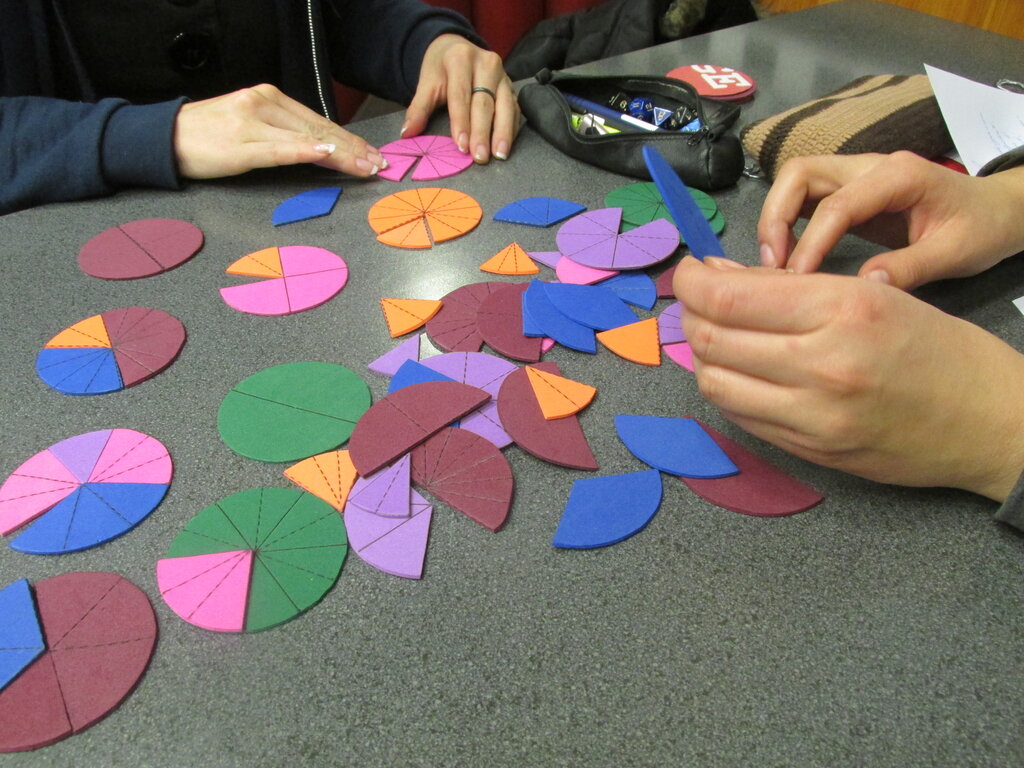
Thinking about fractions with real objects helps make the concept solid. The denominator sets the size of the slice, and the numerator counts how many slices you have.
Let's check your understanding of these new concepts.
What does a fraction represent?
In the fraction , the number 7 is the ______.
Grasping the roles of the numerator and denominator is the first step. With this foundation, you'll be ready to explore what else you can do with fractions.