Adam Smith The Father of Modern Economics
Early Life and Education
A Scottish Beginning
Adam Smith was born in 1723 in Kirkcaldy, a small port town on the east coast of Scotland. His father, a customs official also named Adam Smith, died a few months before he was born. This left his mother, Margaret Douglas, to raise him alone. The two shared a very close bond throughout their lives.
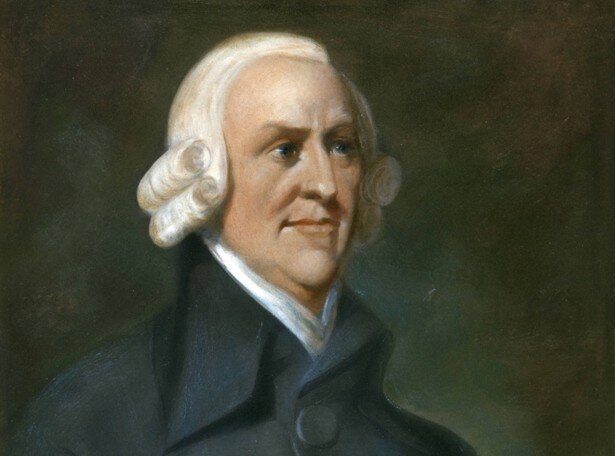
Young Smith was a thoughtful, and at times absent-minded, child. A popular story, likely exaggerated, claims he was briefly abducted by gypsies at age three before being rescued. What is certain is his early aptitude for learning. He excelled in his studies and, at the age of just 14, left Kirkcaldy for the University of Glasgow.
The Glasgow Enlightenment
The Glasgow of the 1730s was a vibrant hub of intellectual activity, a key center of the Scottish Enlightenment. The university was a world away from the rigid, classics-focused institutions in England. Here, ideas about science, philosophy, and human progress were debated with vigor.
The most profound influence on Smith during this period was his professor, Francis Hutcheson, a leading figure in moral philosophy.
Hutcheson broke with tradition by lecturing in English instead of Latin, making complex ideas accessible and engaging. He taught that humans possess an innate “moral sense,” a natural capacity to distinguish right from wrong and to feel sympathy for others. He also championed the principles of individual liberty and freedom of expression. Smith was captivated, and Hutcheson's ideas would become a cornerstone of his own philosophical work.
Disappointment at Oxford
In 1740, Smith was awarded a prestigious scholarship, the Snell Exhibition, to attend Balliol College, Oxford. He hoped to continue his intellectual journey, but he was sorely disappointed. Compared to the dynamic environment of Glasgow, Oxford felt stagnant and intellectually stifling. He later wrote that “the greater part of the publick professors have, for these many years, given up altogether even the pretence of teaching.”
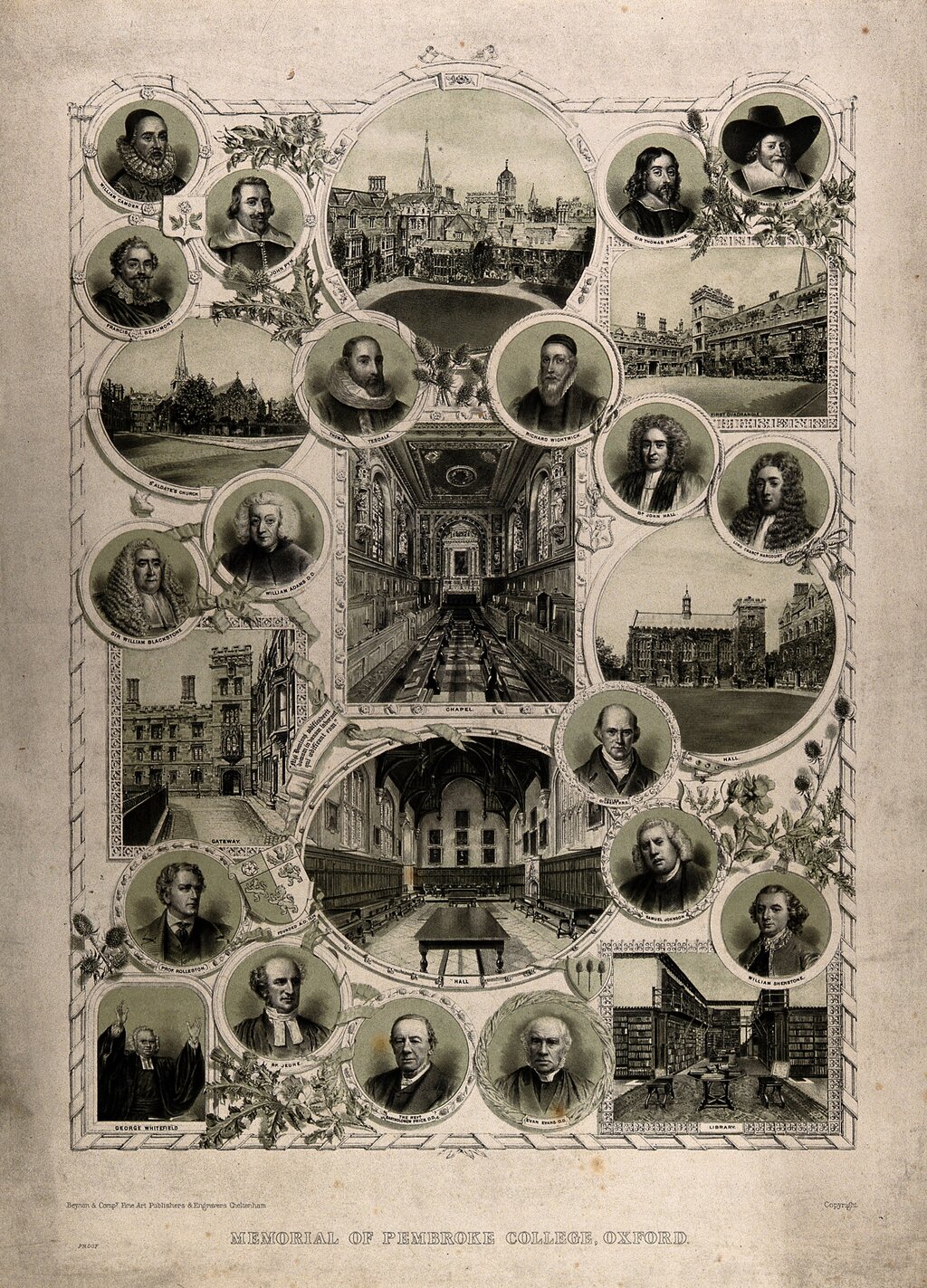
Despite the poor quality of formal instruction, Smith made the most of his time. He embarked on a rigorous program of self-education, spending countless hours in Balliol's library. He devoured books on philosophy, literature, and history, reading deeply in both English and French. It was during this quiet, solitary period that he honed his critical thinking and developed the wide-ranging knowledge that would inform his later masterpieces.
His time at Oxford taught him the value of independent study, a habit that would serve him for the rest of his life.
After six unhappy years, Smith left Oxford in 1746 without finishing his degree, returning to his home in Kirkcaldy. While his formal education had ended, the real work of synthesizing the ideas from Glasgow and the books from Oxford's library was just beginning.
Which of the following best describes Adam Smith's experience at Oxford University?
The philosopher Francis Hutcheson, who taught Adam Smith in Glasgow, was known for breaking with tradition by lecturing in English instead of Latin.
These formative years laid the intellectual groundwork for all that was to come.